
Typhoon Noul Disrupts Hong Kong and Southern China Aviation: Flight Cancellations and Rail Suspensions 2026
Typhoon Noul has triggered massive travel disruptions across Hong Kong and Southern China, forcing the cancellation of hundreds of flights and the suspension of critical rail and ferry networks.

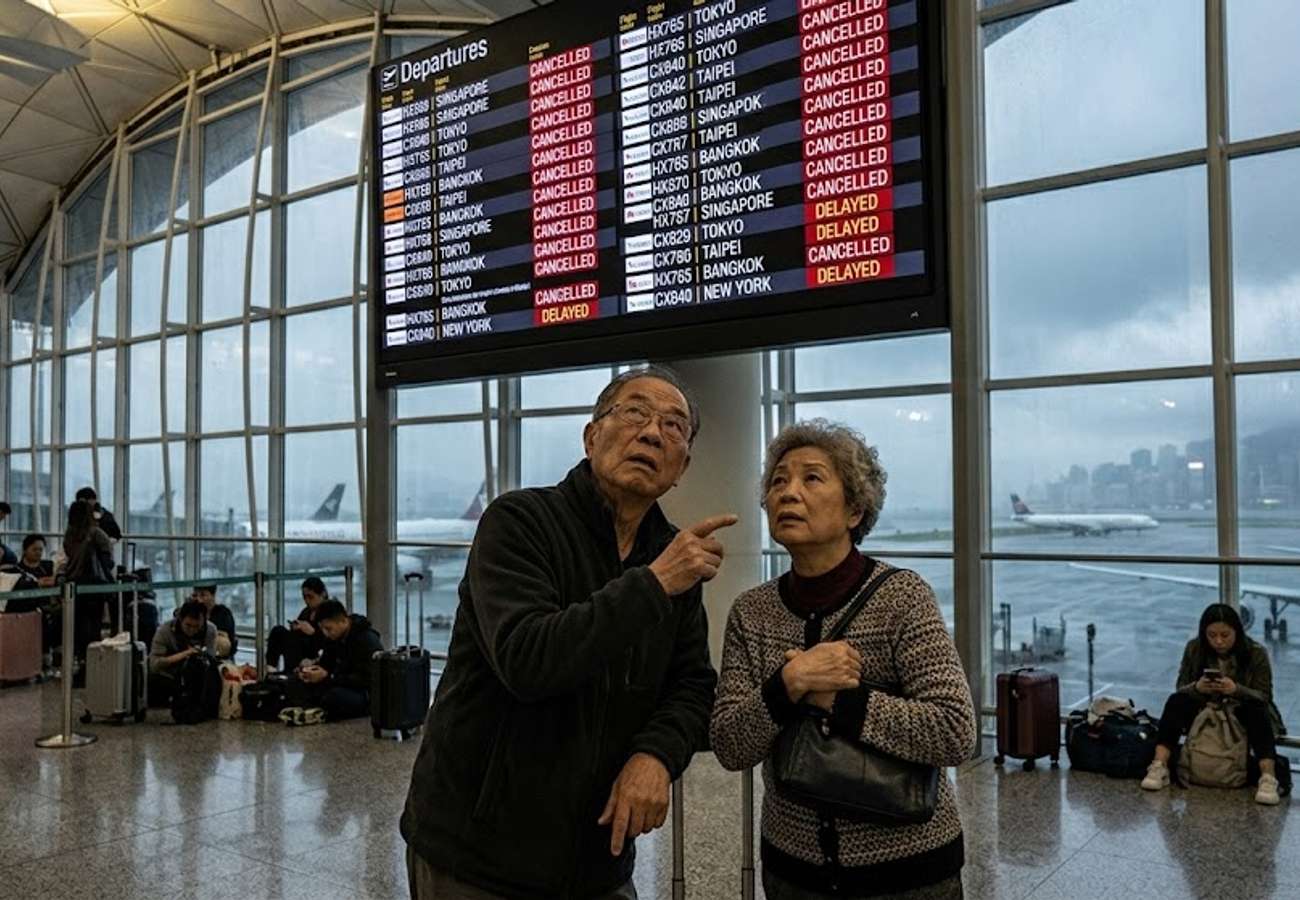
Image generated by AI
Typhoon Noul has paralyzed transport networks across Hong Kong and Southern China, triggering a cascade of flight cancellations, rail shutdowns, and the evacuation of over 360,000 people. The storm's intensity has forced a total operational pivot for airlines and hotels as they manage thousands of stranded passengers.
The cyclone intensified over the northeastern South China Sea, recording sustained winds of approximately 145 kilometres per hour. Meteorological forecasts placed the landfall point along the coastline between Huizhou and Shanwei. While wind speeds are expected to drop once the storm moves inland, the threat of heavy rainfall and flooding continues to jeopardize transport recovery in Guangdong, Fujian, Jiangxi, and Hunan.
Emergency Response and Signal Escalation
Hong Kong's meteorological authorities utilized a tiered warning system to manage the escalating risk. The city moved rapidly from Standby Signal No. 1 to the No. 8 Northwest Gale or Storm Signal. As the system intensified, the alert was further upgraded to Increasing Gale or Storm Signal No. 9.
This escalation triggered mandatory closures of:
- Waterfront areas and public recreation spaces.
- Outdoor tourism facilities.
- Coastal infrastructure and public beaches.
Massive Coastal Evacuations and Infrastructure Closures
To prevent casualties from storm surges and flooding, emergency teams executed large-scale relocations. More than 340,000 residents were moved from vulnerable low-lying areas along the Guangdong coastline. In neighboring Fujian Province, an additional 23,000 people were evacuated.
The disruption extended to critical regional connectivity. The Hong Kong-Zhuhai-Macao Bridge—a vital artery for the Greater Bay Area—was temporarily closed at the peak of the storm, severing the primary road link between three of the region's most significant economic hubs.
Aviation Sector Crisis and Recovery Efforts
The aviation industry faced immediate pressure, with Hong Kong International Airport (HKIA) activating its Flight Rescheduling Control System. This framework was necessary to coordinate the repositioning of aircraft and crews following the storm's passage.
Flight Impact Summary:
- Delays: Over 200 arriving and departing flights were delayed by late Saturday.
- Cancellations: Dozens of scheduled services were grounded immediately.
- Cathay Pacific: All flights arriving and departing on 26 July were suspended during the peak weather window.
- HK Express: Reduced schedules and adjusted aircraft rotations were implemented to mitigate losses.
Affected passengers were granted flexible booking options, including date changes, rerouting, and refunds. However, authorities warned that "normal" schedules would not resume immediately due to the logistical challenge of repositioning flight crews and aircraft.
Ground Transport and Tourism Paralysis
The simultaneous failure of air, rail, and sea transport created a logistical bottleneck for business travelers and tourists.
Transport Disruptions:
- Rail: High-speed and conventional rail services across Guangdong were suspended, cutting off travel between Guangzhou, Shenzhen, and Zhuhai.
- Maritime: All ferry routes were cancelled due to dangerous wave heights and rough seas.
- Roads: Heavy traffic restrictions were imposed across Southern China.
Tourism operations entered a full standby mode. Marine excursions, sightseeing cruises, and coastal parks were shut down. Tour operators were forced to postpone itineraries and renegotiate with accommodation providers to handle the sudden shift in traveler movements.
Hospitality Sector: The "Stranded Passenger" Surge
Hotels in Hong Kong and Guangdong reported volatile booking patterns. While corporate events and group tours were cancelled, properties saw a spike in "distress bookings" from stranded airline passengers.
Front-office teams faced the dual challenge of managing delayed arrivals and postponed departures. Furthermore, the suspension of rail and road networks hindered hotel operations, delaying the delivery of essential food and supplies and complicating employee commutes.
Long-term Recovery Outlook
Landfall is not the end of the disruption. As Typhoon Noul moves into Jiangxi and Hunan, the risk shifts from wind damage to hydrological disasters. Heavy rainfall is expected to trigger landslides and flooding, which may keep regional roads closed long after the winds subside.
The recovery phase will require a sequenced restart: rail operators must first inspect signaling systems and tracks, and airlines must execute complex crew rotations before full capacity returns to the Southern China aviation network.
Travelers are advised to monitor official meteorological updates and airline notifications before attempting transit through the Greater Bay Area.
Related Travel Guides
Disclaimer
This article is for informational and educational purposes only. It does not constitute legal, financial, or professional advice. While we strive to provide accurate and up-to-date information, travel policies, regulations, and conditions change rapidly. Always verify information with official sources before making travel decisions. Nomad Lawyer makes no representations about the accuracy, reliability, completeness, or suitability of the information provided. Readers should consult qualified professionals for advice specific to their circumstances. The views expressed in this article are those of the author and do not necessarily reflect the views of Nomad Lawyer.
Preeti Gunjan
Contributor & Community Manager
A passionate traveller and community builder. Preeti helps grow the Nomad Lawyer community, fostering engagement and bringing the reader experience to life.
Learn more about our team →