
Asia Aviation Crisis 2026: 10,162 Delays and 2,323 Cancellations Triggered by Typhoon Noul and Regional Instability
Massive travel disruptions hit Asia and the Middle East as Typhoon Noul causes 10,162 delays and 2,323 cancellations, primarily impacting southern China and Hong Kong aviation hubs.

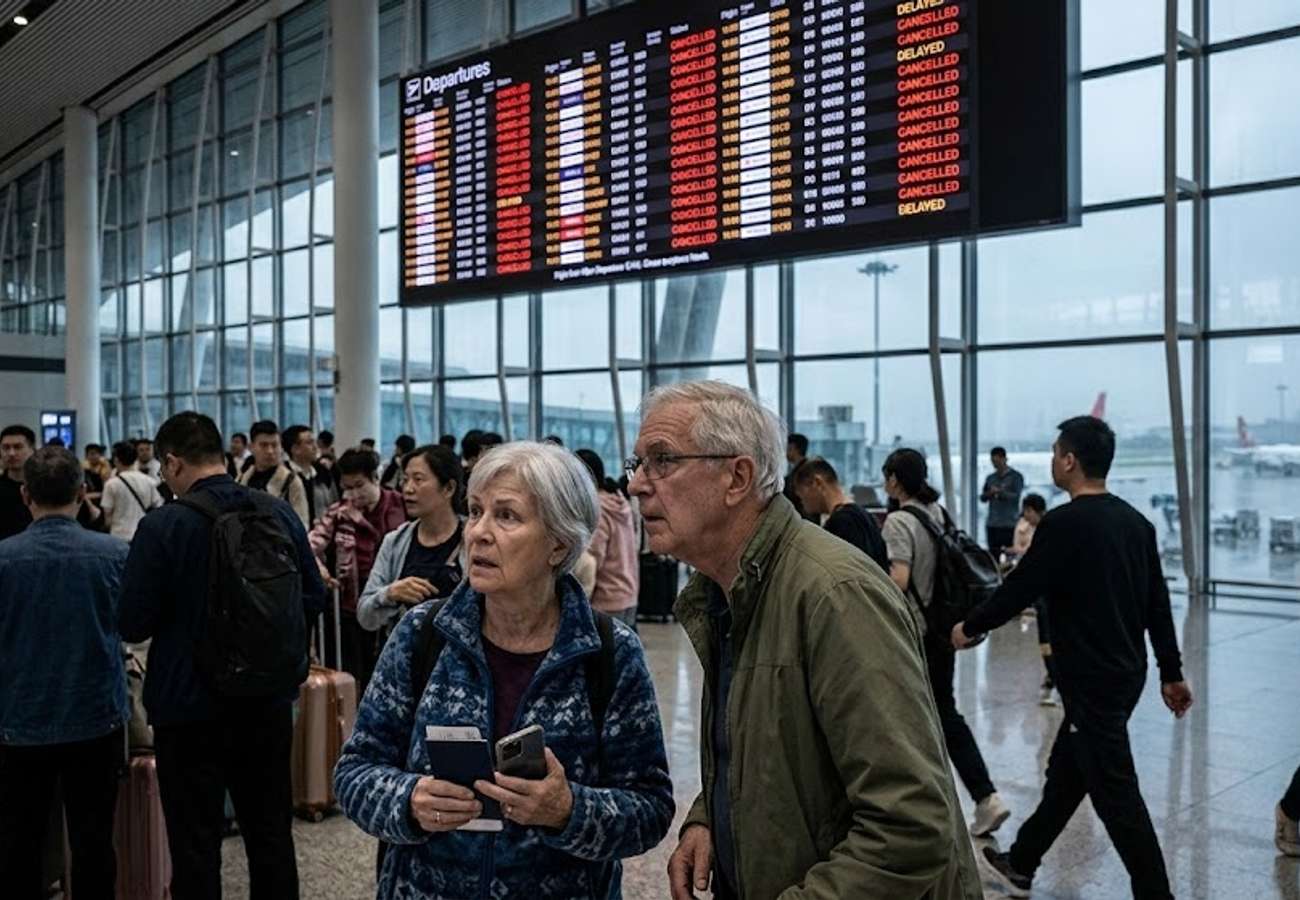
Image generated by AI
Flight networks across Asia and the Middle East are currently in a state of collapse, with 10,162 recorded delays and 2,323 cancellations paralyzing regional transit. The crisis is centered on southern China, where Typhoon Noul has triggered Red Typhoon Alerts and massive evacuations.
The scale of the disruption is unprecedented, stretching from the weather-battered hubs of Guangdong Province to the high-traffic corridors of the Middle East. Data indicates that southern China is the epicenter, with Shenzhen Bao’an and Guangzhou Baiyun airports alone accounting for more than 10% of all regional cancellations and delays.
Regional Disruption Data and Statistics
The current aviation crisis is bifurcated between extreme weather events in East Asia and operational/security pressures in the Middle East and Southeast Asia. Mainland China bears the heaviest burden, representing nearly 57% of all delays and 84% of all cancellations.
| Region/City | Delays | Cancellations | Primary Driver |
|---|---|---|---|
| Mainland China | 5,776 | 1,940 | Typhoon Noul / Network Congestion |
| Japan | 831 | 44 | Operational Rotations |
| Saudi Arabia | 532 | 173 | Localized Operational Pressures |
| Hong Kong | 410 | 289 | Typhoon Noul (Signal No. 8) |
| Guangzhou Baiyun | 688 (Max) | - | Weather-driven congestion |
| Tokyo Haneda | 477 | - | High-frequency network lag |
| Shenzhen Bao’an | - | 412 (Max) | Severe weather cancellations |
Carrier-Specific Impact Assessment
Airlines with heavily concentrated hubs in southern China are facing the most significant operational strain. China Southern Airlines is the most impacted carrier, recording 1,155 delays and 575 cancellations, which represents approximately 11% of all delays and nearly 25% of all cancellations globally for the period.
Other heavily impacted carriers include:
- Cathay Pacific: 255 delays and 320 cancellations.
- China Eastern & Air China: Significant disruption due to presence at Shanghai Pudong, Beijing Daxing, and Beijing Capital.
- Saudia: The most affected carrier in the Middle East, facing concentrated cancellations at Saudi airports.
The Typhoon Noul Effect
The primary catalyst is Typhoon Noul, tracking across the South China Sea toward Guangdong with sustained winds of 145 km/h. The storm's trajectory toward Huizhou and Shanwei has forced a Red Typhoon Alert in mainland China and Signal No. 8 in Hong Kong.
Beyond immediate cancellations, the storm has created a "cascade effect." Strong crosswinds have reduced runway capacity, and heavy rain has slowed ground movements. Because aircraft are out of position, a rolling wave of delays has spread to airports far from the storm's center, including those in northern China and Taiwan.
Traveler Logistics Guide: Navigating the Crisis
From a ground-level perspective, the best way to navigate this level of systemic failure is to avoid "hub-hopping" through Guangdong or Hong Kong until the Red Alert is downgraded.
1. Booking and Re-routing Strategies If you are stranded in China or Hong Kong, do not rely on automated re-booking tools, as they often suggest flights that are already overbooked due to the 2,323 cancellations. Instead, contact the airline's dedicated "Irregular Operations" (IROP) desk. If traveling toward the Middle East, consider routing through Singapore Changi or Bangkok Suvarnabhumi, which have maintained higher operational stability despite localized congestion.
2. Optimal Layover Windows In the current environment, the standard 2-hour connection is insufficient. For transit through Tokyo Haneda or Narita—where delays are high but cancellations are low—allow a minimum of 6 to 8 hours. This provides a buffer for the "aircraft rotation" delays currently affecting Japan Airlines and ANA.
3. Digital Transit and Documentation Ensure all travel documents are digitized. With 340,000 people evacuated in Guangdong and rail services suspended, ground transportation to airports is unpredictable. Use real-time flight tracking apps rather than airport departure boards, as the latter often lag behind the actual operational status of the aircraft.
Infrastructure and Regional Impact
This event highlights a critical vulnerability in the "hub-and-spoke" model of Asian aviation. When primary hubs like Guangzhou Baiyun and Shenzhen Bao’an fail, the entire network—including secondary cities like Wuhan and Qingdao—experiences a synchronization failure.
In the Middle East, the disruption at King Abdulaziz and King Khalid airports, combined with ongoing military tensions, suggests that operational resilience is being tested by a combination of security requirements and aircraft rotation lags. This creates a volatile environment where schedules can change with very little notice.
Transit recovery is expected to be slow as airlines work to reposition aircraft and crews displaced by the storm.
Related Travel Guides
Disclaimer
This article is for informational and educational purposes only. It does not constitute legal, financial, or professional advice. While we strive to provide accurate and up-to-date information, travel policies, regulations, and conditions change rapidly. Always verify information with official sources before making travel decisions. Nomad Lawyer makes no representations about the accuracy, reliability, completeness, or suitability of the information provided. Readers should consult qualified professionals for advice specific to their circumstances. The views expressed in this article are those of the author and do not necessarily reflect the views of Nomad Lawyer.
Raushan Kumar
Founder & Lead Developer
Full-stack developer with 11+ years of experience and a passionate traveller. Raushan built Nomad Lawyer from the ground up with a vision to create the best travel and law experience on the web.
Learn more about our team →