
Turkish Airlines Boeing 777 Strikes Ground Radar During Taxi, Mast Pierces Aircraft Cabin
Breaking airline news and aviation industry updates for 2026.

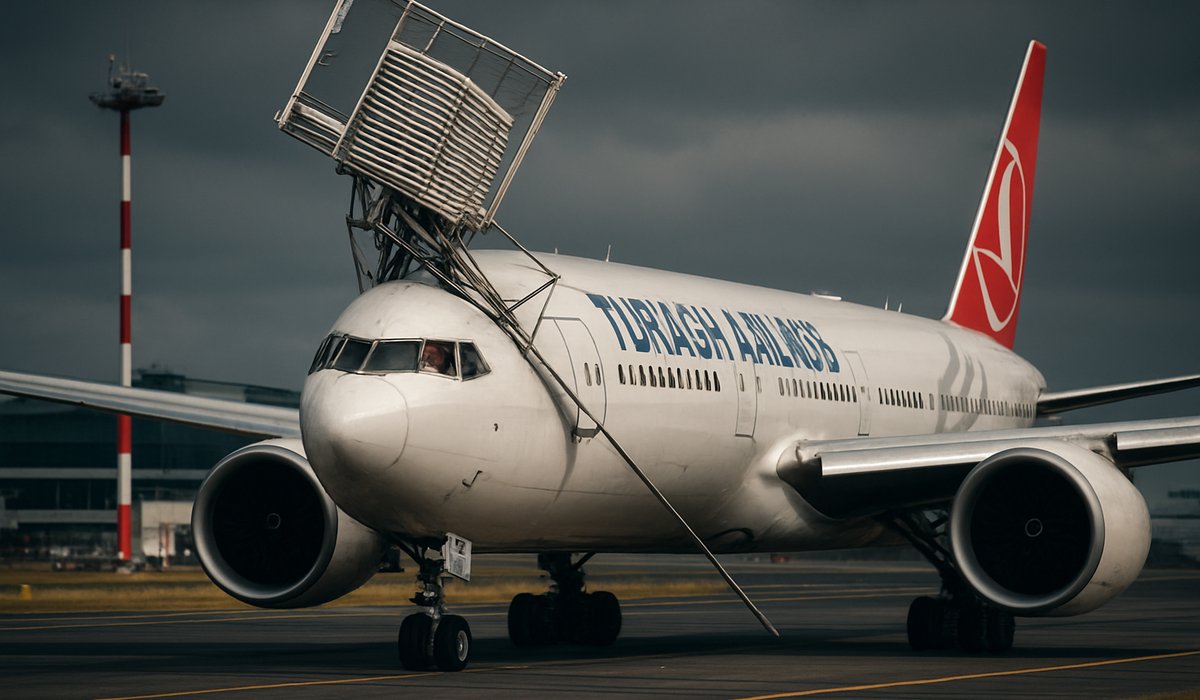
Image generated by AI
Turkish Airlines Boeing 777 Strikes Ground Radar During Taxi, Mast Pierces Aircraft Cabin
Incident at Antalya Airport raises fresh concerns about airport ground operations and aircraft safety protocols
A Turkish Airlines Boeing 777-300ER collided with a ground-based radar installation while taxiing at Antalya International Airport on Thursday evening, resulting in structural damage to the aircraft's fuselage and injuries to multiple passengers. The incident, involving flight TK2430 from Istanbul, has triggered a safety investigation and renewed scrutiny of airport ground operations procedures across Turkey's busiest tourism hub.
The Incident: What Happened
The wide-body aircraft struck a radar antenna mast shortly after touching down at Antalya International Airport (AYT) around 8:00 PM local time on June 11. The impact proved severe enough that the mast penetrated the fuselage, creating an opening in the cabin. Turkish Airlines confirmed that at least one passenger sustained injuries during the collision, though preliminary reports suggest the total number of affected passengers could reach three, pending full medical assessments.
The aircraft involved, a Boeing 777-300ER with Turkish Airlines' livery, was completing a scheduled domestic service from Istanbul Airport (IST) when the ground collision occurred. The incident unfolded during routine taxiing operations—typically considered the safest phase of flight—raising questions about ground infrastructure placement and pilot visibility during low-speed aircraft movements.
Investigation Underway
Turkish authorities have launched an immediate investigation into the circumstances surrounding the collision. Early assessments suggest potential issues with either the radar installation's positioning relative to standard taxiway routes or possible miscommunication regarding ground operations. The damage visible in preliminary reports indicates the mast struck the fuselage with considerable force, contradicting assumptions that taxiing speeds would minimize impact severity.
Airport officials at Antalya have not yet released detailed statements regarding maintenance of the radar installation or standard clearance procedures for aircraft of the 777's wingspan and dimensions.
Industry Safety Implications
The incident represents a rare but serious breach in airport ground operations, categories typically featuring far lower accident rates than in-flight incidents. For Turkish Airlines—one of Europe's largest carriers by passenger volume—the collision adds to operational challenges already pressured by volatile jet fuel prices and international route disruptions affecting the broader aviation sector.
Ground incidents of this nature underscore vulnerabilities in coordination between air traffic control, airport infrastructure planning, and pilot guidance systems during taxiing phases when crews rely heavily on ground personnel and visual cues.
FAQ: Your Questions Answered
Q: How common are aircraft collisions with airport infrastructure during taxiing? A: Such incidents remain exceptionally rare in modern aviation, with international safety protocols and ground operations training designed specifically to prevent them.
Q: Could this incident affect Turkish Airlines' safety ratings? A: Regulatory agencies will assess causation; individual incidents typically don't alter carrier safety records unless systemic issues emerge.
Q: What safety systems should prevent ground collisions? A: Aircraft have ground-proximity warning systems, but prevention relies primarily on pilot training, ground control communications, and airport layout design.
Q: Will this impact passenger confidence in Turkish Airlines? A: The carrier maintains strong safety credentials; transparent investigation outcomes will be critical to passenger perception.
Q: What happens to the damaged aircraft? A: Damage assessment will determine whether repair is economically viable or if the airframe is written off, affecting Turkish Airlines' fleet utilization.
Related Travel Guides
External Resources
Disclaimer
This article is for informational and educational purposes only. It does not constitute legal, financial, or professional advice. While we strive to provide accurate and up-to-date information, travel policies, regulations, and conditions change rapidly. Always verify information with official sources before making travel decisions. Nomad Lawyer makes no representations about the accuracy, reliability, completeness, or suitability of the information provided. Readers should consult qualified professionals for advice specific to their circumstances. The views expressed in this article are those of the author and do not necessarily reflect the views of Nomad Lawyer.
Preeti Gunjan
Contributor & Community Manager
A passionate traveller and community builder. Preeti helps grow the Nomad Lawyer community, fostering engagement and bringing the reader experience to life.
Learn more about our team →