
China Travel Chaos: 65 Flight Disruptions Paralyze Guangzhou Baiyun Airport as Critical Cancellations Sever Routes to Tokyo and Beijing
As severe operational bottlenecks paralyze Chinese aviation networks, Guangzhou Baiyun International Airport plunges into terrifying travel chaos with 65 sudden flight disruptions severing vital domestic and international corridors.

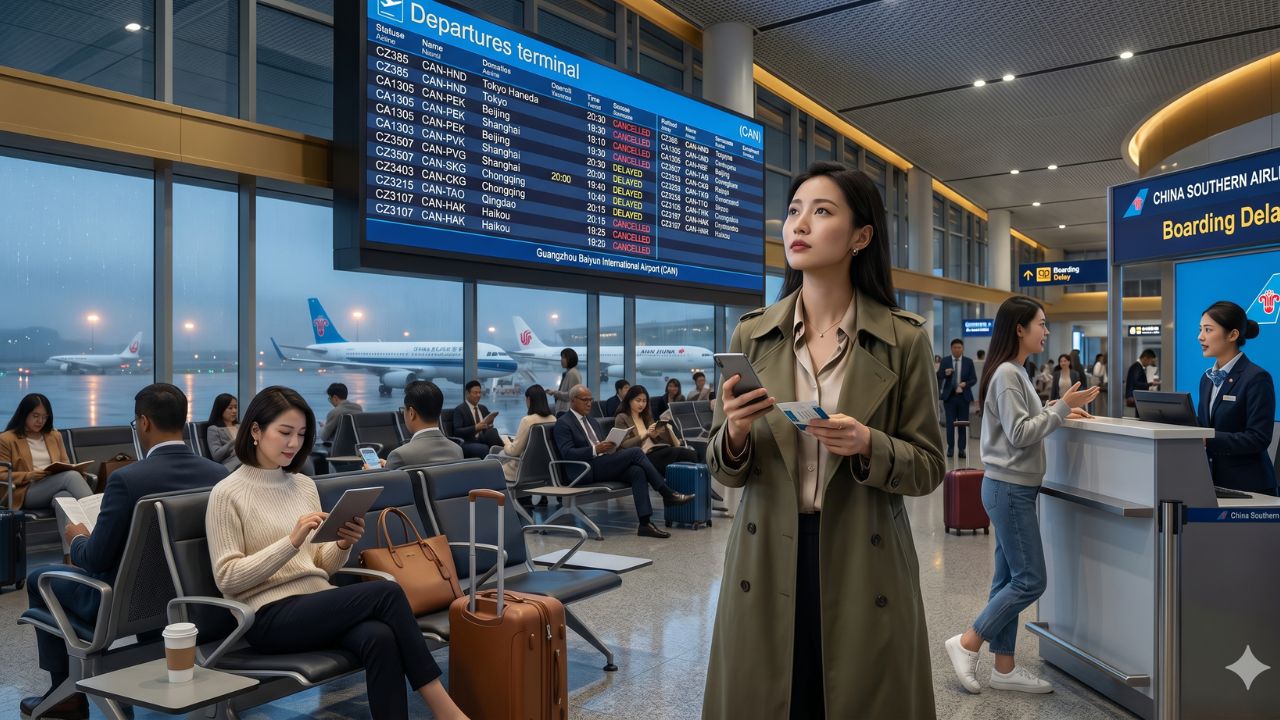
Image generated by AI
A Massive Operational Meltdown Plunges Guangzhou into Gridlock
While massive sectors of the global passenger network frequently battle highly unpredictable weather events, synchronized logistical bottlenecks and horrific fleet management constraints remain the absolute most terrifying catalysts for sudden, unmanageable terminal congestion. Delivering highly urgent, breaking airline news, verified Chinese aviation trackers confirm that a catastrophic operational breakdown has actively generated severe, cascading travel chaos across the massive southern China aviation network. Today, June 2, 2026, severe travel distress forcefully emerged as Guangzhou Baiyun International Airport—one of China’s absolute busiest mega-hubs—abruptly reported a terrifying surge in airport disruptions, violently stranding highly vulnerable commuters attempting to traverse domestic and international borders.
While desperate travelers already attempt to navigate sudden, terrifying flight cancellations caused by massive summer volumes across major international hubs, these exclusive aviation updates reveal the horrifying vulnerability of high-frequency Chinese routes. Verified transit data confirms that major operations have been abruptly paralyzed, triggering 6 critically severe flight cancellations and an astonishing 59 massive delays out of Guangzhou. This horrific operational collapse is actively destroying the high-value travel itineraries of passengers flying into massive mega-hubs including Tokyo, Beijing, Shanghai, and Chongqing, leaving elite corporate crowds violently trapped inside the congested Guangdong gateway.
Expanded Overview: The Scale of the Aviation Crisis
The sudden, highly publicized execution of this massive regional operational meltdown serves as an undeniable example of how rapidly a province's most critical transit networks can completely disintegrate under extreme scheduling pressure. The massive disruption heavily impacts elite corporate travel, essential government transit, and massive international tourism corridors. The latest Guangzhou Baiyun Airport flight cancellations highlight exactly how severe schedule disruptions on southern China’s busiest air routes can violently affect passenger movement connecting to the nation's absolute largest metropolitan centers.
Although the 6 outright cancellations officially represent approximately 0% of total daily volume, the terrifying reality is found in the 59 massive delays, which account for a brutal 8% of all scheduled departures. The timing and scale of these failures are absolutely devastating. The disruptions instantly paralyze the most lucrative travel periods of the day, actively destroying hundreds of incredibly vulnerable connecting itineraries. This massive disruption instantly destroys crucial business meetings, highly sensitive international transits, and vital regional connections, violently triggering a massive travel chain reaction that destroys schedule reliability and inflicts severe financial damages on stranded passengers.
Section-Wise Breakdown of the Connectivity Crisis
International and Tier-1 Domestic Corridors Severed
The absolute most devastating impact of these disruptions involves the violent severance of international links. A highly critical international departure, flight JAL88 operated by a massive Boeing 787-8, was heavily disrupted on its route to Tokyo Haneda International Airport (RJTT). This failure instantly strands high-value international tourists and corporate executives desperately attempting to cross the East China Sea.
Simultaneously, the vital domestic routes to China's absolute largest financial and political powerhouses were severely crippled. Massive flights bound for Beijing Daxing International Airport (ZBAD) and both major Shanghai airports—Hongqiao (ZSSS) and Pudong (ZSPD)—suffered catastrophic schedule failures. High-capacity Airbus A321 and A330 aircraft, essential for moving massive volumes of corporate passengers to eastern China, were abruptly removed or severely delayed, throwing the entire domestic corporate travel sector into complete turmoil.
Regional Hubs Paralyzed by Airspace Congestion
The catastrophic disruption violently extended beyond Tier-1 cities, completely paralyzing essential regional travel. High-demand routes to Nanjing Lukou International Airport (ZSNJ), Qingdao Jiaodong International Airport (ZSQD), Chongqing Jiangbei International Airport (ZUCK), and Haikou Meilan International Airport (ZJHK) were completely scrapped or significantly delayed.
The primary catalysts for this massive breakdown include severe air traffic congestion during peak hours, complex operational adjustments involving crew availability, and restrictive airspace management protocols combined with sudden, adverse weather events like thunderstorms and dense fog. These interrelated factors guarantee a terrifyingly slow recovery for the paralyzed Guangzhou hub.
Verified Guangzhou Network Disruption Data
To fully comprehend the massive operational scale and devastating delays dictating this highly volatile regional crisis, the following table explicitly details the exact flight metrics officially recorded during the Guangzhou Baiyun International Airport network disruption:
| Flight Ident | Aircraft Type | Destination | Scheduled Departure |
|---|---|---|---|
| JAL88 | Boeing 787-8 (B788) | Tokyo Int’l (Haneda) (HND / RJTT) | Wednesday 02:10 PM CST |
| CSZ9867 | Airbus A320 | Nanjing Lukou Int’l (NKG / ZSNJ) | Wednesday 12:50 PM CST |
| CES6312 | Airbus A321 | Beijing Daxing Int’l (PKX / ZBAD) | Tuesday 08:50 PM CST |
| CES5258 | Airbus A321 | Qingdao Jiaodong Int’l (TAO / ZSQD) | Tuesday 06:00 PM CST |
| CES5330 | Airbus A333 (A333) | Shanghai Hongqiao Int’l (SHA / ZSSS) | Tuesday 05:30 PM CST |
| CHH6207 | Boeing 737-800 (B738) | Shanghai Pudong Int’l (PVG / ZSPD) | Tuesday 04:30 PM CST |
| CSZ9533 | Airbus A320 | Shanghai Pudong Int’l (PVG / ZSPD) | Tuesday 03:00 PM CST |
| CHH7341 | Boeing 787-9 (B789) | Chongqing Jiangbei Int’l (CKG / ZUCK) | Tuesday 12:55 PM CST |
| CHH7004 | Airbus A320neo (A20N) | Haikou Meilan Int’l (HAK / ZJHK) | Tuesday 07:50 AM CST |
| CHH7131 | Boeing 737-800 (B738) | Shanghai Hongqiao Int’l (SHA / ZSSS) | Tuesday 07:40 AM CST |
(Total verified disruptions: 6 critical cancellations, 59 severe delays)
Passenger Impact: Navigating the Regional Meltdown
For the modern commuter attempting to navigate this highly volatile Chinese network, the passenger impact of this massive Guangzhou meltdown is completely exhausting. Massive flight cancellations and 59 cascading delays on elite corporate routes to Beijing, Shanghai, and Tokyo are incredibly frustrating, leaving business travelers utterly stranded with zero alternative rapid transport options.
- Anticipate Overwhelming Terminal Congestion: Because massive, high-capacity aircraft (including an A333 and multiple B787s) were violently disrupted, thousands of passengers were simultaneously dumped back into the Guangzhou terminal. Securing seats on later flights or high-speed rail will be nearly impossible due to incredibly high existing load factors.
- Document All Severe Expenses: Stranded passengers must furiously retain all booking records, boarding passes, and corporate hotel receipts. Travelers should aggressively check airline policies regarding carrier-controlled failures to demand immediate financial reimbursement for lost business days.
- Verify Downstream Connectivity: Passengers violently delayed en route to massive hubs like Tokyo Haneda or Shanghai Pudong must desperately check their onward domestic or international connections, as missing these massive feeder flights guarantees the total destruction of their entire itinerary.
Conclusion: A Highly Volatile Transit Crisis
The massive, highly publicized operational failure across Guangzhou Baiyun International Airport represents a severe, terrifying crisis for the southern Chinese travel sector. By actively forcing passengers to endure 65 critical, high-capacity flight disruptions on the region's most vital domestic and international corridors, the airline industry guarantees an incredibly stressful, highly exhausting journey. As the operational teams frantically battle this sudden air traffic gridlock, passengers are heavily urged to aggressively monitor their bookings, strictly demand their mandated compensation, and fully expect massive, cascading flight disruptions amidst unprecedented Chinese travel chaos.
Key Takeaways
- Massive Corridor Meltdown: Guangzhou Baiyun International Airport suffered 6 critical flight cancellations and 59 severe delays (8% of departures) affecting major global hubs.
- International Links Severed: A critical flight to Tokyo Haneda (JAL88, Boeing 787-8) suffered severe disruption, stranding international travelers.
- Tier-1 Hubs Paralyzed: High-capacity flights to Beijing Daxing, Shanghai Hongqiao, and Shanghai Pudong were catastrophically impacted, instantly stranding hundreds of highly lucrative corporate passengers.
- High-Capacity Failures: Massive widebody aircraft, including a Boeing 787-9 and an Airbus A333, were abruptly entangled in the schedule collapse.
- Passenger Survival Tactics: Travelers are aggressively urged to strictly document all hotel and meal expenses to file for aggressive financial compensation due to the severe delays and carrier-controlled cancellations.
Disclaimer: The specific cancellation metrics, delayed flight timelines, and airline operational failures presented in this report are based on verified transit tracking data from FlightAware regarding the Guangzhou Baiyun Airport network disruption on June 2, 2026. Official airline routing, terminal congestion levels, and final ticket rebooking options are highly volatile and subject to continuous, real-time update based on active carrier operational directives, complex airspace management, and sudden air traffic constraints. Prospective passengers are urgently advised to fiercely monitor their specific booking status and verify active flight schedules directly via the airline's official portal prior to airport arrival.
Disclaimer
This article is for informational and educational purposes only. It does not constitute legal, financial, or professional advice. While we strive to provide accurate and up-to-date information, travel policies, regulations, and conditions change rapidly. Always verify information with official sources before making travel decisions. Nomad Lawyer makes no representations about the accuracy, reliability, completeness, or suitability of the information provided. Readers should consult qualified professionals for advice specific to their circumstances. The views expressed in this article are those of the author and do not necessarily reflect the views of Nomad Lawyer.
Kunal K Choudhary
Co-Founder & Contributor
A passionate traveller and tech enthusiast. Kunal contributes to the vision and growth of Nomad Lawyer, bringing fresh perspectives and driving the community forward.
Learn more about our team →