
Turkey Stuns Global Aviation With Istanbul Airport’s New Runway Set to Reshape Flights, Cut Travel Times and Boost Its Global Hub Power
Turkey Stuns Global Aviation With Istanbul Airport’s New Runway Set to Reshape Flights, Cut Travel Times and Boost Its Global Hub Power

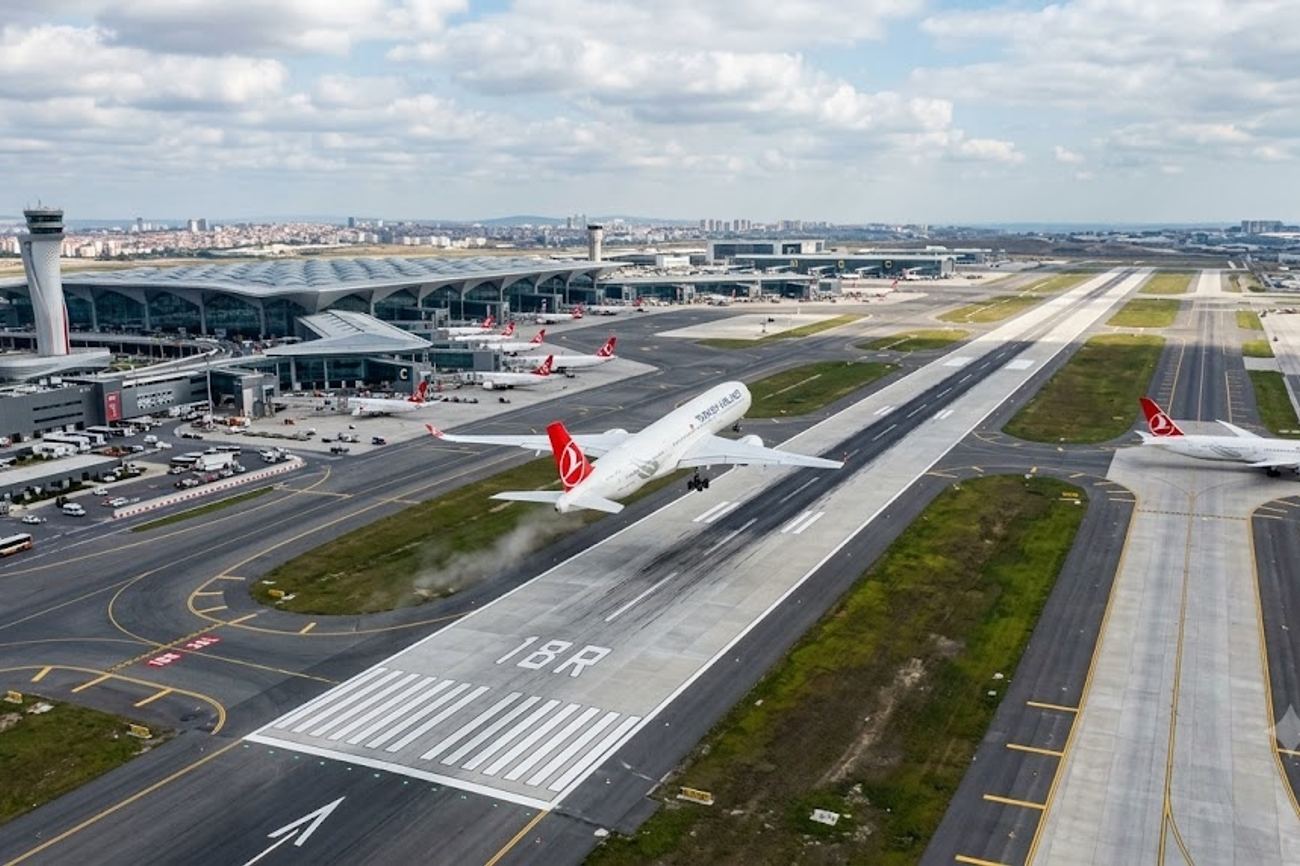
Image generated by AI
While most airports simply add more of the same, Istanbul Airport is breaking its own geometric pattern by installing its first-ever east-west oriented runway. Scheduled for inauguration on September 18, 2026, with President Recep Tayyip Erdoğan in attendance, this specific directional shift is a strategic move to decouple domestic and eastbound traffic from the primary flow, fundamentally altering how aircraft navigate the tarmac.
The Strategic Pivot of Istanbul’s Airspace
For the uninitiated, an airport is often viewed as a static set of terminals and strips. However, those of us who track the rhythms of global transit know that runway orientation is everything. Until now, Istanbul Airport has operated on a specific alignment. The introduction of this fourth main runway—measuring exactly 2,820 metres in length and 45 metres in width—introduces a critical east-west axis that previously did not exist among the main runways.
Once this project is complete, the facility will boast a total of six runways. This isn't just about adding more asphalt; it is about operational intelligence. By providing a new directional option, the airport can now better manage the complex choreography of arrivals and departures. For the traveler, this means the airport is preparing for a future where the sheer volume of aircraft would otherwise lead to the grueling taxiing delays common at other mega-hubs.
The timing of the September 18, 2026, opening is a signal of Turkey's intent to solidify its position as the primary bridge between Europe and Asia. When you look at the map of global aviation, Istanbul is the natural fulcrum. By increasing its capacity to handle simultaneous movements, the city is ensuring that its infrastructure keeps pace with its ambition to be the world's most connected transit point.
What Makes Istanbul's Aviation Hub Different
To understand why an east-west runway matters, you have to understand the volatility of the Bosphorus region's weather. Wind direction dictates which runway is usable; if the wind is blowing too strongly across a runway (crosswinds), aircraft cannot safely land or take off. By adding a runway that runs east-west, Istanbul Airport is essentially buying insurance against the elements.
This new configuration offers a level of weather resilience that was previously lacking. When adverse conditions hit, air traffic controllers now have an additional tool to keep flights moving, reducing the likelihood of the systemic collapses that often plague major hubs during storms.
Beyond the commercial jets, there is a subtle but important shift for general aviation. The new runway is strategically positioned near the airport's hangars. This allows private and corporate aircraft to move independently of the massive commercial liners. In the past, a small private jet might have been stuck in a queue behind a line of wide-body aircraft; now, they have a faster, more direct path, reducing congestion for everyone.
For those planning a visit to the city, it is worth noting that the airport is managed with a level of precision that mirrors the city's own chaotic yet functional energy. You can coordinate your arrivals and local transit through the Official Turkey Tourism portal or check the latest flight regulations via the Turkish State Airports Authority.
Visitor Insider Tips
Navigating Istanbul Airport can be an endurance sport given its scale. To make the most of your transit, especially as the airport expands its operational capacity, keep these local insights in mind:
Timing the Transit: The airport is located significantly far from the city center. While the new runway may reduce taxiing time for domestic and eastbound flights, it does not shorten the drive to Sultanahmet or Beyoğlu. Always allow a minimum of four hours before an international departure. The Havaist shuttle buses are the most reliable way to reach the city, but avoid them during the 5:00 PM to 7:00 PM rush hour if you can; the traffic on the way into the city is legendary.
Navigating the Terminal: The terminal is one of the largest in the world. Do not rely on the signs alone; use the airport's digital maps. If you have a long layover, head to the upper levels where the lounges and high-end dining are located. For a more authentic taste of Turkey without leaving the airport, seek out the traditional simit (sesame bread) vendors rather than the global fast-food chains.
Local Etiquette and Logistics: When dealing with airport staff or taxi drivers, a few words of Turkish go a long way. A simple "Teşekkür ederim" (Thank you) can change the tone of an interaction. If you are hiring a taxi, ensure it is an official yellow taxi from the designated queue; avoid "independent" drivers soliciting passengers in the arrivals hall.
Strategic Basing: If you are flying into Istanbul for a short business trip, consider staying in the Arnavutköy district or near the northern corridors of the city to avoid the grueling commute to the airport, though most visitors still prefer the cultural heart of the city near the UNESCO World Heritage sites like the Hagia Sophia.
Cultural and Environmental Context
The expansion of Istanbul Airport is more than an engineering feat; it is a reflection of Turkey's geopolitical strategy. The airport serves as the physical manifestation of the "hub and spoke" model, where Istanbul is the center of the world. However, this growth does not come without tension.
The rapid expansion of aviation infrastructure in the region has sparked ongoing conversations about the environmental impact on the northern forests and local watersheds. The push for "weather resilience" and "operational efficiency" is often balanced against the need to preserve the unique ecology of the Thrace and Marmara regions.
Furthermore, the airport acts as a cultural gateway. For millions of travelers, the first interaction they have with Turkish culture is not in a bazaar, but in the sterile, high-tech environment of the terminal. The government's investment in this infrastructure—highlighted by the high-profile involvement of the presidency in the September 2026 inauguration—shows that the airport is viewed as a symbol of national prestige and modernity. It is where the traditional hospitality of the Anatolian plateau meets the clinical efficiency of 21st-century logistics.
FAQ: Visiting Istanbul 2026
What is the best time to visit Istanbul? Spring (April to May) and Autumn (September to November) offer the most temperate weather. September 2026 will be particularly interesting due to the airport's new runway opening, though the city remains crowded year-round.
Do I need a visa to enter Turkey? Visa requirements vary by nationality. Many travelers can apply for an e-Visa online via the official government portal. Always check the current status of your passport's validity (minimum six months) before booking.
How do I get from Istanbul Airport to the city center? The most efficient options are the M11 metro line, which connects the airport to the city's rail network, or the Havaist airport shuttle buses. Taxis are available but can be expensive and subject to heavy traffic.
Is Istanbul safe for solo travelers? Yes, Istanbul is generally safe for solo travelers. Stick to well-lit, populated areas at night and use official transport. The city's residents are famously hospitable to foreigners.
As the east-west axis opens in 2026, the bridge between continents becomes not just a metaphor, but a precisely engineered reality.
Tags: IstanbulAirport2026, TurkeyAviation, IstanbulTravelTips, BosphorusTransit, TurkishInfrastructure2026
Related Travel Guides
Disclaimer
This article is for informational and educational purposes only. It does not constitute legal, financial, or professional advice. While we strive to provide accurate and up-to-date information, travel policies, regulations, and conditions change rapidly. Always verify information with official sources before making travel decisions. Nomad Lawyer makes no representations about the accuracy, reliability, completeness, or suitability of the information provided. Readers should consult qualified professionals for advice specific to their circumstances. The views expressed in this article are those of the author and do not necessarily reflect the views of Nomad Lawyer.
Naina Thakur
Contributor & Travel Specialist
Travel enthusiast and legal writer covering visa regulations, responsible tourism, and cultural journeys across global destinations.
Learn more about our team →