
TSA Confirms Medical Cannabis Air Travel Policy Remains Unchanged Triggering Widespread Passenger Confusion, Flight Cancellations Risk, and Airport Disruptions Across New York, Los Angeles, Chicago, and Miami: New Airline News and Aviation Updates
The Transportation Security Administration (TSA) clarifies that federal airport screening rules for medical cannabis remain unchanged despite widespread traveler confusion.

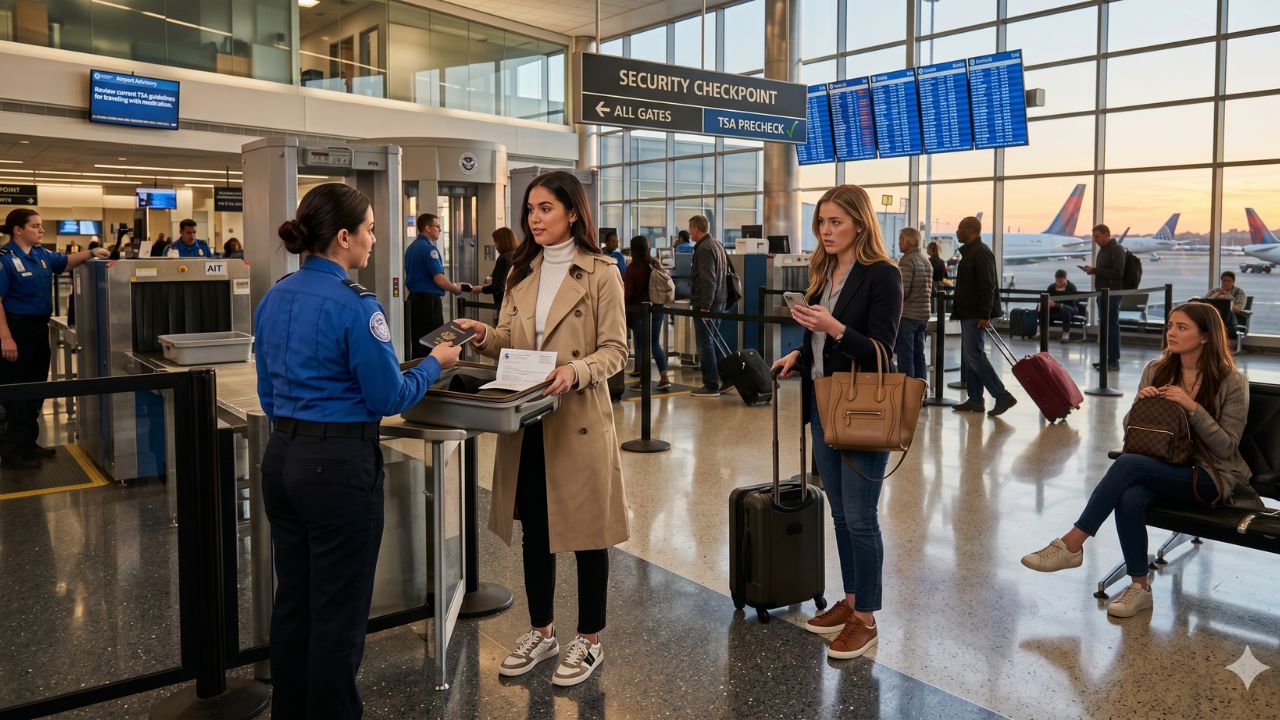
Image generated by AI
In a definitive response to mounting traveler uncertainty, the Transportation Security Administration (TSA) has officially clarified that its security screening policies regarding medical cannabis remain entirely unchanged. This announcement, issued on May 23, 2026, arrives amid growing public confusion sparked by recent social media rumors and misinterpretations of federal drug reclassification updates. As passengers navigate the highly complex intersection of state-level cannabis legalization and strict federal aviation laws, carriers including Delta Air Lines, American Airlines, and United Airlines are monitoring the situation to mitigate potential boarding delays, passenger disputes, and subsequent flight cancellations or terminal airport disruptions at major transit hubs including New York, Los Angeles, Chicago, and Miami. This timely regulatory clarification stands as a central focal point in breaking airline news and global aviation updates, offering critical intelligence for medical travelers.
Context: Rising Confusion Over Federal Airport Screening Rules
The surge in passenger confusion largely stems from recent media reports highlighting potential shifts in federal drug classification policies, leading many travelers to mistakenly believe that airport security restrictions had been relaxed. In response, officials from the Transportation Security Administration (TSA) have re-emphasized that the agency's primary mission is aviation safety, not drug enforcement.
TSA officers do not actively search for cannabis, medical marijuana, or other illegal substances during routine terminal security screening. However, because airport checkpoints fall under federal jurisdiction, TSA screeners are legally required to refer any suspected controlled substances discovered during baggage screening to local airport law enforcement, triggering a highly variable process that depends entirely on regional municipal laws.
TSA Cannabis Screening and Regional Airport Enforcement Matrix
To help commercial travelers, corporate logistics teams, and consumer advocacy groups evaluate the regional legal landscape, the following list and table summarize the core parameters of federal airport screening:
- Clarification Date: May 23, 2026.
- Federal Screening Authority: TSA focus remains strictly on security threats (weapons, explosives, and prohibited flight items).
- Local Law Enforcement Referral: Mandatory notification of local airport police upon discovery of suspected controlled substances.
- State vs. Federal Jurisdictional Clash: Evolving state-level medical laws do not override federal aviation security frameworks.
- International Restrictions: All cross-border transport of cannabis remains strictly prohibited under severe criminal penalties.
TSA Policy and Regional Airport Enforcement Matrix
The following table outlines the security jurisdiction, local police authority, typical local referral responses, and travel risks across the busiest domestic gateways:
| Regional Airport Gateway | TSA Screening Focus | Local Airport Police Authority | Typical Local Referral Response | Primary Travel Risk |
|---|---|---|---|---|
| Los Angeles (LAX) | Explosives & Weapons | Los Angeles Police Department (LAPD) | Allowed within state limits; possession legal under California law | Federal illegality persists; zero international travel allowed |
| Chicago O'Hare (ORD) | Airspace & Terminal Safety | Chicago Police Department (CPD) | Utilization of airport amnesty boxes; confiscation without arrest | Missed flight departures due to screening delays |
| New York (JFK & LGA) | Luggage & Pax Screening | Port Authority Police (PAPD) | Allowed with valid state-issued medical documentation | Secondary check delays and airline boarding conflicts |
| Miami (MIA) | Pre-Boarding Inspections | Miami-Dade Police Department | Strict medical verification; possible confiscation or local charges | Severe legal penalties for large or improperly packaged volumes |
Section-Wise Breakdown of TSA Screening and Airport Enforcement
Los Angeles International Airport (LAX) and California Gateways
As the premier gateway on the West Coast, Los Angeles International Airport (LAX) operates under California's highly progressive state cannabis laws. While TSA screeners at LAX are bound by federal protocols to report suspected cannabis, the responding Los Angeles Police Department (LAPD) officers typically permit passengers to travel domestically within California or to other legal states, provided the quantity remains within personal legal limits. However, passengers are warned that this local leniency does not insulate them from federal transport laws once their flight departs.
Chicago O'Hare International Airport (ORD) and Illinois Gateways
At Chicago O'Hare International Airport (ORD), the Chicago Police Department (CPD) handles TSA referrals through a balanced approach that prioritizes terminal flow and local legality. The airport has installed dedicated "cannabis amnesty boxes" at security checkpoints, allowing passengers to voluntarily surrender their products before boarding. If a referral is made post-screening, officers typically confiscate the substance if it exceeds state limits, but avoid criminal charges for small, documented medical volumes to prevent broader airport disruptions.
New York Gateways: JFK and LaGuardia (LGA) Airports
Operating under the jurisdiction of the Port Authority Police Department (PAPD), New York's primary hubs—John F. Kennedy International Airport (JFK) and LaGuardia Airport (LGA)—see high volumes of medical travelers. Following the legalization of adult-use cannabis in New York State, PAPD officers generally do not arrest passengers carrying small, personal amounts of medical cannabis, particularly when accompanied by valid medical certification. Nonetheless, travelers are subject to secondary screening delays, which can lead to missed boarding gates during peak holiday travel periods.
Miami International Airport (MIA) and Florida Gateways
In contrast to West Coast and Northeast hubs, Miami International Airport (MIA) operates under Florida's stricter, medical-only regulatory framework. The Miami-Dade Police Department conducts rigorous inspections of any substances referred by TSA, requiring passengers to present active, state-approved medical marijuana cards. Improperly packaged products, lack of documentation, or volumes exceeding prescription limits can result in confiscation, intensive questioning, or formal criminal charges, highlighting the inconsistent nature of regional airport travel.
Industry Response: Airlines Navigate Passenger Boarding Challenges
Commercial carriers are increasingly caught in the middle of the jurisdictional rift between federal security guidelines and evolving state laws. The Federal Aviation Administration (FAA) prohibits the transportation of federally illegal substances aboard commercial aircraft, meaning airlines must maintain zero-tolerance policies in their contracts of carriage.
When passengers are delayed at TSA checkpoints due to local police referrals, gate agents are forced to process last-minute standby travelers, creating booking friction and delaying aircraft pushbacks. Carriers like Delta, American, and United urge passengers to review transportation guidelines issued by the Department of Transportation (DOT) before heading to the terminal to ensure seamless boarding operations.
Passenger and Consumer Impact: Navigating Terminal Uncertainty
For the millions of medical cannabis patients who rely on prescribed treatments for chronic medical conditions, the lack of a uniform federal travel policy is a source of severe travel anxiety. Passengers often face inconsistent enforcement depending on the specific airport, local police shift, and individual screeners, turning routine flights into stressful experiences. Missed connections, confiscated medications, and the threat of local prosecution can disrupt holiday travel plans and lead to significant financial losses.
Advocacy groups have called for updated federal transportation standards that distinguish legal, doctor-prescribed medical cannabis from illicit trafficking. However, until federal statutory changes are formally enacted, passengers must navigate a complex, localized patchwork of rules that offer no guarantees of smooth transit.
What This Means for Travelers: Actionable Advice
To minimize the risk of airport delays and legal complications when traveling domestically, passengers should follow these essential guidelines:
- Carry Comprehensive Documentation: Always keep your doctor's prescription, medical cannabis card, and relevant state certification with your travel documents.
- Understand Destination State Laws: Research the cannabis regulations of your arrival destination, as local police enforcement varies significantly between states.
- Keep Quantities Small: Only carry personal, prescribed medical volumes that clearly align with your documented medical necessity.
- Use Original Prescription Packaging: Keep all medical cannabis products in their original dispensary containers with clear labeling to assist responding officers.
- Absolutely Avoid International Travel: Never attempt to cross international borders with any cannabis products, as doing so constitutes a severe federal crime regardless of medical status.
FAQ: TSA Airport Cannabis Policy and Screening 2026
Can I legally fly with medical cannabis within the United States?
While TSA does not actively search for cannabis, it remains federally illegal. If found during screening, TSA is legally required to refer the matter to local airport police, whose response depends on local state laws.
What happens if TSA screeners discover cannabis in my baggage?
TSA will notify local airport law enforcement officers, who will evaluate the situation based on local state laws, documentation, and quantity, deciding whether to let you proceed, confiscate the product, or take legal action.
Does federal cannabis reclassification change TSA screening rules?
No, recent federal reclassifications have not changed TSA's airport screening protocols. TSA continues to operate under federal aviation guidelines focused strictly on safety threats and explosives.
Macroeconomic Industry Analysis: The State-Federal Jurisdictional Rift
Aviation policy experts emphasize that the ongoing confusion surrounding TSA cannabis rules highlights a growing structural gap in US transportation infrastructure. Evolving state-level legislation has outpaced the slower legislative process of federal transportation reform, leaving federal agencies like the TSA in a difficult regulatory position.
This jurisdictional rift complicates airspace coordination and gate management, as airlines and airport authorities struggle to maintain consistent operational flows across different states. Until Congress establishes unified national guidelines for medical travel, the airport environment will continue to be characterized by operational inconsistencies that affect overall network efficiency.
Conclusion: Seeking Unified Aviation Security Standards
The TSA’s recent policy clarification serves as a powerful reminder of the physical and legal limits of domestic air travel. While individual states continue to modernize their legal frameworks, the federal government maintains strict authority over the nation’s airspace and airport security checkpoints.
For the passenger, this means that safety and preparation remain the absolute priorities. As the aviation industry recovers and adapts to changing social norms, resolving the jurisdictional conflicts at airport terminals will require a coordinated effort between federal lawmakers, state authorities, and airline partners to ensure a safe, predictable, and seamless journey for all.
Key Takeaways
- Policy Unchanged: TSA officially confirms that its medical cannabis air travel policy remains completely unchanged as of May 23, 2026.
- Referral Mandate: TSA officers do not actively search for drugs, but are legally required to refer discovered cannabis to local airport police.
- State vs. Federal Conflict: Airports remain federal territory, meaning state legalization does not guarantee legal air travel.
- Local Policing Variances: Enforcement responses range from LAPD permission at LAX to CPD amnesty boxes at ORD and Miami-Dade confiscation at MIA.
- No International Travel: Carrying cannabis across international borders remains strictly prohibited and carries severe criminal penalties.
- Traveler Caution Advised: Medical patients should carry valid state-issued cards, use original packaging, and anticipate potential terminal delays.
Related Travel Guides
TSA Medical Cannabis Airport Screening Rules and Traveler Experiences on Reddit in 2026
Disclaimer
This article is for informational and educational purposes only. It does not constitute legal, financial, or professional advice. While we strive to provide accurate and up-to-date information, travel policies, regulations, and conditions change rapidly. Always verify information with official sources before making travel decisions. Nomad Lawyer makes no representations about the accuracy, reliability, completeness, or suitability of the information provided. Readers should consult qualified professionals for advice specific to their circumstances. The views expressed in this article are those of the author and do not necessarily reflect the views of Nomad Lawyer.
Kunal K Choudhary
Co-Founder & Contributor
A passionate traveller and tech enthusiast. Kunal contributes to the vision and growth of Nomad Lawyer, bringing fresh perspectives and driving the community forward.
Learn more about our team →