
Breaking Airline News: Emirates Deploys Massive Starlink Wi-Fi Network to Shield Passengers from Terrifying In-Flight Travel Chaos
Breaking airline news: Amidst a terrifying era of severe holding patterns and massive tarmac delays, Emirates executes a brilliant tactical defense, launching massive Starlink Wi-Fi networks to rescue travelers from digital isolation and transit chaos.

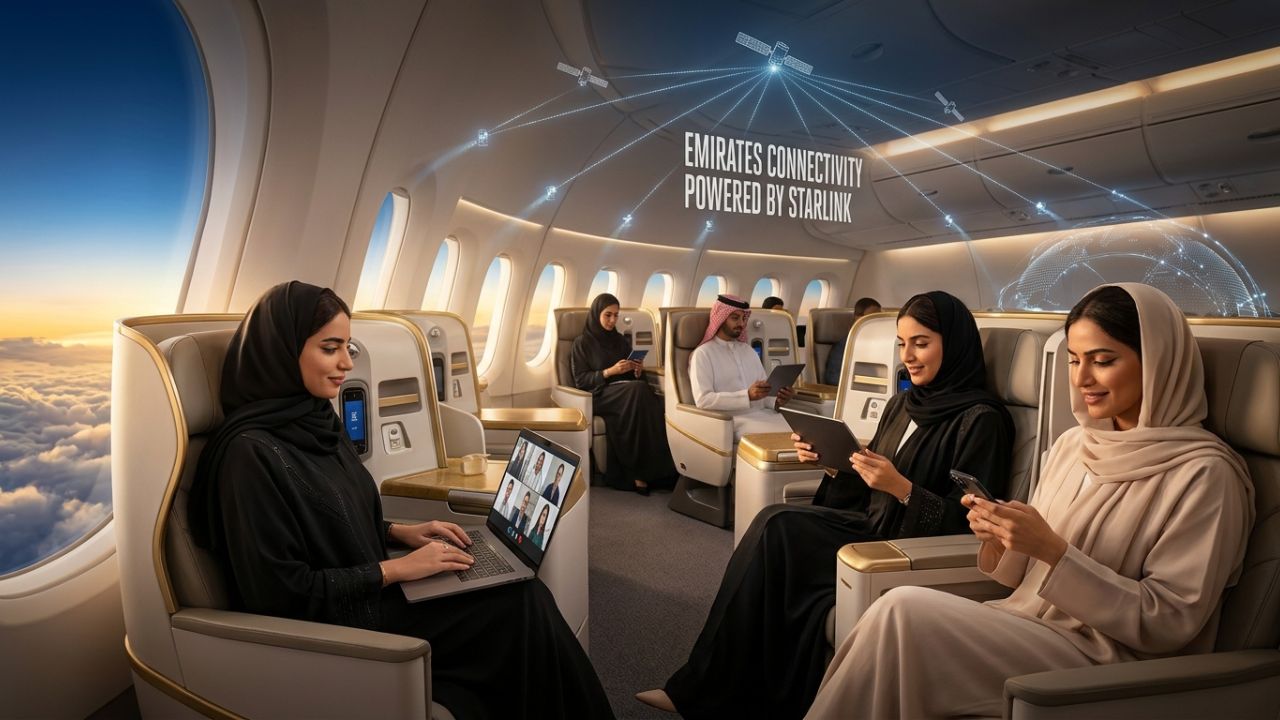
Image representing the intense strategic battle as global aviation authorities desperately deploy massive Low-Earth Orbit satellite networks to combat severe in-flight friction and bypass paralyzing digital isolation during massive travel disruptions.
Breaking Airline News: Emirates Deploys Massive Starlink Wi-Fi Network to Shield Passengers from Terrifying In-Flight Travel Chaos
As paralyzing airport congestion, terrifying tarmac delays, and severe operational meltdowns violently threaten to completely trap passengers in isolated metal tubes for hours, a massive global transit titan has executed a high-stakes technological maneuver. In a desperate bid to physically and psychologically rescue global travelers from the terrifying threat of extreme travel chaos triggered by digital blackouts, Emirates has aggressively accelerated a massive tactical defense. Officially deploying Elon Musk’s SpaceX Starlink satellite network across its intercontinental fleet, the Dubai-based carrier is forcefully rewriting how passengers survive massive delays. By aggressively establishing this unified, high-speed digital lifeline, Emirates is directly fighting to prevent the complete collapse of the passenger experience. The airline is ensuring that furious corporate travelers and anxious tourists are no longer trapped by the terrifying unreliability and severe psychological friction historically defining legacy in-flight connectivity during massive operational groundings.
In a harrowing display of modern aviation vulnerability, the sheer logistical nightmare of attempting to survive a sudden three-hour holding pattern or a massive tarmac delay has historically forced passengers into terrifying digital isolation. For years, attempting to maintain communication with family or rebook a blown connection required travelers to rely on agonizingly slow, legacy geostationary satellite internet systems orbiting at a terrifying 36,000 kilometers above the Earth. This disjointed operational model frequently triggered massive bandwidth crashes, data packet loss, and complete communication failure the exact moment thousands of stranded passengers tried to get online. However, Emirates is aggressively fighting back against this structural paralysis. By forcefully injecting low-Earth orbit (LEO) Starlink technology into its massive wide-body fleet, the airline ensures that passengers can violently slash their exposure to cascading logistical failures. This highly optimized digital routing completely decompresses cabin anxiety, ultimately shielding travelers from the agonizing misery of paralyzed transport networks by guaranteeing unmatched streaming, real-time video conferencing, and instant data transfers.
Expanded Overview: The Massive Scale of the Transit Contagion
The terrifying crisis of overwhelming passenger stress currently gripping complex global itineraries brutally exposes the severe limitations of flying without robust digital armor. Recognizing that aggressively forcing travelers to endure hours of delayed flight time without high-speed internet leads directly to severe psychological friction and cabin rage, aviation authorities are attempting to forcefully decompress the tension. The sheer scale of this Emirates defense operation is immense. Speaking at the Berlin Air Show, Emirates President Tim Clark delivered a massive endorsement of the SpaceX technology, confirming that consumer engagement has violently exceeded expectations. The airline has officially committed to fully equipping its entire 232 wide-body fleet by the middle of 2027. Astonishingly, official figures confirm that more than 650,000 passengers have already utilized the active Starlink system, entirely bypassing the terrifying threat of connection-induced travel chaos.
Section-Wise Breakdown: The Operational Realignment
Breaking the Budget Sector Gridlock
To survive the terrifying surge in global travel demand, airlines must differentiate or die, and the budget sector is currently engaged in a massive, violent ideological war over this technology. Wizz Air is aggressively utilizing the tech to shatter traditional budget paradigms, committing to a free, high-speed Starlink rollout commencing in 2027. Conversely, Ryanair Chief Executive Michael O’Leary has aggressively rejected the technology. O'Leary cited a terrifying financial penalty, calculating that the drag of the satellite radomes and hardware costs would trigger a massive $250 million annual capital expenditure, triggering a highly publicized clash with Elon Musk. Similarly, easyJet maintains a deeply cautious fiscal stance, proving that offering free internet violently conflicts with traditional low-cost survival models.
Deploying the Global Tactical Shield
Looking beyond the terrifying impact of isolated fleets, this massive technological shift is aggressively conquering the global airspace. The Middle East is leading the violent charge, with Qatar Airways having successfully activated Starlink in October 2024. Flydubai and Bahrain’s Gulf Air are rapidly executing aggressive installation timelines. Across the globe, the adoption rate is terrifyingly fast. The Lufthansa Group (Swiss, Austrian, Brussels Airlines) is heavily modifying its fleets. In the United States, Southwest Airlines is executing a massive sprint, targeting over 300 Starlink conversions by year-end, while American Airlines will violently upgrade more than 500 narrow-body aircraft starting in early 2027. United Airlines, Hawaiian Airlines, Air France, airBaltic, JSX, Alaska Airlines, Air New Zealand, Korean Air, Air Busan, and the IAG conglomerate (British Airways, Aer Lingus, Iberia, Vueling) have all initiated massive defensive upgrades.
Securing the Orbital Dominance
The massive infrastructural shift aggressively centers around capturing the sky before competitors can launch. While Elon Musk’s SpaceX currently operates with terrifying dominance—holding contracts for over 7,000 global aircraft according to Valour consultancy—a massive war for orbit is brewing. Jeff Bezos’ Amazon Project Kuiper (Amazon Leo) is aggressively attempting to shatter the monopoly, successfully securing massive strategic commitments from major American carriers Delta Air Lines and JetBlue Airways, ensuring that airlines will soon have multiple massive satellite shields to deploy against in-flight travel chaos.
Global Satellite Wi-Fi Integration Matrix
To fully comprehend the massive logistical and strategic fallout of this new technological integration, corporate travel managers and affected tourists must review the exact operational metrics defining the global Starlink deployment. The following matrix provides a granular breakdown of the specific, officially verified strategic connectivity data driving this massive disruption mitigation effort.
| Strategic Aviation Metric | Confirmed Connectivity Data |
|---|---|
| Emirates Fleet Target | 232 Wide-Body Aircraft by Mid-2027 (>650,000 pax flown) |
| Legacy Satellite Altitude Limit | Geostationary Orbit at ~36,000 Kilometers |
| Budget Airline Rejecting Tech | Ryanair (Citing $250 Million Annual Capex) |
| United States Narrow-Body Targets | Southwest (>300 by year-end), American (>500 by early 2027) |
| Emerging Orbital Competitor | Amazon Project Kuiper (Delta Air Lines, JetBlue) |
| Current Starlink Market Dominance | >7,000 Global Aircraft Contracts Secured (Valour) |
Passenger Impact: Surviving the Tarmac Delay
For the millions of global tourists and corporate commuters attempting to navigate rapidly fluctuating flight schedules, this massive Starlink deployment represents a highly anticipated lifeline against severe operational delays. The brutal reality of enduring a terrifyingly sudden three-hour tarmac delay while your legacy Wi-Fi violently crashes, preventing you from rebooking your missed connection or attending a vital corporate video call, inflicts intense psychological stress and completely destroys meticulously planned itineraries. By aggressively deploying this massive low-latency network, airlines are attempting to actively prevent the terrifying friction that results in severe cabin rage and entirely ruined business deals.
Survival Guide for Transit Travelers
Travelers desperately preparing to navigate the modernized global network must immediately execute the following survival protocols:
- Leverage LEO Connectivity: Passengers attempting complex intercontinental jumps must aggressively filter their bookings to prioritize carriers offering Starlink (or emerging Amazon Leo) capability; attempting to rely on legacy geostationary Wi-Fi during a massive delay almost guarantees terrifying digital blackouts.
- Exploit Real-Time Rebooking: Because low-Earth orbit latency is practically non-existent, corporate travelers trapped in holding patterns must relentlessly monitor their airline apps via Starlink; if you suspect a missed connection, execute an instant rebooking directly from your seat at 35,000 feet, completely bypassing the massive operational risk of waiting until you land.
- Understand Budget Limitations: Because massive carriers like Ryanair explicitly reject the $250M capex of Starlink, travelers flying ultra-low-cost must physically prepare for absolute digital isolation; download all entertainment and necessary travel documents before arriving at the airport to survive the flight.
Industry Analysis: The Economics of Tactical Distraction
From a strategic aviation perspective, the travel turmoil currently forcing these massive technological realignments highlights the terrifying vulnerability of airlines attempting to pacify stranded passengers without high-speed internet. Industry analysts confirm that securing massive bandwidth via low-Earth orbit satellites is an absolute masterstroke in corporate crisis management. The aggressive Emirates strategy lowers systemic risk, providing passengers with massive, uninterrupted distraction during severe operational meltdowns, ultimately shielding the aviation ecosystem from severe passenger backlash and mitigating the psychological damage of travel chaos.
Conclusion: A Strategic Retreat to Ensure Aviation Survival
As the extremely critical 2026 global travel season accelerates, the massive deployment of SpaceX Starlink across global fleets represents a massive warning to airlines attempting to ignore passenger connectivity demands. The aggressive maneuvering proves that capturing market dominance requires terrifyingly swift and highly optimized hardware integration, ensuring passengers remain connected while shielding them from the brutal reality of operational unreliability. Corporate travel buyers and everyday passengers attempting to navigate this highly unstable era of airport disruptions must embrace these new, highly efficient digital lifelines. By acting aggressively to leverage Starlink-equipped flights, travelers can successfully survive the intense travel surges and completely avoid the paralyzing threat of in-flight digital isolation.
Key Takeaways
- Massive Tactical Bypass: Emirates is aggressively leading a massive global shift toward SpaceX Starlink, targeting 232 wide-body aircraft by mid-2027 to completely bypass the severe travel chaos of in-flight digital blackouts.
- Crushing Legacy Technology: Low-Earth orbit satellites completely shatter the terrifying latency and bandwidth restrictions historically inflicted by legacy geostationary satellites operating at 36,000 kilometers.
- Budget Sector War: While Wizz Air aggressively embraces Starlink for 2027, Ryanair officially rejected the technology, citing a massive $250 million annual capital expenditure penalty.
- Massive U.S. Deployment: American carriers are violently scaling the tech, with Southwest targeting over 300 conversions this year, and American Airlines equipping over 500 narrow-body jets starting in early 2027.
- Traveler Advisory: Passengers must aggressively seek out Starlink-enabled carriers to secure high-speed inflight rebooking capabilities, entirely shielding themselves from the severe operational unpredictability and digital isolation caused by massive tarmac delays.
Related Travel Guides
Disclaimer
This article is for informational and educational purposes only. It does not constitute legal, financial, or professional advice. While we strive to provide accurate and up-to-date information, travel policies, regulations, and conditions change rapidly. Always verify information with official sources before making travel decisions. Nomad Lawyer makes no representations about the accuracy, reliability, completeness, or suitability of the information provided. Readers should consult qualified professionals for advice specific to their circumstances. The views expressed in this article are those of the author and do not necessarily reflect the views of Nomad Lawyer.
Kunal K Choudhary
Co-Founder & Contributor
A passionate traveller and tech enthusiast. Kunal contributes to the vision and growth of Nomad Lawyer, bringing fresh perspectives and driving the community forward.
Learn more about our team →