
TSA Seizes Concealed Pocketknife at Dane County Regional Airport as Checked Bag Fees Hit $100
A traveler at Madison's MSN airport attempted to bypass a $100 checked baggage fee by taping a pocketknife to a silver pole in her carry-on, highlighting a growing trend of fee-avoidance risks.

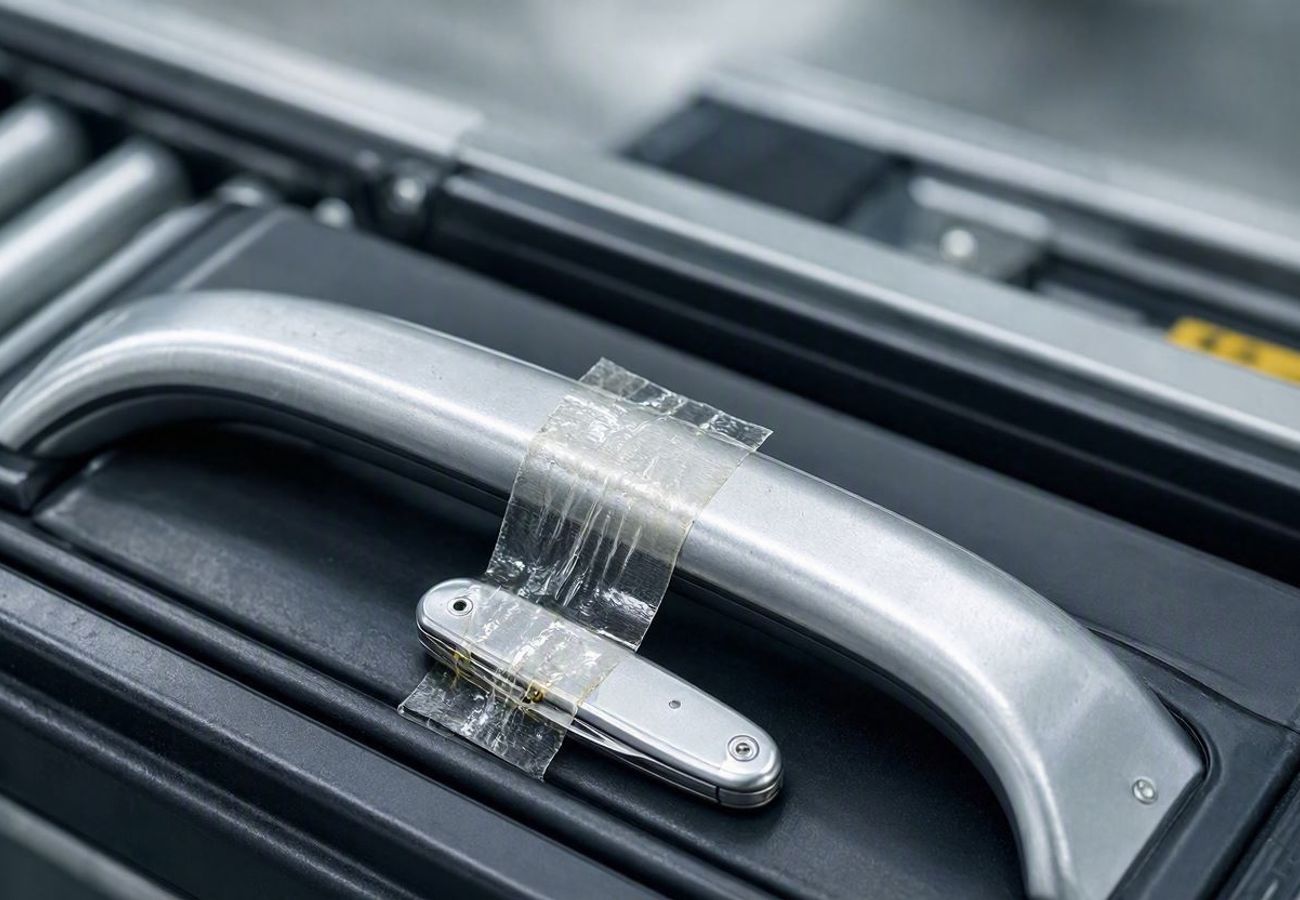
Image generated by AI
Checked baggage fees for several U.S. carriers have surged toward the $100 mark in 2026, creating a financial incentive for passengers to risk federal penalties by smuggling banned items into the cabin. This economic pressure was recently evidenced at Dane County Regional Airport (MSN) in Madison, Wisconsin, where a traveler attempted to conceal a pocketknife within her carry-on luggage to avoid the cost of a checked bag.
The MSN Seizure in Numbers
The incident at Madison's MSN airport provides a stark data point regarding the intersection of airline pricing and passenger behavior. The traveler in question attempted to bypass a $100 checked baggage fee by using a specific concealment method: taping a silver pocketknife to a metallic silver pole located at the bottom of her carry-on bag.
The detection was the result of high-resolution X-ray screening. TSA Officer Callie Meis, a 22-year veteran of the agency, flagged the anomaly. The subsequent manual inspection by Property Search Officer Jim Kohn, who has 21 years of experience, confirmed that the item was "artfully concealed." This specific attempt to blend a silver object against a silver background indicates a calculated effort to deceive imaging technology, rather than an accidental oversight.
The financial disparity in this case is extreme. The item seized was a $5 pocketknife. The traveler risked a federal civil penalty—which can reach thousands of dollars—to save a $100 fee. This 20:1 ratio of potential penalty to saved cost highlights a growing desperation among budget-conscious travelers as ancillary fees continue to climb.
Fee-Avoidance Trends and Regulatory Context
The 2026 aviation market has seen a systemic shift in how carriers monetize luggage. While basic economy fares remain competitive, the "unbundling" of services has pushed checked bag costs to historic highs. This shift correlates with an increase in "intentional concealment" cases reported at security checkpoints across the United States.
Historically, most banned items found in carry-ons are the result of negligence—items forgotten in side pockets or lining. However, the MSN incident represents a shift toward active evasion. When compared to regional benchmarks, the $100 fee cited by the passenger is significantly higher than the industry average for the first checked bag seen in previous years.
The following table illustrates the shift in baggage cost dynamics and the resulting risk profile for the modern traveler.
| Metric | Historical Average (Pre-2024) | 2026 Market Trend | Impact on Passenger Behavior |
|---|---|---|---|
| First Checked Bag Fee | $30 - $60 | Up to $100 | Increased attempt to use carry-on only |
| Common Seizure Cause | Forgetfulness/Negligence | Intentional Concealment | Higher frequency of federal referrals |
| Item Value vs. Fee | Low Ratio | High Ratio | Risking civil penalties for low-value items |
| Detection Technology | Standard X-Ray | Advanced Imaging/AI | Lower success rate for "blending" items |
This trend is mirrored in broader industry data. According to the International Air Transport Association (IATA), the push toward ancillary revenue is a primary driver for airline profitability in the post-recovery era. As airlines lean more heavily on these fees, the friction between corporate pricing and passenger compliance increases.
What This Means for Travelers
For those navigating U.S. airports in late 2026, the data suggests that the "risk-reward" calculation for avoiding baggage fees is heavily skewed against the passenger. TSA's current imaging capabilities are specifically tuned to detect the types of "blending" techniques used in the MSN case.
If you are planning travel in Q4, adhere to the following data-backed booking and packing strategies:
- Audit Your Gear via Official Channels: Use the TSA "What Can I Bring?" tool. The MSN incident proves that "artful concealment" is an ineffective strategy against veteran officers and modern scanners.
- Calculate the Penalty Risk: A federal civil penalty far outweighs a $100 bag fee. If an item is prohibited in the cabin, the only statistically safe option is to pay the fee or ship the item via a third-party courier.
- Budget for Ancillaries: When comparing flight prices, calculate the "True Cost of Travel" by adding the $100 checked bag fee to the base fare. This prevents the last-minute financial panic that leads to risky security decisions.
Projection: The Future of Aviation Fees and Security
Based on current trajectories, we expect a further increase in the use of AI-driven screening at checkpoints. The ability of Officer Meis to flag a silver-on-silver concealment suggests that human expertise remains vital, but the integration of automated threat detection will likely make "hiding" items nearly impossible.
Simultaneously, as checked bag fees continue to rise, we anticipate a market correction where more carriers may introduce "tiered" baggage bundles to reduce the number of passengers attempting to smuggle prohibited items into the cabin. The Dane County Sheriff’s Office involvement in the MSN case serves as a warning: the transition from a security seizure to a law enforcement matter is instantaneous when "intent to conceal" is admitted.
FAQ: TSA Regulations and Baggage Fees 2026
Will checked baggage fees continue to rise in 2026? Yes. Data indicates that airlines are increasing ancillary fees to offset rising operational costs. Some carriers have already reached the $100 threshold for single bags.
Can I be arrested for having a pocketknife in my carry-on? While simple possession often results in the item being surrendered, admitting to "intentional concealment" can lead to law enforcement involvement and federal civil penalties.
Is there any way to avoid checked bag fees legally? Travelers can use loyalty program status, specific credit cards offered by airlines, or invest in "personal item" bags that maximize the dimensions allowed for free carry-ons.
Does TSA always confiscate banned items? Generally, yes. While officers have some discretion, items like pocketknives are strictly prohibited in the cabin and must be checked or abandoned.
Saving a hundred dollars is not worth a federal record.
Related Travel Guides
Disclaimer
This article is for informational and educational purposes only. It does not constitute legal, financial, or professional advice. While we strive to provide accurate and up-to-date information, travel policies, regulations, and conditions change rapidly. Always verify information with official sources before making travel decisions. Nomad Lawyer makes no representations about the accuracy, reliability, completeness, or suitability of the information provided. Readers should consult qualified professionals for advice specific to their circumstances. The views expressed in this article are those of the author and do not necessarily reflect the views of Nomad Lawyer.
Preeti Gunjan
Contributor & Community Manager
A passionate traveller and community builder. Preeti helps grow the Nomad Lawyer community, fostering engagement and bringing the reader experience to life.
Learn more about our team →