
Travel Thailand Asia Hit: Airspace Shutdowns Spark Mass Flight Cancellations
Travel Thailand Asia faces unprecedented disruptions in March 2026 as regional airspace shutdowns trigger widespread flight cancellations across Thailand, Malaysia, and Indonesia. Thousands of passengers stranded as ticket prices surge amid ongoing conflict.

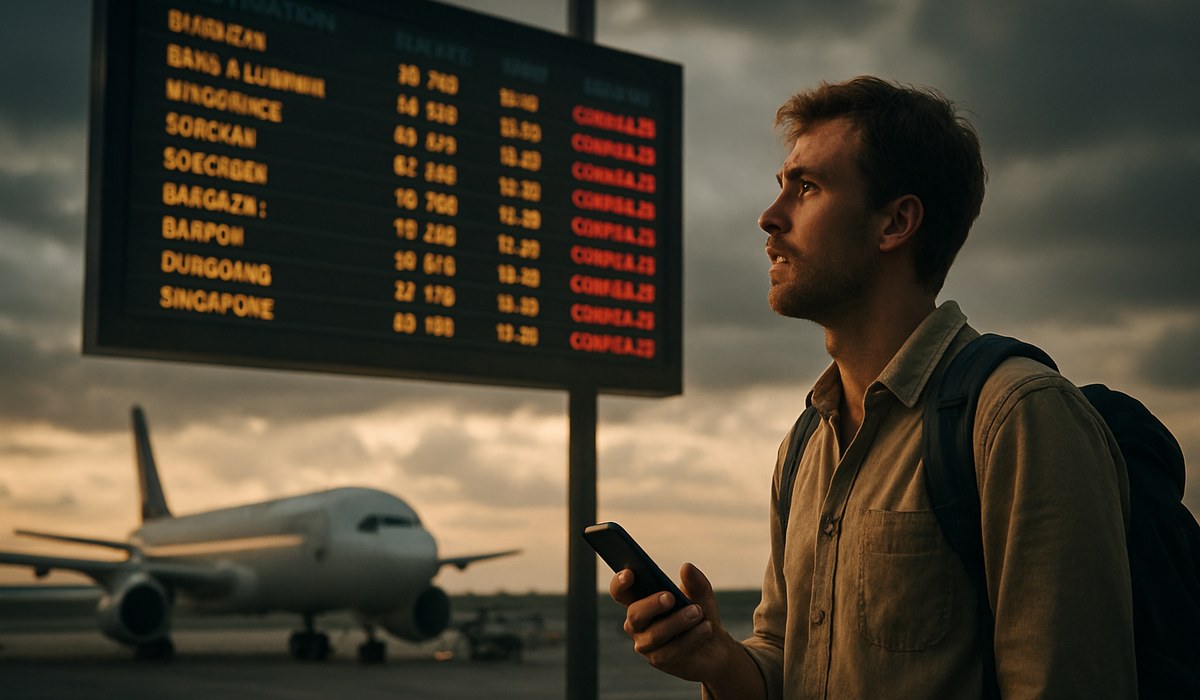
Image generated by AI
Southeast Asia's Aviation Crisis: What Travelers Must Know Now
Multiple airspace closures across Thailand, Malaysia, and Indonesia have created cascading flight cancellations affecting over 50,000 passengers daily. The disruptions began March 20, 2026, when regional authorities implemented emergency airspace restrictions due to ongoing geopolitical tensions. Bangkok's Suvarnabhumi Airport (BKK), Kuala Lumpur International (KUL), and Bali's Ngurah Rai Airport (DPS) face severe operational constraints. Airlines including Thai Airways, Malaysia Airlines, Garuda Indonesia, and budget carriers Lion Air report significant schedule reductions. Travel Thailand Asia now requires immediate contingency planning for anyone departing or transiting through the region during the next 7–10 days.
Airspace Shutdowns Impact Major Thailand Tourism Routes
Regional authorities have closed critical flight corridors affecting inbound and outbound traffic to Thailand. Bangkok Suvarnabhumi Airport (BKK) alone has cancelled over 180 flights since March 22. Thai Airways International (THAI) suspended service on 12 international routes, including Bangkok-Singapore (BKK-SIN), Bangkok-Hanoi (BKK-HAN), and Bangkok-Hong Kong (BKK-HKG) operations. Domestic routes between Bangkok and Phuket (HKT), Chiang Mai (CNX), and Krabi (HKT) experience hourly delays averaging 2–4 hours. The Civil Aviation Authority of Thailand (CAAT) estimates normal operations will not resume until late March at earliest. Travelers can monitor real-time flight status through FlightAware and airline websites before attempting airport arrival.
Malaysia Airlines and Regional Carriers Face Operational Gridlock
Malaysia Airlines (MH) has reduced flight capacity by 35% across Southeast Asian routes as Kuala Lumpur International Airport (KUL) operates at restricted capacity. The airline cancelled flights on the lucrative Kuala Lumpur-Bangkok (KUL-BKK), Kuala Lumpur-Singapore (KUL-SIN), and Kuala Lumpur-Hong Kong (KUL-HKG) routes through March 25. AirAsia X and budget carriers operating from Malaysia have implemented rolling cancellations affecting tourism destinations throughout the region. Ground staff at KUL report 8-hour passenger backlogs as rebooked passengers overwhelm customer service centers. Malaysia's tourism authority estimates the disruptions will cost the nation RM 120 million (USD 26 million) in lost revenue per day.
Indonesia's Aviation Network Confronts Severe Capacity Constraints
Bali's Ngurah Rai Airport (DPS) suspended international departures for 12 hours on March 22 due to airspace restrictions affecting Indonesia airspace. Garuda Indonesia (GA), Indonesia's flag carrier, reduced flights by 40% on routes connecting Jakarta (CGK), Bali, and Medan (KNO). Lion Air, Southeast Asia's largest budget airline by passenger volume, reported stranded travelers at DPS exceeding 8,000 passengers on a single day. The airport authority implemented a strict cap on departing aircraft, limiting operations to essential cargo and repatriation flights. Tourism to Bali, traditionally welcoming 150,000+ international visitors weekly, now faces a projected 65% decline for the final week of March. Indonesia's transport ministry coordinated emergency ground transport for stranded passengers unable to depart by air.
Live Flight Status and Real-Time Tracking Resources
Travelers should use official monitoring tools to verify departure and arrival updates before traveling to Thailand, Malaysia, or Indonesia. FlightAware provides real-time flight tracking, current delays, and airport congestion data updated every 30 seconds. Individual airline websites (Thai Airways, Malaysia Airlines, Garuda Indonesia, Lion Air) publish cancellation lists and rebooking options directly. The International Air Transport Association (IATA) maintains current safety alerts and operational notices for all affected Southeast Asian airports. Airport authority websites for BKK, KUL, and DPS post hourly operational updates. Download airline mobile apps to receive instant push notifications regarding your specific flight. Check tracking resources no less than 3 hours before scheduled departure time.
Passenger Rights and Financial Compensation During Disruptions
The U.S. Department of Transportation enforces passenger rights policies that apply to flights operated by foreign carriers on U.S.-bound routes; similar protections exist under European and Asian regulations. Passengers on cancelled flights hold legal entitlement to rebooking on alternative airlines, full refunds, or compensation depending on regional law. Affected travelers should request written confirmation of cancellation from airlines within 24 hours of notification. Document all expenses incurred due to disruptions, including hotel accommodations, meals, and ground transport, for potential reimbursement claims. Airlines operating to Thailand, Malaysia, and Indonesia must comply with local aviation authority regulations regarding passenger compensation. Most carriers offer travel credits or alternative routing instead of cash refunds; negotiate for full refunds if the new route significantly extends travel time.
| Airport Code | City | Cancellations (Mar 22-23) | Primary Affected Routes | Status |
|---|---|---|---|---|
| BKK | Bangkok, Thailand | 180+ | International departures to Asia-Pacific | Restricted capacity |
| KUL | Kuala Lumpur, Malaysia | 95+ | Cross-border flights to Thailand, Singapore | Rolling cancellations |
| DPS | Bali, Indonesia | 120+ | International routes to Australia, Asia | Suspended departures (12hr+) |
| CNX | Chiang Mai, Thailand | 45+ | Domestic flights to Bangkok | 2-4 hour delays |
| CGK | Jakarta, Indonesia | 60+ | Long-haul international flights | Rerouted via alternate airports |
| SIN | Singapore (Changi) | 35+ | Transiting flights affected by Thai airspace | Capacity constraints |
What This Means for Travelers: Actionable Steps
Travelers with upcoming flights to or through travel thailand asia destinations must act immediately to protect their plans and finances. Follow these numbered steps:
-
Contact your airline today — Call customer service directly (not online chat) to confirm your flight status before March 24.
-
Request written cancellation confirmation — Obtain email documentation of any cancellation to file compensation claims with your credit card company or travel insurer.
-
Book alternate routing now — Reroute through Singapore, Hong Kong, or Kuala Lumpur if possible to avoid closed Thai airspace.
-
Purchase travel insurance immediately — Policies activate for new bookings; existing coverage may exclude "known events," so upgrade if your policy allows.
-
Collect receipts for all expenses — Save hotel, meal, and ground transport receipts for airline reimbursement claims under passenger rights regulations.
-
Verify return flight status daily — Set mobile app alerts for real-time notifications on departure changes throughout your journey.
-
Allow 24+ hours at connecting airports — Tight connections risk missing onward flights due to cascading delays; book with minimum 6-hour layovers if available.
Frequently Asked Questions: Travel Thailand Asia Disruptions
What is causing the airspace shutdowns affecting travel thailand asia in March 2026? Regional authorities implemented emergency airspace restrictions due to ongoing geopolitical tensions affecting southern Thailand and maritime boundaries. The restrictions, announced March 20, create no-fly zones that force aircraft to significantly longer alternate routes or complete rerouting through alternative airports.
Which airlines are still operating flights to Thailand, Malaysia, and Indonesia? Thai Airways, Malaysia Airlines, Garuda Indonesia, Lion Air, AirAsia X, Singapore Airlines, and Cathay Pacific continue limited operations with reduced schedules. Budget carriers operating regional routes experience the most severe capacity cuts. Check each airline's website for specific route availability before booking.
Will my travel insurance cover cancellations due to airspace shutdowns? Most travel insurance policies cover force majeure events like airspace closures, but coverage varies significantly. Review your policy's "airspace closure," "government action," and "civil unrest" clauses. File claims immediately with your insurer and retain all documentation of disruptions and related expenses.
How long will the disruptions to travel thailand asia airports continue? Regional authorities have not announced a specific reopening date for closed airspace. Current projections suggest gradual capacity increases through late March, with possible full normalization by March 31, 2026. Monitor official announcements from Thailand's CAAT, Malaysia's DCA, and Indonesia's Transportation Ministry daily.
Related Travel Guides
Disclaimer
This article is for informational and educational purposes only. It does not constitute legal, financial, or professional advice. While we strive to provide accurate and up-to-date information, travel policies, regulations, and conditions change rapidly. Always verify information with official sources before making travel decisions. Nomad Lawyer makes no representations about the accuracy, reliability, completeness, or suitability of the information provided. Readers should consult qualified professionals for advice specific to their circumstances. The views expressed in this article are those of the author and do not necessarily reflect the views of Nomad Lawyer.
Kunal K Choudhary
Co-Founder & Contributor
A passionate traveller and tech enthusiast. Kunal contributes to the vision and growth of Nomad Lawyer, bringing fresh perspectives and driving the community forward.
Learn more about our team →