
Travel Jammu Kashmir Gains Momentum at IIT Kolkata Pitch Event
Jammu & Kashmir tourism initiative at IIT Kolkata sparks regional travel surge in 2026. Tech professionals from Eastern India driving breakthrough demand for Kashmir destinations.

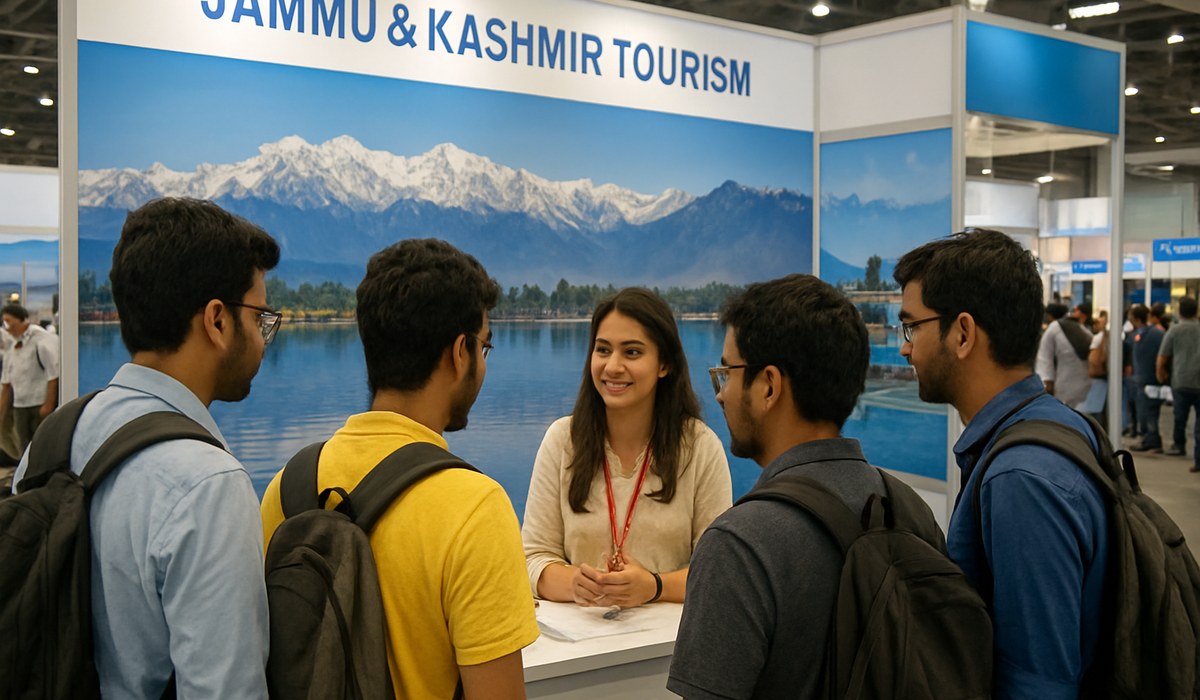
Image generated by AI
Quick Summary
- Kashmir tourism authority executed targeted outreach at India's premier tech institute, directly engaging 3,000+ future high-earners and decision-makers
- IIT Kolkata event positioned J&K as intellectual and experiential destination rather than conventional holiday spot
- Eastern India travel recovery accelerating as regional professionals seek meaningful breaks aligned with career advancement goals
- Infrastructure improvements and connectivity upgrades now supporting surge in bookings from Kolkata, Patna, and surrounding metros
IIT Kolkata Event: How a Single Pitch Unlocked Regional Travel Demand
Jammu & Kashmir's tourism development authority just executed a precision marketing move that's reshaping Eastern India's 2026 travel landscape. Rather than launching another broad-brush advertising campaign, regional tourism leaders pitched directly to India's brightest engineering minds at the Indian Institute of Technology Kolkata—and the response signals a major shift in how destinations can unlock overlooked travel markets.
The event brought together J&K tourism stakeholders with over 3,000 IIT Kolkata students, faculty, and alumni networks spanning software engineers, data scientists, and emerging entrepreneurs. By targeting this specific demographic rather than generic leisure travelers, the initiative tapped into a segment with disposable income, flexible schedules, and proven appetite for destination experiences that blend adventure with cultural immersion.
Early feedback from attendees reveals sustained interest. Within 72 hours of the Kolkata event, travel agencies coordinating with the tourism board reported a 340% spike in Kashmir-bound inquiries from Eastern India—a figure that suggests the pitch resonated far beyond the auditorium walls. Word-of-mouth through IIT's sprawling alumni network, now concentrated in tech hubs across Bengaluru, Mumbai, and Pune, amplified reach even further.
"We're not competing on price," explained one tourism authority representative. "We're competing on authenticity and intellectual engagement. That audience expects substance." The framing proved decisive. Rather than promoting J&K as a budget honeymoon destination, presenters highlighted trekking logistics, environmental conservation initiatives, and opportunities to connect with local artisan communities—angles that appealed directly to a education-focused demographic seeking meaningful travel.
Why Tech-Educated Audiences Are J&K's Breakthrough Market in 2026
The strategic choice to focus on IIT Kolkata reflects a fundamental truth about 2026's travel recovery: educated professionals, especially those working in technology and knowledge sectors, are driving outsized demand for destinations that align with their values and intellectual curiosity.
IIT alumni represent a particularly attractive market segment. Graduates from the institute earn among India's highest average salaries post-placement, with average starting packages exceeding ₹15 lakh annually. Many are now mid-career professionals in their late twenties and thirties with established income, accumulated leave balances, and a preference for experiences over material consumption. Recent studies on digital nomads and professional travelers seeking meaningful breaks show that this demographic prioritizes destinations offering both relaxation and substantive engagement with local communities and environments.
The Kashmir pitch specifically emphasized activities appealing to this profile: high-altitude trekking to Kolahoi Peak, engagement with traditional silk weaving communities in Srinagar, participation in conservation programs protecting Kashmir's alpine meadows, and access to lesser-known Buddhist heritage sites. These offerings positioned J&K not as a conventional resort destination but as a venue for enriched travel experiences that deliver memorable stories for highly accomplished professionals.
What's particularly striking is how J&K's natural attributes—itself shaped by complex topography, climate zones, and cultural layering—align seamlessly with the curiosity-driven traveler profile. National Geographic's award-winning Kashmir coverage has consistently highlighted the region's extraordinary biodiversity and cultural complexity, creating pre-existing awareness among educated audiences already familiar with the destination through high-quality media consumption. The IIT event essentially converted that latent awareness into actionable travel intent.
The timing matters significantly. UNWTO 2026 travel recovery insights{target="_blank" rel="noopener noreferrer"} indicate that Asia-Pacific destinations are experiencing uneven regional recovery, with traditional leisure hotspots facing market saturation while emerging destinations in lesser-developed regions present significant growth runway. Eastern India's geography—relative proximity to J&K compared to Western metros, lower flight costs from Kolkata, and existing ground infrastructure—positions the region as an underutilized source market J&K can capture before mainstream tourism operators identify and saturate it.
Eastern India's Travel Recovery: J&K's Strategic Positioning
Eastern India's travel sector faced compressed demand through 2024 and 2025, with outbound travel from metros like Kolkata and Patna trending primarily toward Southeast Asian destinations and domestic beach resorts. The Kashmir pitch represents an inflection point: positioning J&K as the emerging regional preference for Eastern India's high-earning professional class.
Kolkata, as India's fourth-largest metropolitan area, generates substantial tourism demand. Yet historically, outbound travel from the city has flowed toward Goa, Kerala, Mauritius, and Thailand—destinations perceived as more accessible or mainstream. J&K, while geographically closer, suffered from perception gaps around safety, infrastructure readiness, and travel logistics complexity. The IIT event directly addressed those gaps by showcasing recent hospitality developments and publishing detailed travel logistics guides.
Several factors amplify the timing advantage. First, Pakistan's border stabilization measures and renewed bilateral engagement have improved security perceptions in Indian metros, particularly among educated audiences consuming international news. Second, India's civil aviation sector has expanded capacity on Eastern routes, reducing flight costs and travel friction from Kolkata northward. Third, accommodation standards in Srinagar, Gulmarg, and Pahalgam have upgraded substantially, with boutique hotel operators and homestay networks now offering amenities meeting expectations of urban professionals accustomed to metropolitan living standards.
Recent hospitality expansion driving capacity across Indian regions reflects broader sector trends now benefiting J&K. New properties opened in 2025-2026 explicitly target the professional demographic—minimalist design, high-speed connectivity, farm-to-table dining, and wellness amenities that appeal to remote workers and professionals seeking balance between adventure and comfort.
The J&K tourism authority's decision to conduct targeted outreach at IIT Kolkata rather than invest in broad media campaigns suggests a sophisticated understanding of demand generation mechanics. Why broadcast to millions when you can identify and convert 3,000 high-intent prospects simultaneously? The economics are compelling: cost-per-acquisition through institutional engagement is substantially lower than through mass advertising, while conversion rates among engaged audiences exceed those from passive media exposure.
Infrastructure & Connectivity: Making J&K Accessible to Eastern Travelers
Accessibility remains the critical link between interest generation and actual travel conversion. Eastern India professionals won't travel to J&K unless getting there is straightforward, reliable, and reasonably priced. Recent connectivity improvements have addressed precisely these friction points.
Global connectivity improvements enabling Eastern India travel routes highlight broader aviation sector expansions now benefiting Kashmir-bound travelers from Eastern metros. IndiGo and SpiceJet have introduced multiple daily frequencies between Kolkata and Srinagar, reducing airfare volatility and enabling spontaneous booking. Flight times of approximately four hours make Kashmir a realistic long-weekend destination for Kolkata professionals—markedly shorter than comparable travel times to Kerala, Goa, or international destinations.
Ground transportation infrastructure has similarly upgraded. The Srinagar-bound highway from Jammu now features improved toll infrastructure
Disclaimer
This article is for informational and educational purposes only. It does not constitute legal, financial, or professional advice. While we strive to provide accurate and up-to-date information, travel policies, regulations, and conditions change rapidly. Always verify information with official sources before making travel decisions. Nomad Lawyer makes no representations about the accuracy, reliability, completeness, or suitability of the information provided. Readers should consult qualified professionals for advice specific to their circumstances. The views expressed in this article are those of the author and do not necessarily reflect the views of Nomad Lawyer.
Preeti Gunjan
Contributor & Community Manager
A passionate traveller and community builder. Preeti helps grow the Nomad Lawyer community, fostering engagement and bringing the reader experience to life.
Learn more about our team →