
Boeing 737-900ER's Extended Runway Requirements Expose Aircraft Design Trade-Offs in Modern Aviation
Breaking airline news and aviation industry updates for 2026.

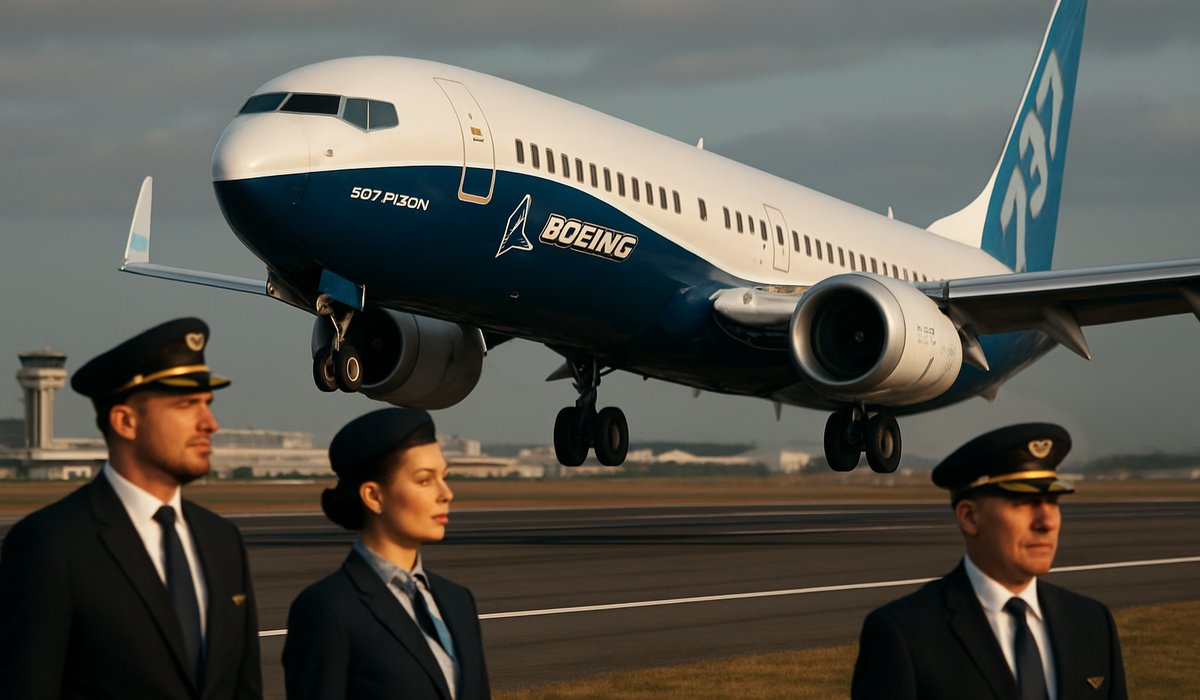
Image generated by AI
Boeing 737-900ER's Extended Runway Requirements Expose Aircraft Design Trade-Offs in Modern Aviation
Engineering compromise reveals structural limits as airlines push for maximum passenger capacity on single-aisle jets
The Weight Problem Behind One of Aviation's Most Utilized Aircraft
The Boeing 737-900ER represents a critical engineering paradox in commercial aviation: a aircraft deliberately engineered to squeeze maximum passenger density into a single-aisle frame, yet constrained by the physical limitations that such ambition creates. As the heaviest variant within the venerable 737 Next Generation family, this widebody competitor-class narrowbody aircraft demands substantially longer takeoff rolls than its predecessors—a operational reality that reshapes how airlines deploy the jet across their networks.
Boeing's strategic calculus was straightforward: develop a narrowbody workhorse capable of transporting over 200 passengers while maintaining operational and maintenance compatibility with the existing 737 fleet ecosystem. The engineering team succeeded in the objective but at a measurable cost: the aircraft's maximum takeoff weight fundamentally requires extended runway lengths compared to smaller 737 variants.
Understanding the Physics of Payload and Performance
The 737-900ER's weight penalty directly impacts acceleration capabilities during critical flight phases. Airlines operating this variant from airfields with runway constraints—particularly at high-altitude or hot-weather airports—encounter performance penalties that demand lighter passenger loads or reduced cargo capacity to meet takeoff safety standards.
This architectural limitation exposes a broader tension within aviation's commercial imperatives. Carriers seeking to maximize revenue per flight operation through increased seating capacity must reconcile those ambitions against hard physical constraints: runway availability, aircraft weight distribution, and fuel burn efficiency.
Industry Implications and Fleet Deployment Strategy
The extended takeoff characteristics have shaped operational decisions across major carriers worldwide. Airlines deploying the 737-900ER must carefully consider route planning, with certain secondary airports requiring operational concessions. This reality underscores why many carriers maintain diverse narrowbody fleets rather than standardizing exclusively on single aircraft types.
Modern aviation increasingly reveals these design compromises. As airlines pursue aggressive cost-reduction strategies through fleet consolidation, aircraft like the 737-900ER illuminate the physics-based limits of single-aisle passenger growth without proportional fuselage width expansion.
The Broader Context: Engineering Versus Economics
The 737-900ER's runway demands represent a microcosm of contemporary aerospace challenges—balancing passenger capacity expansion with the fundamental aerodynamic and structural constraints that define aircraft performance. For airlines weighing fleet acquisition decisions, the extended takeoff roll becomes a critical operational variable influencing profitability across different route networks.
FAQ: Boeing 737-900ER Runway Performance and Aviation Operations
Q: Why does the Boeing 737-900ER require longer takeoff distances than other 737 variants? A: The aircraft's maximum takeoff weight—designed to carry 200+ passengers while maintaining 737 fleet commonality—creates higher mass requiring extended acceleration distances to achieve safe flight velocity.
Q: How does the 737-900ER's takeoff performance impact airline operations? A: Airlines must account for runway length constraints at certain airports, potentially requiring reduced passenger loads, lighter cargo, or alternative aircraft assignments on fuel-limited or high-altitude routes.
Q: What alternatives do carriers have to the 737-900ER for high-capacity narrowbody service? A: Airlines can deploy larger narrowbody aircraft like the Airbus A321 or Boeing 737 MAX 8, each with different weight and performance characteristics suited to specific route requirements.
Q: Does the 737-900ER's weight impact fuel efficiency and operating costs? A: Yes, increased mass translates to higher fuel consumption per flight hour, influencing seat-mile economics and profitability across airline networks.
Q: Which airports face operational constraints with 737-900ER deployments? A: High-altitude airports, hot-weather regions, and secondary airfields with runway limitations frequently experience 737-900ER performance restrictions, requiring operational planning adjustments.
Related Travel Guides
- Alaska Airlines Expands California Network with New Santa Rosa Routes and Revived Long Beach to Seattle Flights for Your 2026 Luxury Escape
- Airlines Middle East Chaos: 208 Flights Canceled in Gulf Region March 2026
- Las Vegas Joins Baltimore and Chicago in New Southwest Airlines Route Expansion to San Jose
Disclaimer
This article is for informational and educational purposes only. It does not constitute legal, financial, or professional advice. While we strive to provide accurate and up-to-date information, travel policies, regulations, and conditions change rapidly. Always verify information with official sources before making travel decisions. Nomad Lawyer makes no representations about the accuracy, reliability, completeness, or suitability of the information provided. Readers should consult qualified professionals for advice specific to their circumstances. The views expressed in this article are those of the author and do not necessarily reflect the views of Nomad Lawyer.
Raushan Kumar
Founder & Lead Developer
Full-stack developer with 11+ years of experience and a passionate traveller. Raushan built Nomad Lawyer from the ground up with a vision to create the best travel and law experience on the web.
Learn more about our team →