
Tourism News: Tokyo's Kanda Shrine Tanabata Festival Offers Travelers a Spiritual Sanctuary from Global Travel Chaos
As severe airport disruptions and endless logistical failures plague international transit, tourists in Tokyo are finding profound cultural refuge at the historic Kanda Shrine Tanabata Festival.

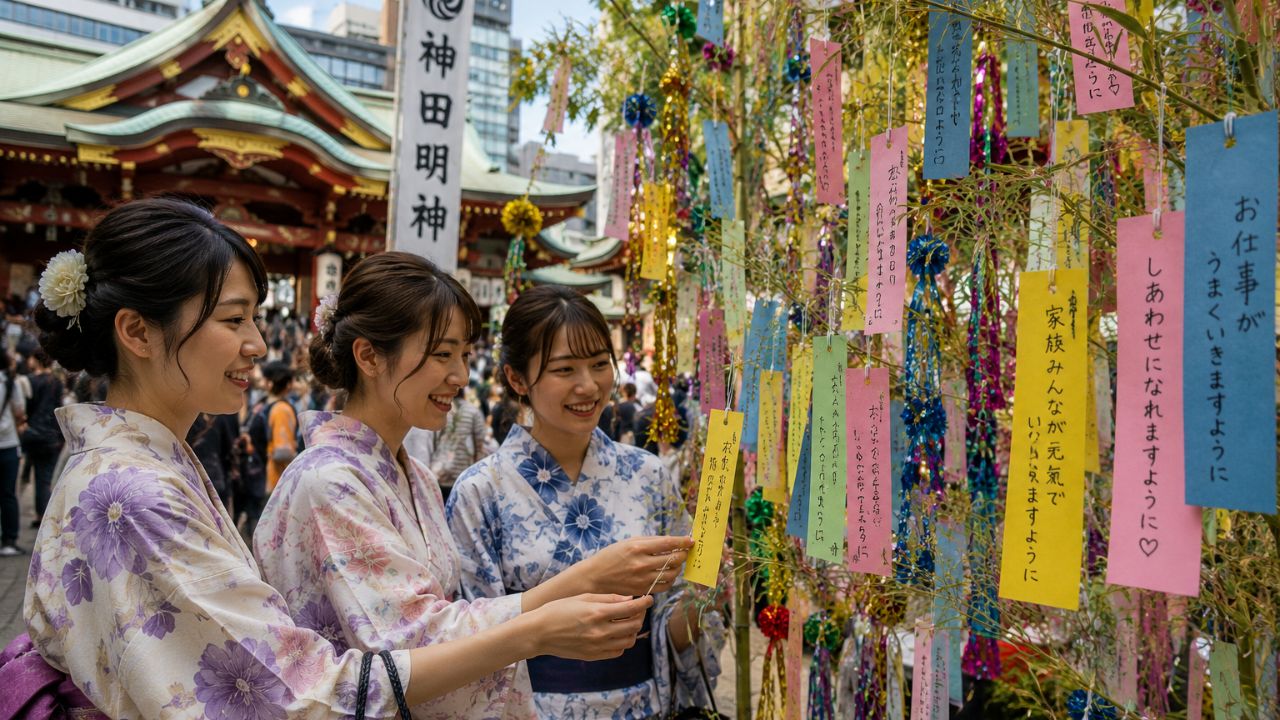
Image generated by AI
Tourism News: Tokyo's Kanda Shrine Tanabata Festival Offers Travelers a Spiritual Sanctuary from Global Travel Chaos
As catastrophic logistical failures and endless security bottlenecks continue to paralyze massive international mega-hubs, weary globetrotters arriving in Japan are aggressively seeking out deep cultural immersion to escape the relentless stress of modern transit.
Image generated by AI
As high-impact airline news platforms rapidly issue continuous aviation updates regarding the intense fragility of the global transit grid, international tourists are actively altering their vacation priorities. With major transit centers frequently battling severe airport disruptions and sudden, rolling flight cancellations, travelers arriving in Japan are exhausted. Consequently, highly immersive, meditative cultural events have seen a massive surge in international attendance. For tourists seeking a profound escape from regional travel chaos, the Kanda Shrine Tanabata Festival in Tokyo's Chiyoda ward offers the ultimate spiritual sanctuary. Deeply rooted in ancient Japanese tradition, this celestial celebration serves as a vital bridge between high-speed modern life and historic lore. By participating in the timeless rituals of Tanabata, international travelers are successfully transforming standard, high-stress sightseeing trips into deeply personal encounters with authentic Japanese heritage.
Expanded Overview: A Meditative Break from the Metropolis
To fully comprehend the massive surge in experiential tourism at historic Japanese sites, industry analysts must examine the psychological toll of modern international transit.
For travelers who have just navigated the brutal realities of congested terminals and lost luggage, the Kanda Shrine offers an immediate, sensory reset. The Tanabata Festival is not merely a local gathering; it serves as a massive cultural anchor for Tokyo. By intentionally stepping off the bustling, neon-lit streets of the metropolis and entering the serene, historically preserved grounds of the shrine, tourists are granted a rare opportunity to completely disconnect from modern time. The sight of vibrant decorations contrasting against centuries-old wooden structures creates a deeply meditative atmosphere, allowing visitors to decompress and reconnect with shared, timeless human values.
Section-Wise Breakdown: The Celestial Legend of Tanabata
The core architecture of the festival's massive appeal relies entirely on its deeply moving, central mythology.
The Tanabata Festival directly honors the ancient and tragic legend of Orihime and Hikoboshi. According to Japanese lore, these two star-crossed lovers were permanently separated by the vast, impassable expanse of the Milky Way. They are permitted by the gods to reunite only once annually—specifically on the seventh day of the seventh month. This powerful narrative deeply emphasizes the enduring themes of love, hope, and perseverance. For international tourists recovering from the grueling realities of global travel, engaging directly with this rich, celestial history provides a profound emotional grounding that cannot be replicated in a standard museum setting.
Section-Wise Breakdown: Experiential Tourism and the Tanzaku Ritual
The administration of the Kanda Shrine has flawlessly evolved to accommodate a massive global audience without sacrificing historical authenticity.
Guests are actively encouraged to transition from passive observers into active participants. The absolute central ritual involves visitors transcribing their private aspirations and wishes onto beautiful, colorful paper strips known as tanzaku. These handwritten wishes are then physically secured within the scenic grounds of the shrine, joining thousands of others fluttering in the summer breeze. To further bridge the gap between ancient lore and modern tourism, the shrine has introduced highly strategic, Tanabata-themed omamori (traditional Japanese amulets). These exclusive charms, featuring gorgeous designs in pink and turquoise, serve as tangible, spiritual mementos for travelers.
Event Details: Kanda Shrine Tanabata Festival Matrix
To ensure international travelers can seamlessly navigate this highly anticipated cultural event, the verified logistical details have been consolidated into the mandatory matrix below.
| Festival Detail | Verified Information |
|---|---|
| Event Location | Kanda Shrine, Chiyoda Ward, Tokyo |
| Festival Date | July 7, 2026 |
| Commencement Time | 4:00 PM |
| Transit Access | Ochanomizu / Shin-Ochanomizu Stations |
| Admission Cost | Free Entry (Small fee for Tanzaku strips) |
| Cultural Ritual | Writing wishes on colorful Tanzaku |
| Exclusive Charms | Pink & Turquoise Omamori |
Traveler Impact: Navigating the Festival Landscape
For the thousands of international tourists utilizing Tokyo's massive transit grid to reach the festival, strategic logistical planning is absolutely critical.
Because the highly sought-after matchmaking omamori are produced in limited quantities, veteran travelers strongly recommend visiting the shrine between mid-June and the actual festival date to secure these exclusive items. The administration has vastly improved English signage to accommodate the massive influx of global tourists, marking a highly successful transition where ancient heritage seamlessly meets modern accessibility. Accessing the Kanda Shrine is highly efficient; travelers simply deploy the Tokyo rail network to reach either the Ochanomizu or Shin-Ochanomizu stations, completely bypassing the intense vehicular gridlock of the surrounding Chiyoda ward.
Industry Analysis: The Evolution of Heritage Management
From a macro-tourism perspective, the Kanda Shrine perfectly illustrates a massive, structural shift in how historical Japanese institutions curate international experiences.
Historically, events like the Tanabata Festival were purely local, community-driven affairs. Today, shrine management utilizes aggressive digital channels for promotion and implements highly structured visitor engagement protocols. The strategic introduction of limited-edition merchandise like the pink and turquoise omamori proves that religious and historical sites now explicitly recognize the massive economic value of experiential tourism. By carefully refining the physical infrastructure to manage increased foot traffic while flawlessly preserving the core tanzaku wish-writing ritual, the Kanda Shrine guarantees that the legend of Orihime and Hikoboshi remains fiercely relevant to a modern, globalized audience.
Conclusion: A Timeless Anchor in a Rapidly Changing City
Ultimately, the Kanda Shrine Tanabata Festival represents a monumental victory for cultural preservation in the heart of Tokyo. By successfully bridging deeply moving celestial mythology with highly accessible, hands-on visitor rituals, the shrine has built a flawless experiential tourism ecosystem. Whether an international passenger has just endured severe travel chaos to reach Japan, or a local resident is seeking a moment of quiet reflection, the core human desire for hope remains an absolute constant. As the skyline of Tokyo continues to rapidly modernize, the quiet corners of the Kanda Shrine offer the ultimate sanctuary, inviting a completely new generation of global travelers to write their own stories under a vast, watchful summer sky.
Key Takeaways
- Deep Cultural Immersion: The Kanda Shrine Tanabata Festival offers international tourists a profound, meditative escape from the intense stress of modern global travel.
- The Tanzaku Ritual: Visitors actively participate by writing their personal wishes on colorful tanzaku paper strips and securing them to the shrine grounds.
- Exclusive Mementos: The shrine offers highly sought-after, limited-edition Tanabata omamori (charms) featuring exclusive pink and turquoise designs.
- Seamless Accessibility: The event takes place on July 7, 2026, commencing at 4:00 PM, and is easily accessible via the Ochanomizu or Shin-Ochanomizu rail stations.
- Cost-Effective Tourism: Entry to the historic Kanda Shrine grounds is completely free, with only a very small fee required to purchase the tanzaku strips.
FAQ: Kanda Shrine Tanabata Festival 2026
When does the Kanda Shrine Tanabata Festival take place? The main festival activities commence at 4:00 PM on July 7, 2026. However, travelers can visit the shrine in the weeks leading up to the event to purchase limited-edition charms.
Where is the festival located and how do I get there? The event is hosted at the historic Kanda Shrine in the Chiyoda ward of Tokyo. The most efficient transit access is via the Ochanomizu or Shin-Ochanomizu railway stations.
Is there an admission fee to attend the festival? No, entry to the Kanda Shrine grounds is completely free for all visitors. However, participating in the core ritual by purchasing a tanzaku paper strip requires a very small fee.
What is the significance of the Tanabata Festival? The festival honors the ancient Japanese legend of Orihime and Hikoboshi, two star-crossed lovers separated by the Milky Way who are permitted to reunite only once a year on the seventh day of the seventh month.
Related Travel Guides
Tokyo Zojoji Tanabata Festival Tourism Travel Chaos 2026
Japan Regional Tourism and Transit Survival Guide 2026
US Airports 28 Cancellations SkyWest United Travel Chaos 2026
Disclaimer: This article is strictly for informational and cultural tourism planning purposes. The specific event telemetry (July 7, 2026, at 4:00 PM), transit access routes (Ochanomizu Station), and merchandise availability (pink and turquoise omamori) are based on verified cultural scheduling data available at the time of publication. Local festival schedules, crowd management protocols, and specific merchandise availability are highly dynamic and subject to immediate modification by the Kanda Shrine administration. International travelers navigating the Tokyo transit grid should explicitly verify the exact event timings, utilize official rail maps, and prepare for massive crowd densities at major cultural sites prior to departure.
Disclaimer
This article is for informational and educational purposes only. It does not constitute legal, financial, or professional advice. While we strive to provide accurate and up-to-date information, travel policies, regulations, and conditions change rapidly. Always verify information with official sources before making travel decisions. Nomad Lawyer makes no representations about the accuracy, reliability, completeness, or suitability of the information provided. Readers should consult qualified professionals for advice specific to their circumstances. The views expressed in this article are those of the author and do not necessarily reflect the views of Nomad Lawyer.
Preeti Gunjan
Contributor & Community Manager
A passionate traveller and community builder. Preeti helps grow the Nomad Lawyer community, fostering engagement and bringing the reader experience to life.
Learn more about our team →