
Toki Air Slashes Domestic Japan Fares to ¥5,500 in Limited Autumn Sale
Toki Air launches the GO! GO! Autumn Travel Campaign with domestic flights from Niigata starting at ¥5,500. Check eligible routes and booking deadlines here.

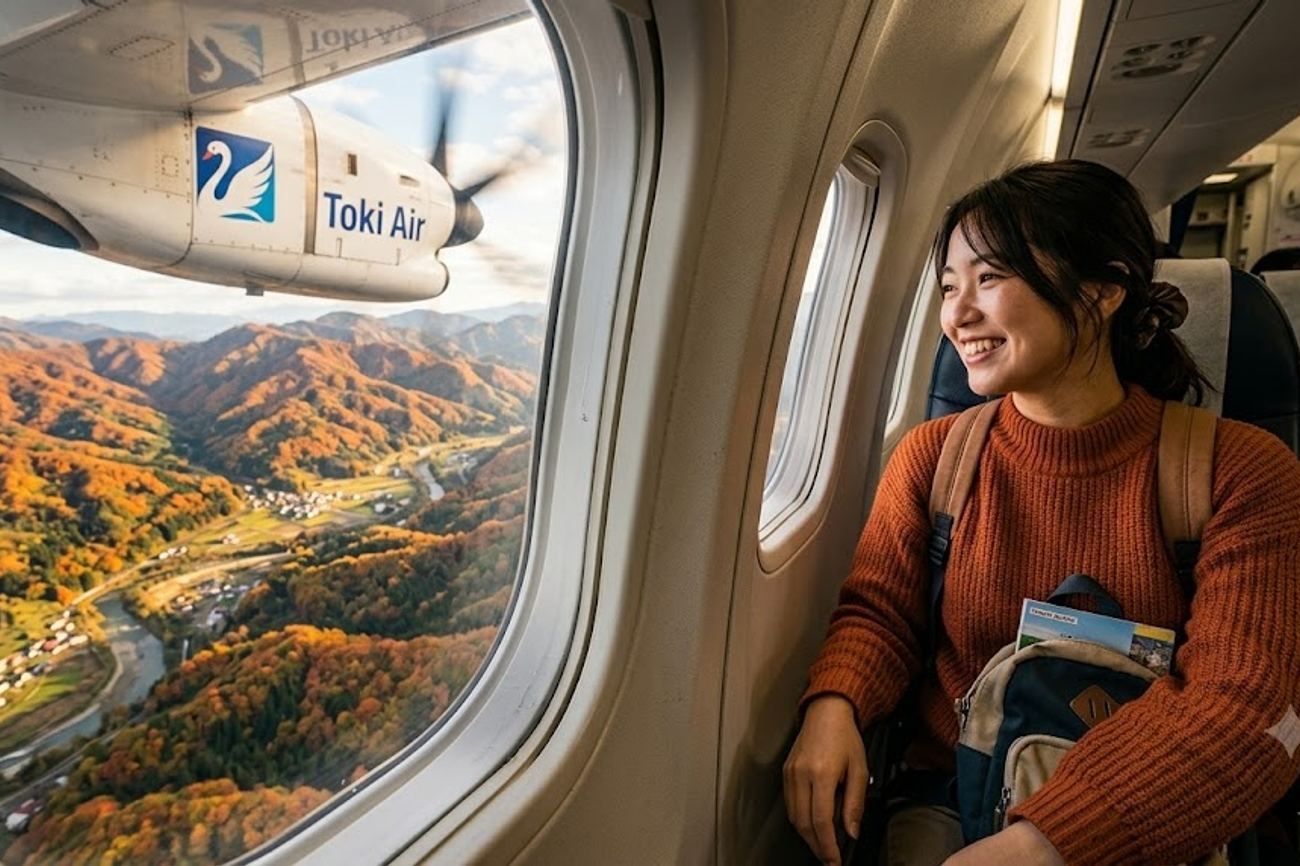
Image generated by AI
Niigata-Based Carrier Launches Flash Autumn Promotion
[Niigata, September 4, 2026] — Toki Air has officially opened its "GO! GO! Autumn Travel Campaign," a short-term pricing strategy designed to stimulate domestic travel across its regional network. Starting at noon on September 4, the airline is offering heavily discounted one-way tickets beginning at ¥5,500 for travel dates between September 7 and September 30, 2026.
The booking window is narrow, closing on September 27, 2026. However, industry observers warn that the sale may conclude prematurely, as the promotion is tied to a fixed inventory of seats. Once the allocated promotional capacity for a specific flight is exhausted, standard pricing will resume.
Pricing Tiers for the GO! GO! Autumn Travel Campaign
The airline has implemented a tiered pricing structure based on the day of travel. For passengers flying on weekdays, campaign fares are positioned between ¥5,500 and ¥7,000 one way. Those traveling during weekends or Japanese public holidays will face a slightly higher range, with tickets priced between ¥5,500 and ¥9,000.
All advertised campaign fares include the mandatory consumption tax, though they do not encompass airport-specific facility charges.
Campaign Specifications and Deadlines
| Campaign Item | Confirmed Detail |
|---|---|
| Campaign Name | GO! GO! Autumn Travel Campaign |
| Airline | TOKI AIR |
| Sale Begins | September 4, 2026, at 12:00 p.m. |
| Sale Ends | September 27, 2026, at 11:59 p.m. |
| Eligible Travel Period | September 7–30, 2026 |
| Lowest One-Way Promotional Fare | ¥5,500 |
| Weekday Fare Range | ¥5,500–¥7,000 |
| Weekend and Public-Holiday Fare Range | ¥5,500–¥9,000 |
| Consumption Tax | Included in the advertised campaign fare |
| Seat Supply | Limited |
| Sale Availability | Ends when campaign seats are sold out |
| Passenger Facility Charges | May be added separately |
Strategic Route Focus and Service Changes
The promotion is centered on Toki Air's primary hub in Niigata. The airline has identified three core routes eligible for these discounts: Niigata to Sapporo Okadama, Niigata to Nagoya Chubu, and Niigata to Kobe.
It is important for travelers to note a significant change in the airline's network: the Nagoya Chubu to Sapporo Okadama service was suspended effective September 1, 2026. Consequently, this specific leg is not included in the autumn promotion.
Eligible Domestic Destinations
| Route | Departure Airport | Arrival Airport | Travel Opportunity |
|---|---|---|---|
| Niigata–Sapporo | Niigata Airport | Sapporo Okadama Airport | Autumn city breaks and Hokkaido travel |
| Niigata–Nagoya | Niigata Airport | Chubu Centrair International Airport | Central Japan city trips and regional connections |
| Niigata–Kobe | Niigata Airport | Kobe Airport | Kansai-area short breaks and urban travel |
| Nagoya–Sapporo | Chubu Centrair–Sapporo Okadama | Service suspended from Sept 1 | Not expected to be available |
The use of Sapporo Okadama Airport provides a distinct advantage for city-bound travelers, as it is located significantly closer to the city center than the larger New Chitose Airport. Similarly, the Kobe route offers a streamlined entry point into the Kansai region.
Comparative Analysis of Fare Reductions
The ¥5,500 entry point represents a substantial discount compared to Toki Air's standard pricing. For context, flexible fares on the Niigata–Nagoya Chubu route typically start at ¥17,800, while routes to Kobe and Sapporo Okadama often begin at ¥21,000.
Even when compared to the airline's own "Toki Toku" discount category—which usually starts at ¥7,700 for Nagoya and ¥8,800 for Kobe and Sapporo—this autumn campaign offers a lower barrier to entry for domestic flyers.
Fare Comparison Table
| Route | Lowest Campaign Fare | Published “Toki Toku” Fare From | Published Flexible Fare From |
|---|---|---|---|
| Niigata–Nagoya Chubu | ¥5,500 | ¥7,700 | ¥17,800 |
| Niigata–Sapporo Okadama | ¥5,500 | ¥8,800 | ¥21,000 |
| Niigata–Kobe | ¥5,500 | ¥8,800 | ¥21,000 |
Understanding Mandatory Surcharges and Fees
While the base fare is discounted, the final ticket price will be influenced by airport facility charges and new system fees. As of September 1, Toki Air has introduced a ¥100 system usage fee per passenger, per flight segment, for all new bookings.
Airport-specific charges vary by destination. Passengers flying into Chubu Centrair International Airport will incur a facility charge of ¥440 for adults and ¥220 for children. Those arriving at Kobe Airport will pay ¥300 for adults and ¥150 for children.
Breakdown of Additional Costs
| Cost Item | Amount or Condition |
|---|---|
| Campaign Base Fare | From ¥5,500 one way |
| Passenger Facility Charge (Chubu Centrair) | ¥440 adult / ¥220 child |
| Passenger Facility Charge (Kobe Airport) | ¥300 adult / ¥150 child |
| System Usage Fee | ¥100 per passenger, per flight sector |
| Online Booking Fee | No fee listed for website bookings |
| Phone/Counter Booking Fee | ¥3,000 per person, per sector |
| Airport-Counter Purchase | Available only for same-day departures |
Travelers are strongly encouraged to book via the official website to avoid the ¥3,000 surcharge associated with telephone or airport-counter reservations.
Why This Matters: The Traveler's Perspective
For the modern traveler, this promotion highlights the volatility of regional aviation pricing in Japan. The gap between a flexible fare (¥21,000) and a campaign fare (¥5,500) is vast, meaning those who book during these specific windows can save over 70% on their transport costs.
From a logistical standpoint, the focus on Sapporo Okadama and Kobe airports suggests a strategy to attract "micro-tourists"—people taking short, 48-to-72-hour trips. By bypassing the larger, more congested hubs like New Chitose, travelers can reduce ground transit time, effectively increasing their vacation time. However, the introduction of the ¥100 system fee, while small, indicates a move toward unbundling costs, where the base fare is kept low to attract attention while auxiliary fees cover operational overhead.
Related Travel Guides
Disclaimer
This article is for informational and educational purposes only. It does not constitute legal, financial, or professional advice. While we strive to provide accurate and up-to-date information, travel policies, regulations, and conditions change rapidly. Always verify information with official sources before making travel decisions. Nomad Lawyer makes no representations about the accuracy, reliability, completeness, or suitability of the information provided. Readers should consult qualified professionals for advice specific to their circumstances. The views expressed in this article are those of the author and do not necessarily reflect the views of Nomad Lawyer.
Kunal K Choudhary
Co-Founder & Contributor
A passionate traveller and tech enthusiast. Kunal contributes to the vision and growth of Nomad Lawyer, bringing fresh perspectives and driving the community forward.
Learn more about our team →