
B-21 Raider's Mysterious Black Panels Explained: Inside the Stealth Bomber's High-Tech Belly
Breaking airline news and aviation industry updates for 2026.

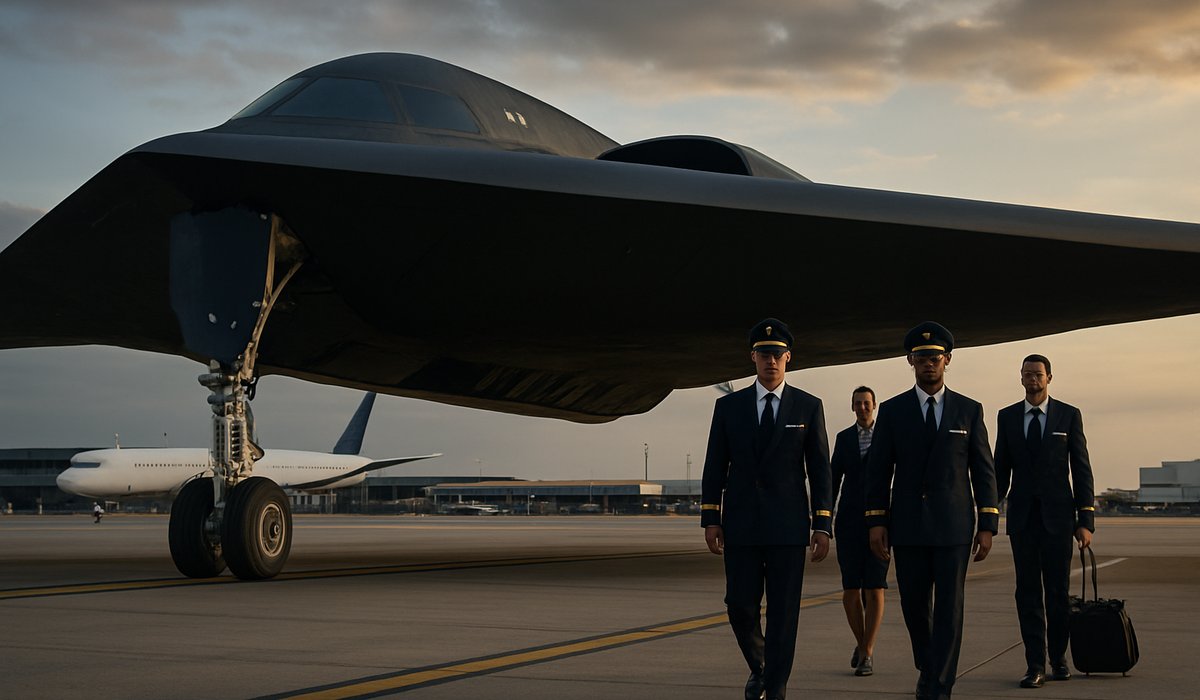
Image generated by AI
B-21 Raider's Mysterious Black Panels Explained: Inside the Stealth Bomber's High-Tech Belly
Defense analysts decode the purpose of enigmatic dark panels spotted on Northrop Grumman's next-generation strategic bomber
The Visual Mystery Capturing Defense Watchers' Attention
Recent photographs of Northrop Grumman's B-21 Raider strategic bomber have sparked intense speculation among aerospace and defense enthusiasts worldwide. The advanced military aircraft, which represents a generational leap in stealth technology, features a distinctive pattern of darker panels across its fuselage that have become the focus of scrutiny from online analysts and industry experts.
Close examination of the bomber's undercarriage reveals a striking visual pattern: four dark rectangular panels positioned beneath the aircraft's nose section, mirrored by an identical quartet running along each wing's lower surface. These darkened components contrast sharply against the predominantly white exterior coating, creating an almost unfinished appearance reminiscent of a building's primer layer before the final paint application.
Decoding the Technical Purpose
The presence of these panels across the B-21's underbelly is not accidental or merely cosmetic. Defense analysts suggest these darker sections serve critical functional purposes integral to the aircraft's advanced sensor and communication systems. Their strategic placement—distributed across multiple points on the airframe—indicates they likely house specialized equipment essential to the bomber's operational capabilities.
The varying sizes and configurations of the panels suggest a deliberate engineering approach to accommodate different systems and components. The larger panels scattered across the underside appear to serve different functions than the smaller square modules, pointing to a modular design philosophy that Northrop Grumman has employed throughout the development process.
Implications for Modern Stealth Aircraft Design
The B-21 Raider represents the cutting edge of American military aviation, designed to penetrate advanced air defense systems while carrying modern ordnance across intercontinental distances. Every external feature, including these previously mysterious panels, serves a purpose in the aircraft's overall effectiveness.
The placement and design of these components reflect decades of stealth technology evolution, building upon lessons learned from earlier platforms like the B-2 Spirit bomber. The careful integration of sensors, communications arrays, and diagnostic systems into the airframe demonstrates the sophisticated engineering required for 21st-century strategic aviation platforms.
As the B-21 moves toward operational deployment, continued photographic documentation and transparent disclosure of non-sensitive technical features help inform public understanding of modern defense capabilities while protecting genuinely classified systems and operational procedures.
FAQ: Understanding the B-21 Raider's Design Features
What are the black panels on the B-21 Raider's underside? The darker panels house advanced sensor systems, communication equipment, and diagnostic components essential to the bomber's operational capabilities.
Why are some panels larger than others? Different panel sizes accommodate various systems and functions, reflecting a modular design approach that optimizes performance and maintenance accessibility.
How do these panels affect the aircraft's stealth characteristics? The panels are integrated into the overall stealth design, with materials and angles carefully engineered to maintain the bomber's low radar cross-section.
Is the B-21's white exterior color operational, or just for testing? Test aircraft typically use distinctive paint schemes for identification purposes; operational variants may employ different camouflage or coating systems.
When will the B-21 Raider become fully operational? The U.S. Air Force has outlined deployment timelines extending through the 2020s as testing and evaluation phases continue.
Related Travel Guides
Flight Delay Compensation Guide 2026
Understanding Airline Route Changes
Airport Security Process Updated (2026)
External Resources
Disclaimer
This article is for informational and educational purposes only. It does not constitute legal, financial, or professional advice. While we strive to provide accurate and up-to-date information, travel policies, regulations, and conditions change rapidly. Always verify information with official sources before making travel decisions. Nomad Lawyer makes no representations about the accuracy, reliability, completeness, or suitability of the information provided. Readers should consult qualified professionals for advice specific to their circumstances. The views expressed in this article are those of the author and do not necessarily reflect the views of Nomad Lawyer.
Preeti Gunjan
Contributor & Community Manager
A passionate traveller and community builder. Preeti helps grow the Nomad Lawyer community, fostering engagement and bringing the reader experience to life.
Learn more about our team →