
Boeing 777X's Exclusive Engine Partnership: Why the GE9X Remains the Only Option
Breaking airline news and aviation industry updates for 2026.

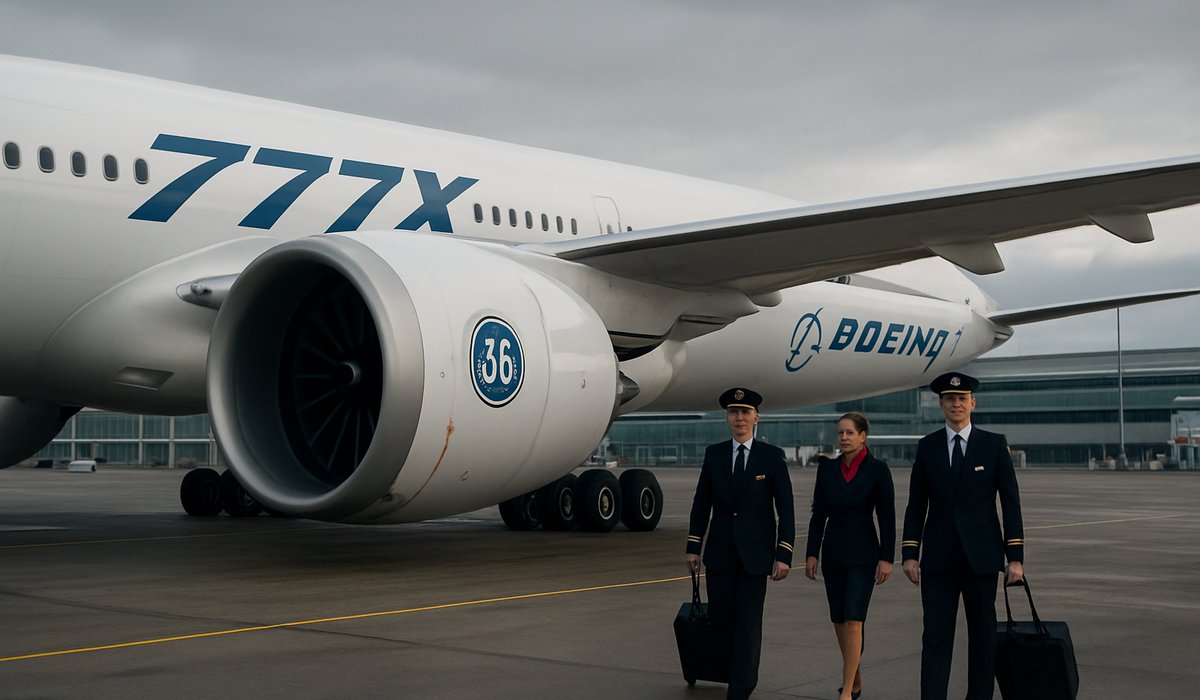
Image generated by AI
Boeing 777X's Exclusive Engine Partnership: Why the GE9X Remains the Only Option
General Electric's next-generation powerplant is engineered precisely for the widebody jet's demanding performance requirements
The Technical Constraint Behind Boeing's Single-Engine Strategy
The Boeing 777X, set to enter commercial service in 2026, operates under a critical technical limitation: it cannot fly with any engine other than General Electric's GE9X powerplant. This exclusivity isn't a corporate preference but rather a fundamental engineering reality that shapes the aircraft's entire design architecture.
The GE9X engine delivers performance parameters that remain unmatched in the commercial aviation market. Capable of producing up to 134,300 pounds of thrust during testing phases, the powerplant features a revolutionary 134-inch composite fan—a technological breakthrough that distinguishes it from earlier iterations. This specialized design enables the 777X to achieve approximately 10% superior fuel efficiency compared to the legacy GE90-115B engine, a significant advantage in an era when jet fuel prices and operational costs dominate airline economics.
Engineering Requirements Drive Exclusive Powerplant Selection
The 777X's design specifications were engineered around the GE9X's unique capabilities from inception. The aircraft must accommodate higher passenger densities across ultra-long-haul international routes—a demanding operational profile that requires thrust levels and thermal efficiency no competing engine manufacturer currently offers.
"No alternative powerplant matches the required performance envelope," according to technical specifications reviewed across the aviation industry. Competitors including Rolls-Royce and Pratt & Whitney have not developed engines capable of delivering this combination of thrust, efficiency, and weight characteristics within the 777X's airframe constraints.
The efficiency gains prove particularly critical in today's volatile fuel-cost environment. Airlines face persistent pressure from elevated jet fuel prices linked to geopolitical tensions and energy market uncertainties. The GE9X's 10% fuel-burn reduction translates directly into operational savings—a competitive advantage that justifies aircraft acquisition costs for major carriers operating on premium intercontinental routes.
Industry Implications for Airline Fleet Planning
This technical exclusivity creates strategic implications for airlines evaluating 777X acquisitions. Carriers become locked into General Electric's maintenance ecosystem, spare-parts supply chain, and engine-upgrade pathways for the aircraft's operational lifespan—potentially 20-30 years.
Major airlines including Singapore Airlines, Emirates, and Japan Airlines have already committed to 777X orders, betting that the efficiency gains and passenger capacity justify dependence on a single powerplant supplier. The arrangement also strengthens General Electric's competitive position in commercial aviation, guaranteeing long-term revenue streams from engine maintenance contracts and technological support.
The 777X represents an inflection point in aircraft development: as environmental regulations tighten and airlines scrutinize operating expenses, aircraft are increasingly designed around specific powerplant technologies rather than engineered for engine flexibility.
Frequently Asked Questions
Why can't the Boeing 777X use different engines? The 777X was engineered exclusively around the GE9X engine's thrust, fan diameter, and efficiency specifications. No competing engine produces comparable performance within the aircraft's design parameters.
How much fuel does the GE9X actually save airlines? The GE9X delivers approximately 10% lower fuel consumption than the previous-generation GE90-115B, translating into significant operational cost reductions on ultra-long-haul routes.
When will the Boeing 777X enter service? Commercial deliveries are scheduled to begin in 2026, pending regulatory certification completion.
Does this give General Electric a monopoly advantage? Yes—airlines operating the 777X become dependent on GE for engine maintenance, spare parts, and technological upgrades throughout the aircraft's service life.
What does this mean for future aircraft design? It signals a trend toward purpose-built aircraft engineered around specific powerplant technology rather than multi-engine flexibility, driven by efficiency and emissions demands.
Related Travel Guides
- Southwest Airlines Dominates US Domestic Market: Mapping Five Decades of Route Expansion and Growth
- Eastar Jet and South Korean LCCs Disrupt East Asian Aviation With Aggressive Route Expansions in 2026
- Air Zimbabwe Deploys Critical London Evasion Corridor: ACMI Partnership Defeats Multi-Hub Travel Chaos and Restores Direct Access
Disclaimer
This article is for informational and educational purposes only. It does not constitute legal, financial, or professional advice. While we strive to provide accurate and up-to-date information, travel policies, regulations, and conditions change rapidly. Always verify information with official sources before making travel decisions. Nomad Lawyer makes no representations about the accuracy, reliability, completeness, or suitability of the information provided. Readers should consult qualified professionals for advice specific to their circumstances. The views expressed in this article are those of the author and do not necessarily reflect the views of Nomad Lawyer.
Kunal K Choudhary
Co-Founder & Contributor
A passionate traveller and tech enthusiast. Kunal contributes to the vision and growth of Nomad Lawyer, bringing fresh perspectives and driving the community forward.
Learn more about our team →