
Riyadh Air's Premium Economy Cabin Sets Tech Bar High, But Bathroom Access Remains an Afterthought
Breaking airline news and aviation industry updates for 2026.

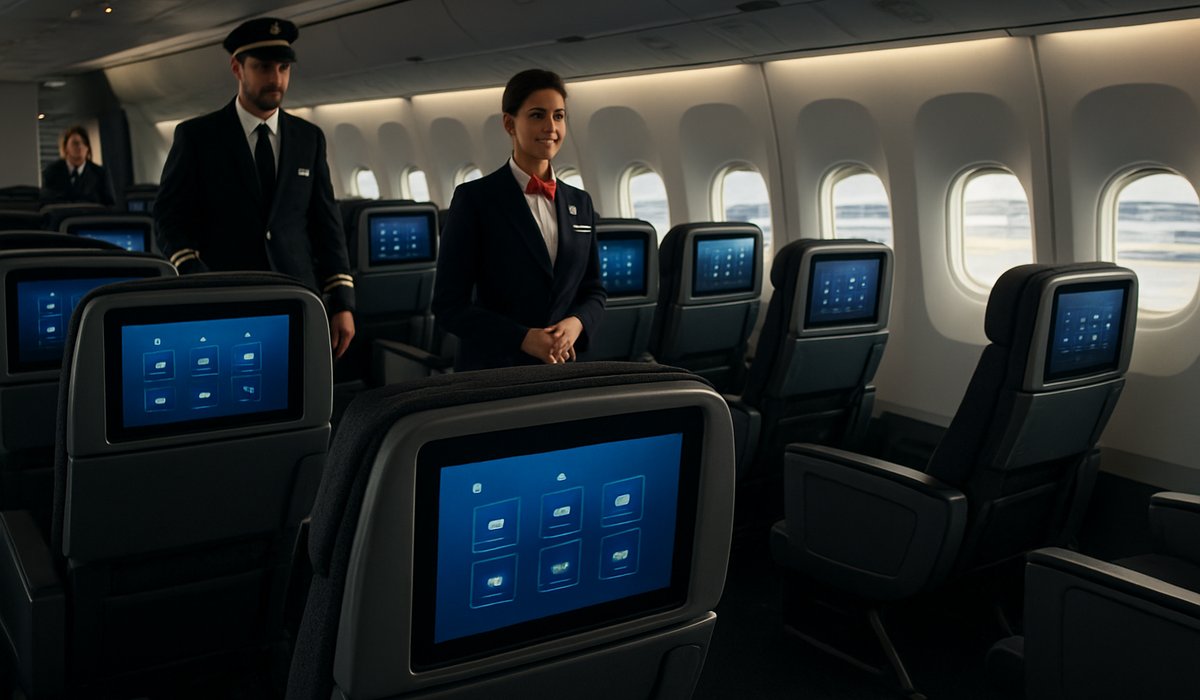
Image generated by AI
Riyadh Air's Premium Economy Cabin Sets Tech Bar High, But Bathroom Access Remains an Afterthought
The Saudi carrier's ambitious aircraft interiors offer cutting-edge in-flight entertainment while overlooking passenger comfort in critical amenities
A Tale of Two Premium Economy Experiences
Riyadh Air has emerged as an unexpected disruptor in the competitive premium economy segment, deploying industry-leading in-flight entertainment systems that tower above rival carriers' offerings. However, a comprehensive examination of the airline's cabin product reveals a paradoxical design philosophy: exceptional technology paired with a conspicuous gap in essential passenger amenities that raises questions about the carrier's priorities in the premium leisure market.
The carrier's premium economy cabin features expansive seatback screens that represent a genuine leap forward in inflight entertainment technology, positioning the Saudi flag carrier ahead of established competitors like Qatar Airways, Singapore Airlines, and Emirates in this crucial touchpoint. Yet this technological sophistication stands in sharp contrast to the aircraft's lavatory infrastructure, which industry observers have flagged as inadequate for a premium-tier product.
Impressive Tech, Compromised Comfort
Riyadh Air's decision to prioritize visual entertainment at the expense of convenient restroom access exemplifies the trade-offs airlines face when designing new aircraft interiors. The premium economy section boasts seat configurations that meet contemporary industry standards for pitch and width, but the premium positioning demands excellence across all passenger touchpoints—not merely those above the armrest.
The disparity becomes particularly acute when considering that competing carriers have successfully integrated both premium-tier technology and thoughtfully designed lavatory arrangements. For a nascent airline attempting to establish market credibility among discerning business and leisure travelers, such oversights risk undermining the investment in flagship amenities.
The Broader Industry Context
This disconnect reflects broader tensions within modern aviation as carriers navigate soaring jet fuel prices, increased aircraft acquisition costs, and competitive pressure on premium economy pricing. Airlines investing in cabin retrofits must balance expenditures across multiple categories—seat engineering, IFE systems, lavatories, galleys, and lighting—while maintaining profitability in a margin-compressed sector.
Riyadh Air's approach suggests a strategic calculation: capture passenger attention through visual innovation while accepting conventional compromises elsewhere. Whether this gambit proves successful may hinge on whether travelers prioritize entertainment technology over holistic cabin experience when selecting premium economy fares.
FAQ: Premium Economy Cabin Features and Air Travel
What defines best-in-class premium economy in-flight entertainment? Top-tier carriers now deploy larger, higher-resolution seatback screens (typically 13-16 inches) with responsive touch interfaces, expanded content libraries, and multi-language support. Riyadh Air's systems represent current technology benchmarks.
How do lavatory access issues affect premium economy passengers? Cramped or limited restroom facilities create bottlenecks during long-haul flights, potentially compromising the premium experience that justifies higher ticket prices relative to economy.
What are typical premium economy seat dimensions across airlines? Industry-standard premium economy offers 17-18 inch widths and 38-40 inch pitch. Differentiation increasingly occurs through technology and service rather than physical seat dimensions.
Why do airlines make trade-offs between technology and amenities? Aircraft cabin design involves finite space and budget constraints. Carriers must prioritize investments strategically based on their competitive positioning and target passenger demographics.
How does jet fuel pricing influence cabin product decisions? Rising fuel costs pressure airlines to maximize revenue per seat while minimizing aircraft weight. These pressures can influence design priorities, sometimes favoring lighter components over comprehensive comfort solutions.
Related Travel Guides
- Airlines SWM and MXD Suffer Sudden Flight Cancellations Across Bangkok Hubs, Triggering Regional Travel Chaos: Latest Airline News
- Jamie Dimon Warnings Signal Airline Disruption Risks in 2026
- Six Aircraft Redefining Ultra-Long-Haul Aviation: Inside the Engineering Behind the World's Longest-Range Commercial Jets
Disclaimer
This article is for informational and educational purposes only. It does not constitute legal, financial, or professional advice. While we strive to provide accurate and up-to-date information, travel policies, regulations, and conditions change rapidly. Always verify information with official sources before making travel decisions. Nomad Lawyer makes no representations about the accuracy, reliability, completeness, or suitability of the information provided. Readers should consult qualified professionals for advice specific to their circumstances. The views expressed in this article are those of the author and do not necessarily reflect the views of Nomad Lawyer.
Raushan Kumar
Founder & Lead Developer
Full-stack developer with 11+ years of experience and a passionate traveller. Raushan built Nomad Lawyer from the ground up with a vision to create the best travel and law experience on the web.
Learn more about our team →