
American Airlines Restricts Boeing 737 MAX 8 to Domestic Routes Despite Transocean Capability—Here's Why
Breaking airline news and aviation industry updates for 2026.

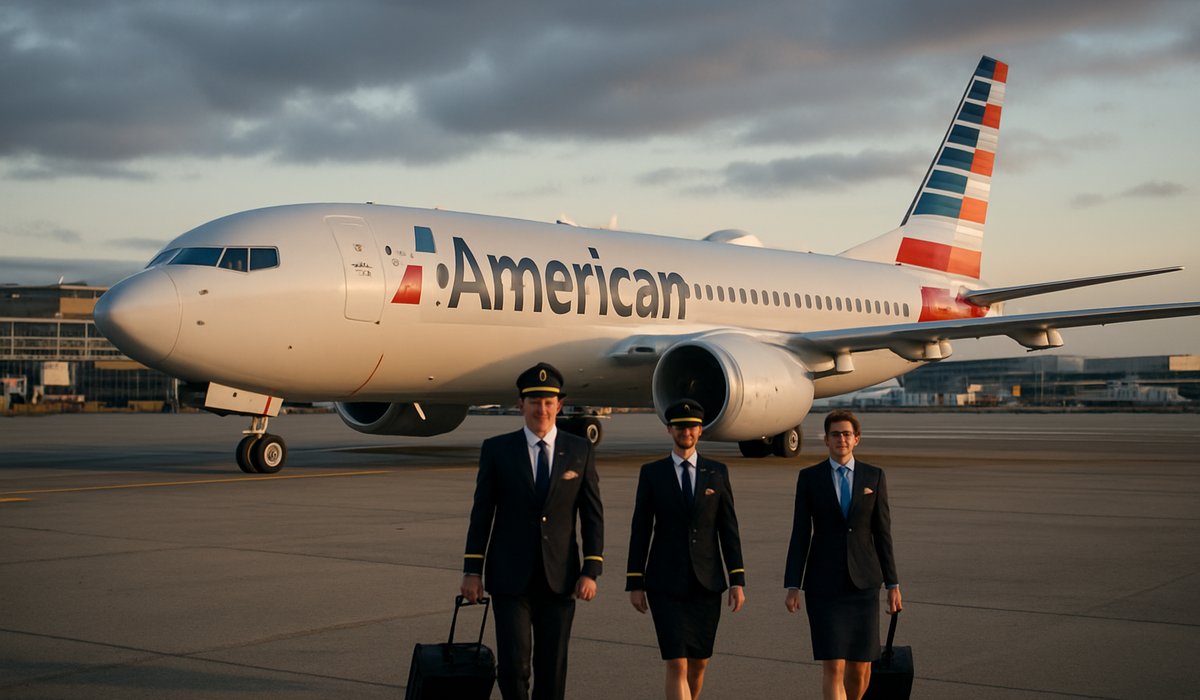
Image generated by AI
American Airlines Restricts Boeing 737 MAX 8 to Domestic Routes Despite Transocean Capability—Here's Why
The carrier's fleet strategy reveals critical operational constraints that challenge Boeing's long-range claims for its controversial narrowbody jet
The Paradox: Range Versus Reality
American Airlines operates more than 350 Boeing 737 MAX 8 aircraft across its network, making it one of the world's largest operators of the redesigned narrowbody. Yet despite the jet's certified range capability extending to transatlantic and transpacific routes—including long-haul corridors to Europe and Hawaii—the Fort Worth-based carrier deliberately restricts these aircraft to domestic and overland flights within North American airspace.
This operational limitation reveals a fundamental tension between engineering specifications and practical airline economics that reshapes how carriers deploy their narrowbody fleets in the post-pandemic aviation landscape.
Sizing the Fleet Strategically
The 737 MAX 8 represents American's fourth-largest aircraft category, trailing only the Boeing 737-800, Airbus A321, and A319. With over 1,000 aircraft in its total fleet, American's deployment decisions carry significant weight across the carrier's route network and profitability calculations.
Narrowbody aircraft—typically designed for routes under four hours—have increasingly attracted manufacturer marketing around extended-range capabilities. However, airlines weigh numerous factors beyond technical range when deciding whether to deploy these smaller jets on longer international routes.
The Economics Behind the Decision
Several interconnected factors explain American's cautious approach. Extended-range narrowbody operations on transatlantic and transpacific flights require different crew scheduling, maintenance protocols, and fuel efficiency calculations compared to widebody alternatives. Additionally, premium cabin configurations—increasingly critical for long-haul profitability—are constrained on single-deck aircraft.
Fuel consumption patterns on extended-range missions can challenge the economic model that makes narrowbody operations viable. When combined with volatile jet fuel prices influenced by geopolitical tensions and crude oil market fluctuations, the margin for error on 12+ hour missions narrows considerably.
Furthermore, regulatory requirements for extended oceanic operations, including specific rescue equipment and crew rest regulations, add operational complexity and cost that may erode the financial advantage narrowbodies typically offer on shorter routes.
Industry-Wide Implications
American's stance reflects broader industry hesitation toward deploying narrowbodies beyond their traditional geographic boundaries. While manufacturers like Boeing and Airbus continue developing extended-range variants, carriers appear reluctant to embrace these aircraft for truly transcontinental missions where widebody aircraft—despite higher acquisition costs—offer superior economics through increased passenger density and cargo revenue.
This deployment strategy underscores the ongoing challenge facing aviation as the industry balances fleet modernization, fuel efficiency demands, and the structural economics of long-haul flying in an era of elevated operating costs.
Frequently Asked Questions
Q: What is the Boeing 737 MAX 8 range capability? A: The 737 MAX 8 has a maximum range of approximately 3,550 nautical miles, technically sufficient for transatlantic routes. However, practical operational considerations often prevent deployment on such missions.
Q: Why do airlines prefer widebody aircraft for long-haul routes over narrowbodies? A: Widebody jets offer larger cabins supporting premium cabin configurations that generate higher revenue per seat-mile. They also demonstrate superior fuel efficiency per passenger on extended-range missions despite higher fuel consumption overall.
Q: How do jet fuel prices impact narrowbody transatlantic economics? A: Higher fuel costs disproportionately affect long-haul narrowbody operations because smaller cabins can't distribute fuel expenses across sufficient premium-fare passengers, making routes economically marginal.
Q: Are other carriers restricting the 737 MAX 8 to domestic routes? A: Deployment strategies vary by carrier based on route networks, aircraft utilization goals, and regional demand patterns. American's approach isn't universal but reflects cautious transatlantic expansion strategy.
Q: Will narrowbody aircraft eventually dominate long-haul routes? A: Industry observers remain divided. While technological improvements continue, current economics favor widebody aircraft for routes exceeding six hours, limiting narrowbody transatlantic and transpacific adoption.
Related Travel Guides
Disclaimer
This article is for informational and educational purposes only. It does not constitute legal, financial, or professional advice. While we strive to provide accurate and up-to-date information, travel policies, regulations, and conditions change rapidly. Always verify information with official sources before making travel decisions. Nomad Lawyer makes no representations about the accuracy, reliability, completeness, or suitability of the information provided. Readers should consult qualified professionals for advice specific to their circumstances. The views expressed in this article are those of the author and do not necessarily reflect the views of Nomad Lawyer.
Kunal K Choudhary
Co-Founder & Contributor
A passionate traveller and tech enthusiast. Kunal contributes to the vision and growth of Nomad Lawyer, bringing fresh perspectives and driving the community forward.
Learn more about our team →