
Ultra-Long-Haul Flight Upgrades: Business Class vs. Premium Economy—What You're Actually Paying For
Breaking airline news and aviation industry updates for 2026.

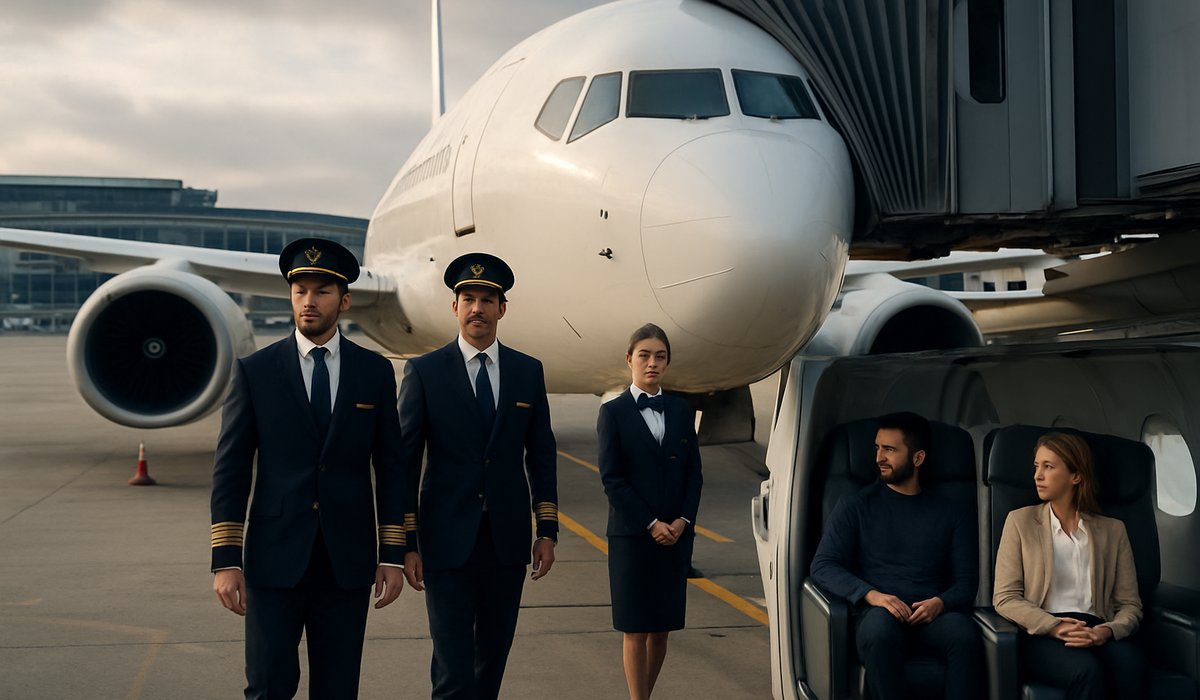
Image generated by AI
Ultra-Long-Haul Flight Upgrades: Business Class vs. Premium Economy—What You're Actually Paying For
As airlines expand premium seating options, passengers face a critical choice between modest comfort upgrades and luxury cabin experiences on extended international routes
The Premium Cabin Dilemma on Extended Routes
Travelers embarking on ultra-long-haul journeys face a pivotal decision at the booking stage: pursue a budget-conscious upgrade to premium economy, or invest substantially more for business class accommodation. The financial and experiential gap between these two cabin tiers extends far beyond simple price differentials, fundamentally reshaping how passengers experience flights lasting 14-18 hours or more.
Beyond Price: The Experiential Divide
The distinction between premium economy and business class encompasses multiple dimensions that carriers leverage to justify dramatic pricing variations. Business class passengers access considerably larger seating configurations, often featuring direct-aisle access or staggered layouts that eliminate middle-seat neighbors. This spatial advantage becomes particularly valuable during ultra-extended flights where cabin time exceeds a full working day.
Acoustic environment represents another critical differentiator. Business cabins employ enhanced sound insulation, noise-dampening materials, and reduced passenger density to create comparatively serene spaces—a substantial advantage when attempting rest across consecutive time zones. Premium economy seating, while superior to standard economy configurations, operates within proximity to higher passenger concentrations and ambient cabin noise levels.
Service Quality and Amenity Stratification
Service delivery marks perhaps the most pronounced distinction. Business class passengers benefit from dedicated cabin crew assignments, personalized meal service, premium beverage programs featuring vintage wines and spirits, and proactive hospitality. Premium economy passengers receive improved catering and attentive service, yet within resource constraints reflecting their cabin's operational model.
Amenity packages diverge considerably. Business class typically includes designer bedding, enhanced toiletry collections, premium entertainment systems, and priority ground services including lounge access. Premium economy offerings remain modest by comparison, though they generally surpass economy standards with improved entertainment, enhanced meal selections, and modest amenity kits.
Industry Context and Route Economics
The proliferation of premium economy cabins reflects airline strategies to capture price-sensitive business travelers and affluent leisure passengers unwilling to commit full business class fares—often exceeding $8,000-$15,000 for transpacific and transatlantic routes. Premium economy typically costs 2-3 times economy pricing, positioning it as an intermediary solution.
This three-tier structure has become industry standard among major carriers operating ultra-long-haul networks, including those serving Asia-Pacific, transatlantic, and emerging Middle Eastern routes where flight durations routinely exceed 15 hours.
Making the Choice
The optimal selection depends on individual priorities: passengers prioritizing comfort, sleep quality, and comprehensive service should evaluate business class despite premium pricing, while those seeking meaningful cabin improvements without maximum expenditure find premium economy increasingly compelling.
FAQ: Ultra-Long-Haul Cabin Selection
What's the typical price difference between premium economy and business class on ultra-long-haul flights? Business class fares typically cost 3-5 times more than premium economy, often reaching $10,000-$15,000 versus $3,000-$5,000 for extended international routes.
Can you actually sleep in premium economy on 15-hour flights? While premium economy seats recline further than economy (typically 6-8 inches), they don't fully flatten like business class. Many passengers manage adequate rest, though comfort levels remain below business class standards.
Which airlines offer the best premium economy on ultra-long-haul routes? Major carriers including those operating Asia-Pacific, transatlantic, and Middle Eastern routes have invested significantly in premium economy products with enhanced seat width, recline angles, and amenities.
Is business class worth the investment for leisure travelers? For flights exceeding 15 hours, business class delivers measurable comfort and service advantages that many leisure travelers find worthwhile, particularly those sensitive to jet lag and sleep disruption.
What amenities differentiate business class on extended flights? Business class includes lie-flat seats, premium bedding, gourmet dining, superior entertainment, designer toiletries, priority baggage handling, and lounge access—amenities largely absent from premium economy.
Related Travel Guides
Flight Delay Compensation Guide 2026
Understanding Airline Route Changes
Airport Security Process Updated (2026)
External Resources
Disclaimer
This article is for informational and educational purposes only. It does not constitute legal, financial, or professional advice. While we strive to provide accurate and up-to-date information, travel policies, regulations, and conditions change rapidly. Always verify information with official sources before making travel decisions. Nomad Lawyer makes no representations about the accuracy, reliability, completeness, or suitability of the information provided. Readers should consult qualified professionals for advice specific to their circumstances. The views expressed in this article are those of the author and do not necessarily reflect the views of Nomad Lawyer.
Raushan Kumar
Founder & Lead Developer
Full-stack developer with 11+ years of experience and a passionate traveller. Raushan built Nomad Lawyer from the ground up with a vision to create the best travel and law experience on the web.
Learn more about our team →