
Boeing 787-9 Ultra-Long-Haul Routes Push Aviation to Breaking Point: How Weather Delays Force Unexpected Fuel Stops
Breaking airline news and aviation industry updates for 2026.

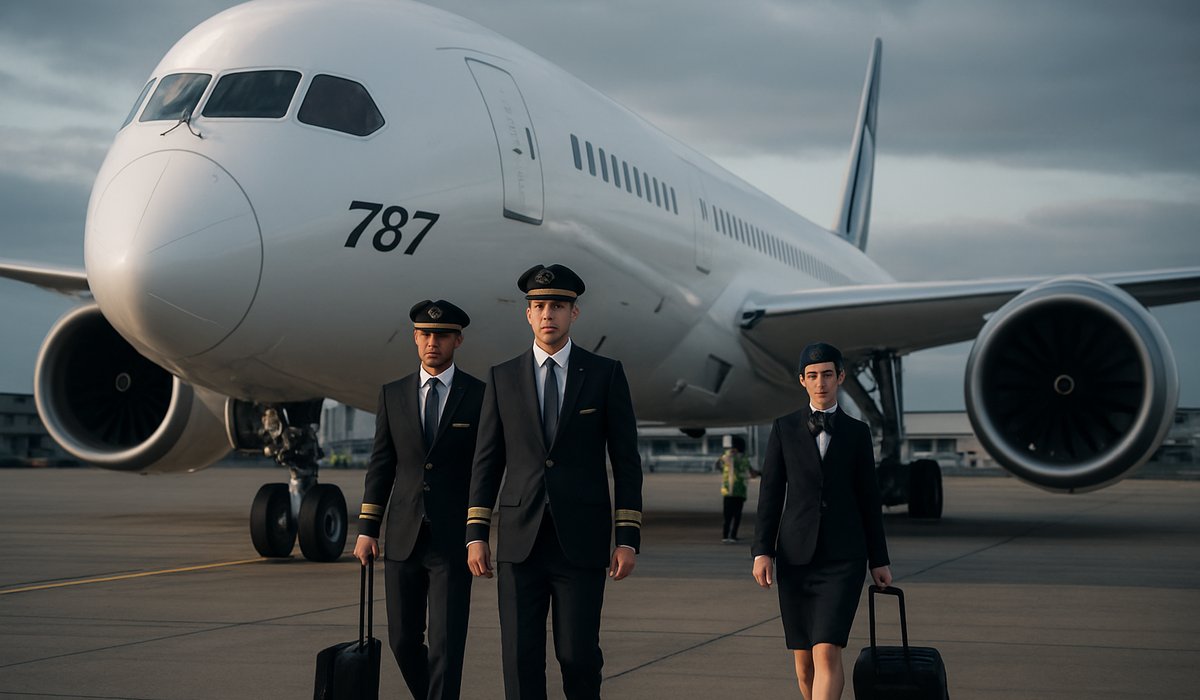
Image generated by AI
Boeing 787-9 Ultra-Long-Haul Routes Push Aviation to Breaking Point: How Weather Delays Force Unexpected Fuel Stops
The aviation industry's pursuit of record-breaking nonstop flights reveals the razor-thin operational margins that define modern commercial aviation
The Fragile Reality Behind Marketing Claims
Airlines have invested billions in next-generation widebody aircraft, celebrating their ability to connect distant cities with seamless, nonstop service. The Boeing 787-9 represents the pinnacle of this ambition—sleek, fuel-efficient, and engineered to traverse some of the world's most challenging routes without intermediate stops. Yet a recent operational incident exposes a troubling gap between manufacturer specifications and real-world aviation constraints.
A minor 30-minute weather-related detour forced a 787-9 operating on an ultra-long-haul route to make an unscheduled fuel stop, disrupting service schedules and challenging industry assumptions about the aircraft's operational flexibility. The incident underscores how modern commercial aviation, despite technological advances, operates with uncomfortably narrow safety margins when exploiting maximum-range capabilities.
Operating at the Absolute Edge
The aviation sector has progressively extended flight ranges over the past decade, driven by jet fuel price volatility, labor cost pressures, and competitive pressure to minimize connections. Airlines market these ultra-long-haul routes aggressively, emphasizing passenger comfort and schedule reliability. However, this strategy leaves minimal operational buffer.
The 787-9's theoretical range exceeds 7,600 nautical miles under optimal conditions. Yet when aircraft operate at maximum range, fuel reserves for weather contingencies, unexpected headwinds, or air traffic control delays become critically thin. A modest routing change—even one spanning just 30 minutes of flight time—can exhaust the mathematical precision required to reach destination airports without refueling.
Industry-Wide Implications
This incident raises broader questions about sustainability in commercial aviation. As airlines compete to establish point-to-point routes previously requiring connections, they increasingly gamble with operational margins. Volatile jet fuel prices, which have surged significantly in recent years, only amplify pressure to maximize aircraft utilization and extend route viability.
The situation also reflects mounting complexity in airline operations and baggage charges structures. When unexpected fuel stops become necessary, airlines absorb costs through operational disruptions, additional crew expenses, and passenger compensation—expenses that may ultimately translate to higher airfares and baggage fees.
What Comes Next
Industry observers warn that pursuing ultra-long-haul service without adequate contingency capacity creates systemic vulnerabilities. Airlines, aircraft manufacturers, and regulators must reassess whether current operational practices truly serve passenger interests or merely prioritize marketing narratives.
The Boeing 787-9 remains an engineering achievement. Yet its real-world limitations suggest the aviation industry may need to recalibrate expectations about nonstop service on the longest international routes.
Frequently Asked Questions
Q: Why would a 30-minute weather detour force a fuel stop on a 787-9? A: When aircraft operate at maximum range capacity, fuel reserves for contingencies are minimal. Any deviation—weather routing, headwinds, or air traffic delays—can consume the narrow safety buffer, necessitating unscheduled refueling.
Q: How do jet fuel prices impact ultra-long-haul route viability? A: Volatile fuel costs pressure airlines to extend routes and reduce connections, pushing aircraft closer to maximum-range limits where operational flexibility diminishes significantly.
Q: Are these ultra-long-haul routes financially sustainable? A: Profitability depends on consistently favorable conditions. Unexpected fuel stops, crew expenses, and passenger compensation can quickly erode margins on already tight routes.
Q: Will airlines adjust their route strategies? A: Industry analysts expect gradual recalibration, with airlines potentially adding strategic fuel stops on certain ultra-long-haul services to improve operational reliability and reduce baggage fee and service disruption costs.
Q: What's the impact on passengers? A: Beyond potential schedule delays, passengers may eventually see higher airfares and expanded baggage charges as airlines adjust pricing to account for operational contingencies on maximum-range routes.
Related Travel Guides
-
Delta Air Lines Charts Bold New Course With Airbus Widebody Strategy for Long-Haul Expansion
-
Airlines Largest Mainline Fleets Dominate North America's 2026 Aviation
External Resources
Disclaimer
This article is for informational and educational purposes only. It does not constitute legal, financial, or professional advice. While we strive to provide accurate and up-to-date information, travel policies, regulations, and conditions change rapidly. Always verify information with official sources before making travel decisions. Nomad Lawyer makes no representations about the accuracy, reliability, completeness, or suitability of the information provided. Readers should consult qualified professionals for advice specific to their circumstances. The views expressed in this article are those of the author and do not necessarily reflect the views of Nomad Lawyer.
Preeti Gunjan
Contributor & Community Manager
A passionate traveller and community builder. Preeti helps grow the Nomad Lawyer community, fostering engagement and bringing the reader experience to life.
Learn more about our team →