
EVA Air's Revolutionary 42-Inch Seat Signals Escalating Premium Economy Arms Race Among Global Carriers
Breaking airline news and aviation industry updates for 2026.

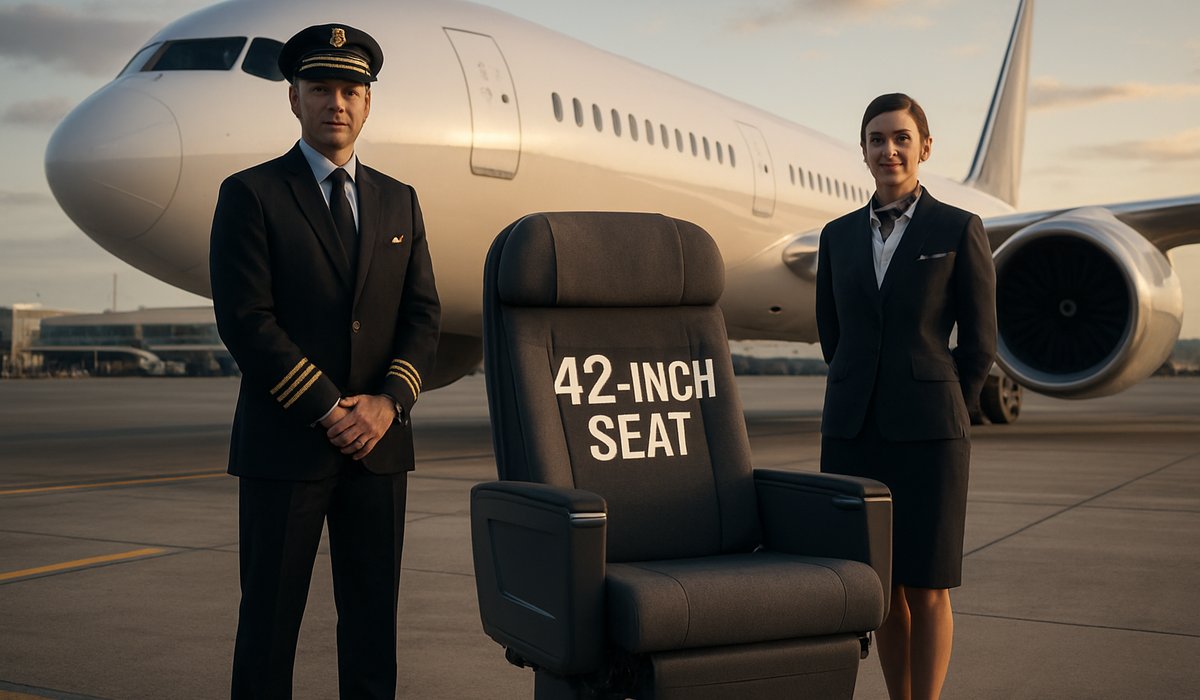
Image generated by AI
EVA Air's Revolutionary 42-Inch Seat Signals Escalating Premium Economy Arms Race Among Global Carriers
The Taiwanese carrier that invented premium economy raises the bar with industry-leading seat width, intensifying competition for affluent long-haul travelers
Premium Economy Becomes the Battleground for Airline Competitiveness
The aviation industry is witnessing an unprecedented shift in competitive strategy as carriers worldwide pivot focus toward premium economy—the fastest-growing cabin segment and increasingly the decisive factor in capturing market share among affluent business travelers and premium leisure passengers.
EVA Air, the Taiwanese carrier that originally pioneered the premium economy concept, has reasserted its dominance with the introduction of a game-changing 42-inch wide seat that competitors currently cannot replicate. The development underscores a critical truth reshaping modern aviation: in an era of margin compression and volatile jet fuel prices, the battleground for profitability has moved decisively toward optimizing premium cabin configurations and ancillary revenue streams including baggage charges and seat selection fees.
Strategic Deployment Drives Competitive Advantage
Airlines recognize that merely installing wider seats no longer suffices—strategic deployment on high-value routes determines commercial success. By placing its new premium economy product on competitive long-haul corridors where demand from affluent passengers remains consistently strong, EVA Air is forcing competitors to respond or risk losing market position.
The competitive landscape has fundamentally transformed. Unlike legacy differentiation strategies focused purely on route networks or basic service offerings, modern airline strategy demands superior in-cabin products that justify premium pricing and generate measurable returns on capital investment. The 42-inch seat width—significantly wider than competing premium economy products—provides EVA Air with tangible, defensible differentiation that directly influences passenger booking decisions.
Industry-Wide Premium Economy Expansion
Leading global carriers including Singapore Airlines, ANA (All Nippon Airways), and Lufthansa have invested billions expanding premium economy capacity in response to sustained demand growth. This expansion reflects fundamental shifts in travel behavior: affluent passengers increasingly view premium economy as superior value compared to business class, while remaining unwilling to accept standard economy conditions on long-haul flights.
The premium economy segment's growth trajectory has accelerated despite macroeconomic headwinds and elevated fuel costs that have pressured airline profitability elsewhere. Carriers view premium economy expansion as essential to offsetting volatility in cargo revenue and sustaining margins amid persistent labor cost inflation and maintenance expenses.
The Broader Aviation Implication
EVA Air's investment in premium economy superiority demonstrates that even mature carriers must continuously innovate product offerings to remain competitive. As airlines worldwide implement fuel surcharges and increase baggage fees to offset operational costs, premium economy represents a legitimate value proposition where passengers receive tangible benefits justifying premium pricing without the expense of business class.
The Taiwanese carrier's strategic positioning suggests premium economy will remain central to airline profitability and competitive differentiation for the foreseeable future.
Frequently Asked Questions
What is premium economy and how does it differ from standard economy? Premium economy is an elevated cabin class positioned between standard economy and business class, typically featuring wider seats, enhanced legroom, priority boarding, and improved amenities. EVA Air's new product offers 42-inch seat width, significantly exceeding industry standards.
Why are airlines investing heavily in premium economy rather than business class? Premium economy delivers superior return on investment compared to business class. It attracts price-conscious affluent travelers, generates stronger load factors, and requires less cabin space per revenue unit, improving overall profitability on long-haul routes.
How do rising jet fuel prices impact airline seating strategies? Elevated fuel costs force airlines to maximize revenue per available seat mile. Premium economy optimizes this metric by capturing premium fares while maintaining higher seat density than business class configurations.
Which airlines currently offer premium economy seating? Major carriers including EVA Air, Singapore Airlines, ANA, Lufthansa, British Airways, and Air France operate premium economy cabins on long-haul fleets, with continued expansion planned globally.
What makes EVA Air's 42-inch seat width competitive advantage sustainable? The seat width provides measurable, immediately perceptible passenger benefits that directly influence booking preferences, creating defensible differentiation in competitive long-haul markets.
Related Travel Guides
-
Qantas SKY Airline Interline Partnership: 20+ South American Destinations
-
[777X Boeing Certification Won't Happen in 2026, FAA Confirms](/boeing-777x-certification-delay-2026)
External Resources
Disclaimer: Airline announcements, route changes, and fleet information reflect official corporate communications as of April 2026. Schedules, aircraft specifications, and service details remain subject to airline modifications.
Raushan Kumar
Founder & Lead Developer
Full-stack developer with 11+ years of experience and a passionate traveller. Raushan built Nomad Lawyer from the ground up with a vision to create the best travel and law experience on the web.
Learn more about our team →