
Trump Administration Lifts Supersonic Flight Ban Over Land, But Boom's Overture Faces Four Critical Hurdles to Commercial Viability
Breaking airline news and aviation industry updates for 2026.

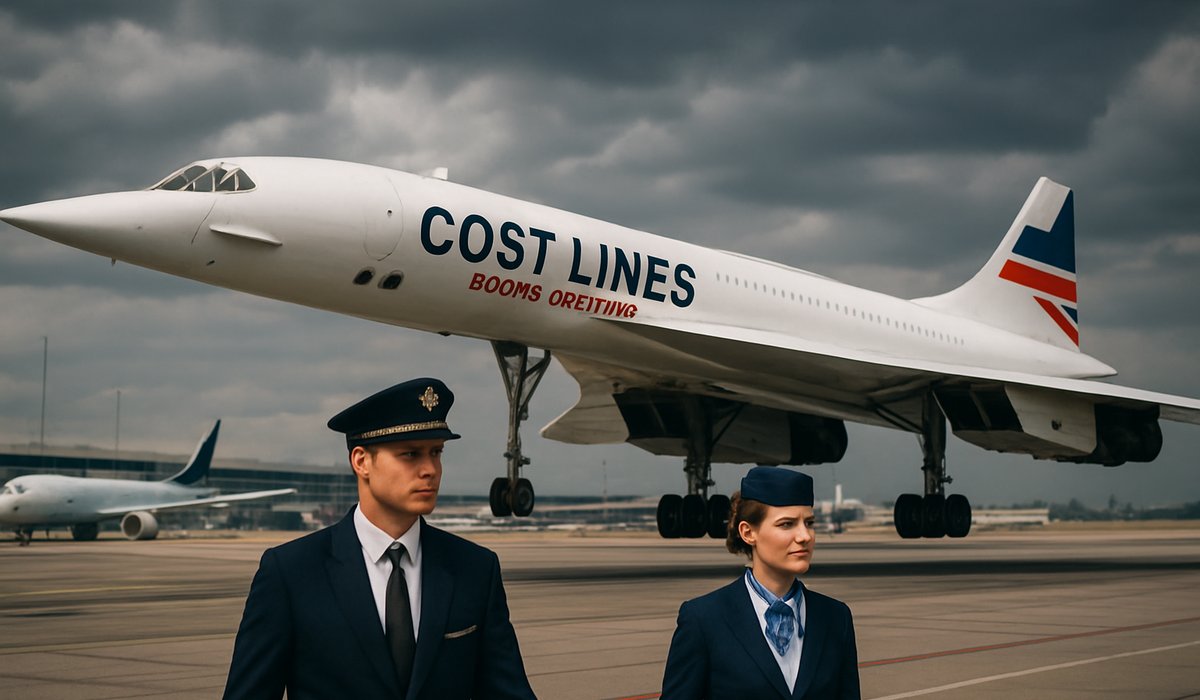
Image generated by AI
Trump Administration Lifts Supersonic Flight Ban Over Land, But Boom's Overture Faces Four Critical Hurdles to Commercial Viability
With regulatory barriers removed, the race to revive supersonic aviation enters a new phase—but engineering, economics, and environmental challenges loom large
Regulatory Breakthrough Opens Door for Supersonic Revival
A landmark executive order signed by President Donald Trump on June 6, 2025, has removed one of the most significant regulatory obstacles that contributed to the original Concorde's commercial demise: the prohibition on supersonic flights over continental land masses. The decision marks a watershed moment for the aviation industry, potentially paving the way for a new generation of high-speed aircraft after nearly two decades without viable supersonic passenger service.
Yet this regulatory victory, while symbolically important, represents only the opening chapter in an ambitious but treacherous journey. Boom Supersonic, the Denver-based aerospace manufacturer banking its future on the Overture—a next-generation supersonic transport designed to carry 65 to 80 passengers—must still overcome substantial technical, financial, operational, and environmental barriers before commercial flights become reality.
Four Major Obstacles Stand in Boom's Path
The regulatory green light does not guarantee commercial success. Industry analysts identify four critical challenges the Overture project must overcome:
First, Engineering and Safety Certification: Designing and certifying a supersonic aircraft to modern safety standards requires navigating complex Federal Aviation Administration protocols. The aircraft must demonstrate superior performance across extreme flight regimes while meeting contemporary noise and emissions benchmarks—something the original Concorde never had to prove.
Second, Economic Viability and Ticket Pricing: Supersonic operations demand significantly higher fuel consumption than subsonic flight. With volatile jet fuel prices influenced by geopolitical tensions and global energy markets, maintaining profitable ticket pricing while covering operational costs remains uncertain. Airlines balked at Concorde's operating expenses for decades.
Third, Environmental and Community Impact: Sonic boom restrictions shaped the original supersonic ban. Although Trump's order permits overland flights, public opposition to noise pollution could resurface, limiting the Overture's operational corridors and passenger demand.
Fourth, Market Demand and Airline Commitments: Premium business travelers represent the primary target market, yet the post-pandemic aviation landscape has fundamentally shifted toward cost efficiency and sustainability. Securing sufficient airline orders and customer willingness to pay premium fares remains unproven.
Industry Watches with Cautious Interest
The aviation sector's response has been measured. While the regulatory change eliminates a significant constraint, industry veterans note that Concorde's commercial failure stemmed from multiple compounding factors—not solely the flight ban.
Boom Supersonic's success will ultimately depend on whether it can deliver an aircraft that simultaneously achieves economic efficiency, environmental responsibility, and genuine market demand—challenges that defeated its legendary predecessor.
FAQ: Supersonic Aviation's Future
Q: Can the Overture legally fly supersonic routes now? A: Over land, yes—within the United States and potentially other nations following similar regulatory reforms. Overwater supersonic routes require additional approvals.
Q: How expensive will Overture tickets be? A: Projections suggest premium pricing comparable to business class on long-haul flights, though exact fares depend on operating costs and fuel prices.
Q: What happened to the original Concorde? A: The supersonic ban over land, combined with high operating costs and limited profitability, led to the aircraft's retirement in 2003.
Q: Which airlines have ordered the Overture? A: As of 2025, several carriers have expressed interest, but firm aircraft orders remain limited pending certification completion.
Q: Will supersonic flights be environmentally friendly? A: Fuel consumption remains higher than subsonic aircraft; Boom emphasizes sustainable aviation fuel compatibility to mitigate environmental impact.
Related Travel Guides
-
Travel Middle East Crisis: 181 Flights Canceled Across Gulf Hub Airports
-
Japan Airlines President Cuts Pay 30% After Cabin Crew Alcohol Violation and Cover-Up Investigation
-
Kuwait Travel Flights Disrupted: 12+ Cancellations Across Gulf Air, Kuwait Airways, EgyptAir
External Resources
Disclaimer
This article is for informational and educational purposes only. It does not constitute legal, financial, or professional advice. While we strive to provide accurate and up-to-date information, travel policies, regulations, and conditions change rapidly. Always verify information with official sources before making travel decisions. Nomad Lawyer makes no representations about the accuracy, reliability, completeness, or suitability of the information provided. Readers should consult qualified professionals for advice specific to their circumstances. The views expressed in this article are those of the author and do not necessarily reflect the views of Nomad Lawyer.
Preeti Gunjan
Contributor & Community Manager
A passionate traveller and community builder. Preeti helps grow the Nomad Lawyer community, fostering engagement and bringing the reader experience to life.
Learn more about our team →