
Taos Wool Festival 2026: Insider Guide to New Mexico's High-Desert Fiber Arts and Golden Aspen Season

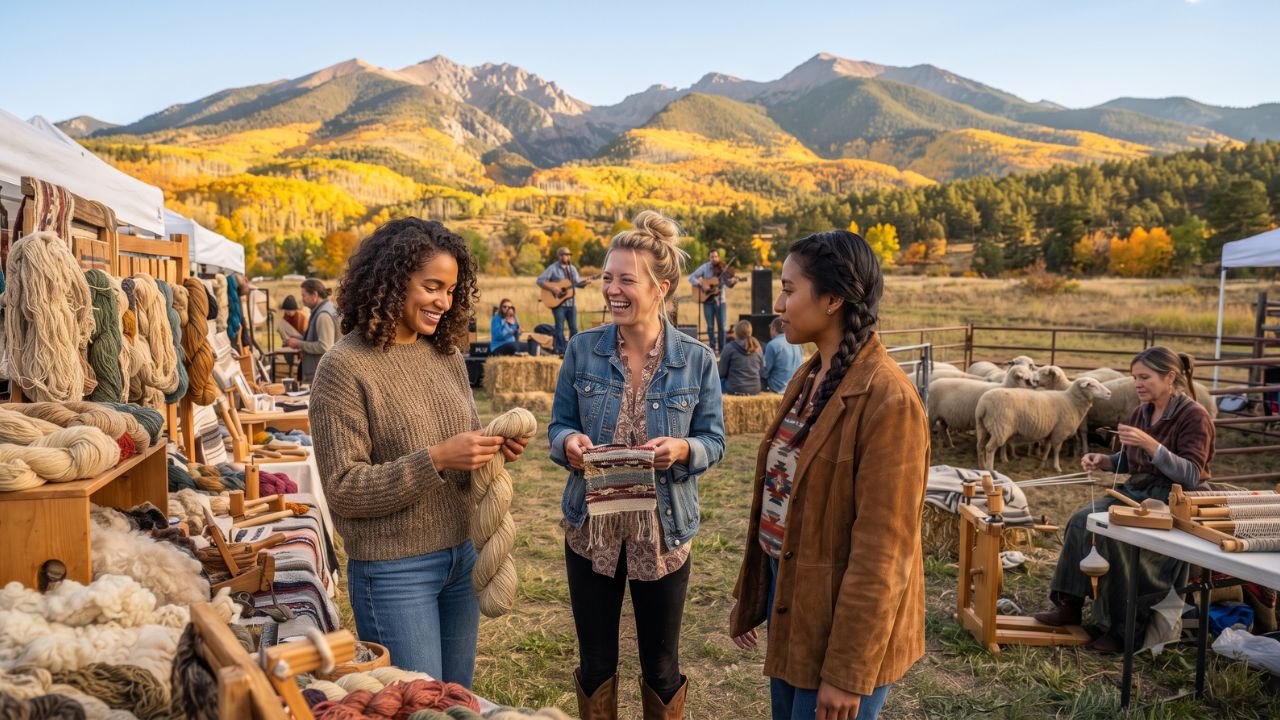
While most autumn travelers flock to standard pumpkin patches and apple orchards, the high-desert enclave of Taos dedicates the first weekend of October to sheep ranching, raw fleece spinning, and centuries-old Indigenous and Hispano weaving. Taking place on Saturday, October 3 (9:00 AM to 5:00 PM) and Sunday, October 4, 2026 (9:00 AM to 4:00 PM), the fourth annual Taos Wool Festival welcomes visitors with free admission to Red Willow Park, formerly known as Kit Carson Park. This open-air mountain gathering connects regional wool growers, master spinners, and folk artists across New Mexico, Colorado, Texas, and the Navajo Nation beneath the golden canopy of peak Sangre de Cristo foliage.
Situated at an elevation of 6,969 feet where high-desert sagebrush mesas collide with 13,000-foot alpine peaks, Taos has long stood as an epicenter of American craft. The wool festival avoids commercial trade show sterile booths, creating an intimate outdoor guild atmosphere where ranchers introduce heritage Churro sheep, yarn dyers demonstrate native vegetal pigment baths, and traditional weavers display hand-loomed Rio Grande and Diné textiles.
A Double Celebration: Wool Traditions and the Taos Fall Arts Finale
The timing of the 2026 festival creates an exceptional cultural alignment. Sunday, October 4 marks the dual finale of both the Taos Wool Festival and the 52nd annual Taos Fall Arts Festival, which opens on September 18. This overlap transforms the entire historic core into an expansive gallery trail. Attendees can wander from fleece washing and live carding demonstrations at Red Willow Park directly into downtown historic venues surrounding Taos Plaza, the Historic Courthouse, McCarthy Plaza, the old US Bank building, and Tuesday Morning.
The market at Red Willow Park highlights the vast creative range of southwestern fiber arts. Over two days, visitors encounter ranch-direct spinning wools, hand-dyed indie yarns, hand-felted apparel, and fine woven rugs. The 2026 exhibitor roster unites local Taos craft studios with master weavers from the Navajo Nation and Oaxacan textile masters known for intricate pedal-loom Zapotec patterns. Live artisan demonstrations run throughout the weekend, breaking down the labor-intensive journey from raw fleece shearing to loom-tensioned masterworks.
Acoustic performances provide a relaxed soundtrack between 12:00 PM and 3:00 PM daily. On Saturday, jazz guitarists Robert Quijano and Shaw Hayakawa take the park bandstand, followed on Sunday by the High Desert Acoustic Duo, featuring cellist Mark Dudrow and multi-instrumentalist Justin Dean. Food stalls feature regional culinary staples, including slow-braised local lamb tacos, piñon-infused baked goods, and small-batch espresso.
What Makes Taos Fiber Culture Different
The pastoral history of Northern New Mexico is inseparable from the Churro sheep, a hardy heritage breed brought to the Rio Grande Valley by Spanish settlers in the sixteenth century. Churro fleece produces long, lustrous, low-grease wool that proved ideal for both Hispano settlers developing Rio Grande blanket patterns and Diné (Navajo) weavers creating world-renowned geometric chief blankets and storm patterns.
Unlike contemporary synthetic textile manufacturing, Taos fiber arts remain rooted in regional ecology. Dyers gather wild chamisa blossoms for radiant yellows, cochineal insects for deep crimsons, and native walnut husks for rich earthen browns.
Beyond the weekend tents, Taos County supports over 70 permanent art galleries and acclaimed cultural institutions. Visitors can explore the Russian-carved architecture at the Taos Art Museum at Fechin House, modern southwestern masters at the Harwood Museum of Art, and premier Native American and Hispano ethnographic collections at the Millicent Rogers Museum, as well as colonial life at the Martinez Hacienda and the Kit Carson House and Museum. State resources from the New Mexico Tourism Department emphasize that exploring northern New Mexico's historic plazas offers a direct window into living American folklore.
Visitor Insider Tips
Experiencing Taos in early October requires practical attention to high-altitude mountain climates, scenic driving routes, and community protocol.
- Altitude and Autumn Packing: At nearly 7,000 feet, sun intensity is high while atmospheric humidity is low. Drink plenty of water and apply sun protection continuously. October temperatures can drop to 30°F overnight before climbing to 68°F by midday, making layered fleece, flannel, and windbreakers essential.
- Peak Foliage Scenic Drives: Pair the festival with a road trip along the Enchanted Circle Scenic Byway, an 84-mile loop circling Wheeler Peak (New Mexico's highest point at 13,161 feet). Golden trembling aspens line the highway between Angel Fire, Eagle Nest, and Red River. Alternatively, drive the historic High Road to Taos from Santa Fe, passing through traditional woodcarving and weaving villages like Chimayó and Truchas.
- Canyon Overlooks and Hiking: Drive 15 minutes northwest of town to stand on the Rio Grande Gorge Bridge, spanning 650 feet above the river chasm. The adjacent rim trails within the Bureau of Land Management Rio Grande del Norte National Monument offer level walking routes with sweeping views of the Sangre de Cristo mountain wall.
- Where to Base Yourself: Reserve adobe casitas or historic inns near Taos Plaza or along Paseo del Pueblo Norte to walk directly to Red Willow Park and downtown gallery exhibitions without navigating event parking.
Cultural and Environmental Context
Taos is a layered multicultural community where Native American, Hispano, and Anglo artistic legacies intersect. Central to this heritage is Taos Pueblo, an ancient multi-story adobe settlement inhabited continuously for over 1,000 years. Recognized as a UNESCO World Heritage Site, the Pueblo requires visitors to adhere strictly to tribal regulations: always check visiting hours in advance, respect private residence markers, and obtain photography permits where designated.
Environmental stewardship across the high desert centers on watershed protection and traditional agricultural acequias (historic communal irrigation ditches). These hand-dug gravity canals, managed by elected mayordomos for centuries, channel snowmelt from the Sangre de Cristo peaks into valley pastures where sheep graze and heirloom heritage crops thrive. Supporting local wool growers and purchasing certified Native and Hispano textiles directly funds the preservation of these centuries-old land and water practices.
FAQ: Visiting Taos Wool Festival 2026
What are the festival dates, location, and entry costs? The festival takes place October 3-4, 2026, at Red Willow Park (formerly Kit Carson Park) in downtown Taos. Hours are Saturday from 9:00 AM to 5:00 PM and Sunday from 9:00 AM to 4:00 PM. Admission is completely free.
How do I get to Taos from the nearest airport? Taos is a 1.5-hour drive north of Santa Fe Regional Airport (SAF) and approximately 2.5 hours north of Albuquerque International Sunport (ABQ) via Interstate 25 and US-285/NM-68.
Can I purchase finished rugs and raw wool at the event? Yes, the festival features raw fleeces, roving, hand-spun yarns, commercial knitting accessories, and heirloom hand-woven blankets and rugs directly from regional ranchers and master weavers.
Are credit cards accepted by vendors? Most textile artists, yarn studios, and food vendors accept cards, but bringing cash is recommended for smaller craft supplies and park donation boxes.
When the golden aspen leaves quiver against the granite crags of the Sangre de Cristo and spinning wheels whirl in Red Willow Park, Taos proves that the finest art is woven from patience, sheep, and mountain earth.
Related Travel Guides
- Mirjan Fort Karnataka: Inside the Pepper Queen's Lost Maritime Kingdom Reshaping India's Heritage Tourism in 2026
- San Diego Rental Market Analysis 2026: Strategic Guide for New Residents and Renters
- Texas State Authorities Launch Multi-Agency Crackdown on Commercial Birth Tourism Operations in South Texas 2026
Disclaimer
This article is for informational and educational purposes only. It does not constitute legal, financial, or professional advice. While we strive to provide accurate and up-to-date information, travel policies, regulations, and conditions change rapidly. Always verify information with official sources before making travel decisions. Nomad Lawyer makes no representations about the accuracy, reliability, completeness, or suitability of the information provided. Readers should consult qualified professionals for advice specific to their circumstances. The views expressed in this article are those of the author and do not necessarily reflect the views of Nomad Lawyer.
Naina Thakur
Contributor & Travel Specialist
Travel enthusiast and legal writer covering visa regulations, responsible tourism, and cultural journeys across global destinations.
Learn more about our team →