
Tanzania Standard Gauge Railway Financing: $2.33bn Secured for Phase 1 Completion
Standard Chartered arranges $2.33bn syndicated financing for Tanzania's Standard Gauge Railway in 2026. The funding completes Phase 1 construction across three sections, enabling regional logistics growth and enhanced East African connectivity.

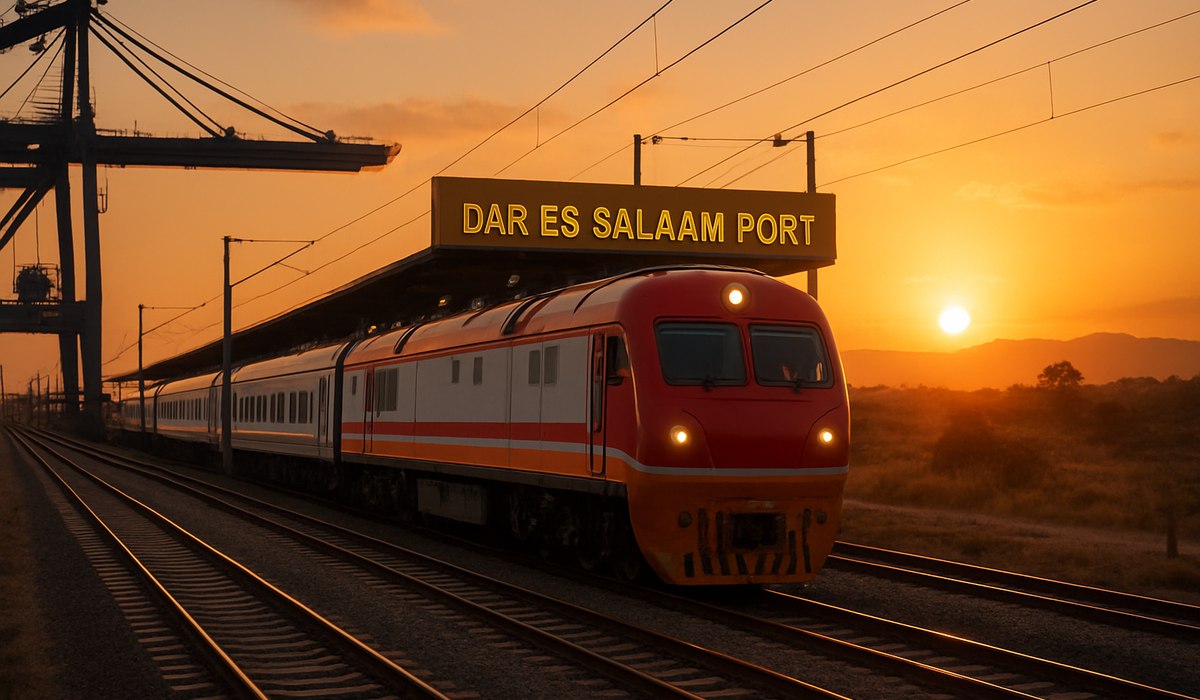
Image generated by AI
Tanzania Secures $2.33 Billion for Standard Gauge Railway Phase 1 Completion
Standard Chartered Bank has successfully arranged $2.33 billion in syndicated financing to complete construction of Tanzania's 1,219-kilometer Standard Gauge Railway Phase 1, connecting Dar es Salaam to Mwanza. The financing package targets the final three sections of this transformative regional corridor, with Tanzania Railways Corporation already operating passenger services between Dar es Salaam and Dodoma since July 2024. This capital injection represents a critical milestone in positioning Tanzania as East Africa's premier logistics and transportation hub.
The Tanzania standard gauge railway financing structure combines export credit agency support with commercial banking partnerships, demonstrating robust international confidence in the project's economic viability. Construction progress on multiple sections continues simultaneously, with operations expanding as infrastructure completion advances eastward.
Financing Breakdown: $2.33 Billion Across Three Sections
The syndicated financing package divides strategically across three distinct construction lots, each with dedicated funding mechanisms and international partners. Lots 3 and 4 account for $1.782 billion of the total package, covering 430 kilometers from Makutupora through Dodoma to Isaka. Turkish contractor Yapi Merkezi manages this section, supported by $1.32 billion in export credit agency facilities arranged between 2025 and 2026, plus $462 million from commercial and development finance institutions secured in 2023.
Lot 5 extends the railway an additional 249 kilometers from Isaka northward to Mwanza, funded through a $559 million covered facility drawn in 2025. China Civil Engineering Construction Corporation executes this final northern segment with backing from Chinese export credit agency Sinosure.
Standard Chartered Bank functioned as sole global lender and financial arranger throughout negotiations, serving Tanzania's Ministry of Finance directly. This banking partnership demonstrates how international financial institutions support African infrastructure development at scale. For travelers planning routes through Tanzania's emerging logistics zones, understanding this infrastructure investment context proves valuable for business and leisure journey planning.
International Partners and Export Credit Agencies Driving Development
The railway infrastructure project mobilizes support from multiple export credit agencies across Europe and Asia, creating geopolitical and economic partnerships. Sweden's EKN and SEK agencies contribute expertise alongside Poland's KUKE and Italy's SACE, reflecting European commitment to African development. These export credit agency mechanisms provide concessional and long-term financing unavailable through conventional commercial banking channels alone.
Chinese involvement through Sinosure and CCECC reinforces Asia-Africa development corridors increasingly central to continental growth strategies. This multinational financing structure reduces individual country risk exposure while distributing repayment obligations across diverse revenue streams. Tourism and freight operations will eventually service these loans, making railway efficiency crucial to Tanzania's long-term fiscal health.
Standard Chartered's appointment as sole arranger underscores the bank's regional expertise and relationships with multilateral financial institutions. The banking institution previously arranged $1.46 billion for earlier SGR phases covering 550 kilometers from Dar es Salaam through Morogoro and Dodoma to Makutupora. Continuity in financial partnership facilitates smoother project execution and reduces administrative complexity for Tanzania's government stakeholders.
Operational Progress and Regional Impact
Tanzania Railways Corporation commenced scheduled passenger operations on the Dar es Salaam–Dodoma segment in July 2024, delivering crucial proof-of-concept for the broader network. Journey times between these major cities now compete with road transport while offering superior comfort and cargo capacity. The operational section validates ridership demand models supporting future expansion financing decisions.
Regional trade dynamics shift substantially as the railway nears completion toward Mwanza on Tanzania's western border. Port-to-inland connectivity improvements enhance competitiveness for landlocked Zambian and Democratic Republic of Congo exporters, diversifying their logistics options beyond congested southern African corridors. Railway operations directly strengthen Tanzania's position as a regional logistics distributor, generating employment and tax revenue across rural communities currently underserved by transportation infrastructure.
The completed Phase 1 network will span three distinct geographic zones: the coastal Dar es Salaam port district, the central highlands around Dodoma serving agricultural regions, and the western Lake Victoria economic zone anchored by Mwanza. Each segment addresses distinct economic needs while collectively forming an integrated transportation backbone. Travelers, freight forwarders, and business professionals will benefit from dramatically reduced transit times once full operations commence.
Tanzania's Broader Infrastructure Ambitions and Regional Connectivity
Tanzania's standard gauge railway financing represents only the opening phase of an ambitious continental vision. Government planners envision eventual northward extension toward Kenya and southward connections to Zimbabwe, positioning the nation as a transit corridor for southern and eastern African commerce. These longer-term extensions remain conceptual but benefit from successful Phase 1 demonstration.
The railway project aligns with Tanzania's development goals under Vision 2025, promoting industrial diversification beyond agriculture and mining. Tourism competitiveness improves as visitors gain reliable transport alternatives to crowded highways, enabling experiential travel beyond Dar es Salaam's immediate vicinity. Wildlife tourism areas in central Tanzania become more accessible, benefiting conservation finance and rural communities hosting national parks.
Sustainable development considerations shaped financing criteria, with export credit agencies increasingly scrutinizing environmental and social governance metrics. The railway reduces carbon emissions per unit of cargo compared to truck transport, supporting Tanzania's climate commitments. Project employment throughout construction and permanent operational phases will directly benefit 10,000+ workers across three years.
How to Book the Best Fare
Travelers planning journeys on Tanzania's operating Dar es Salaam–Dodoma segment should book directly through Tanzania Railways Corporation's official booking platform or authorized travel agents specializing in East African rail. Journey duration averages 6-8 hours depending on service class and seasonal operating conditions.
Fare optimization strategies:
- Book 2-4 weeks ahead for optimal pricing on premium seating classes
- Travel mid-week (Tuesday–Thursday) when demand and fares typically decrease
- Consider off-peak seasons (April–May, November) for reduced competition
- Combine with regional tours through travel agents offering bundled rail-accommodation packages
- Monitor official announcements for new service launches as western sections complete
Ticket classes typically include economy bench seating, standard reserved seats, and first-class cabins with refreshment service. Business travelers benefit from direct point-to-point journeys eliminating downtown traffic congestion present on parallel road routes.
International travel platforms like Trainline increasingly feature African railway networks as these corridors develop operational maturity. Booking through established platforms provides payment security and customer support unavailable through local-only channels, though direct Tanzania Railways Corporation bookings often offer lowest base fares.
Key Data Table: Tanzania SGR Phase 1 Financing Summary
| Metric | Details |
|---|---|
| Total Financing Secured | $2.33 billion USD |
| Phase 1 Total Distance | 1,219 kilometers |
| Lots 3–4 Funding | $1.782 billion (Makutupora–Isaka, 430 km) |
| Lot 5 Funding | $559 million (Isaka–Mwanza, 249 km) |
| ECA Facilities (Lots 3–4) | $1.32 billion from Sweden, Poland, Italy |
| Commercial/Development Financing | $462 million (2023 signing) |
| Chinese ECA Sinosure Facility | $559 million (2025 drawn) |
| Previous Phase Financing (Lots 1–2) | $1.46 billion arranged by Standard Chartered |
| Operating Service Launch | July 2024 (Dar es |
Disclaimer
This article is for informational and educational purposes only. It does not constitute legal, financial, or professional advice. While we strive to provide accurate and up-to-date information, travel policies, regulations, and conditions change rapidly. Always verify information with official sources before making travel decisions. Nomad Lawyer makes no representations about the accuracy, reliability, completeness, or suitability of the information provided. Readers should consult qualified professionals for advice specific to their circumstances. The views expressed in this article are those of the author and do not necessarily reflect the views of Nomad Lawyer.
Kunal K Choudhary
Co-Founder & Contributor
A passionate traveller and tech enthusiast. Kunal contributes to the vision and growth of Nomad Lawyer, bringing fresh perspectives and driving the community forward.
Learn more about our team →