
Sydney Unveils Specialized Airport Metro Trains for Western Sydney International Airport in 2026
Australia introduces a customized fleet of 12 high-capacity metro trains designed specifically for luggage-carrying passengers traveling to the new Western Sydney International Airport.

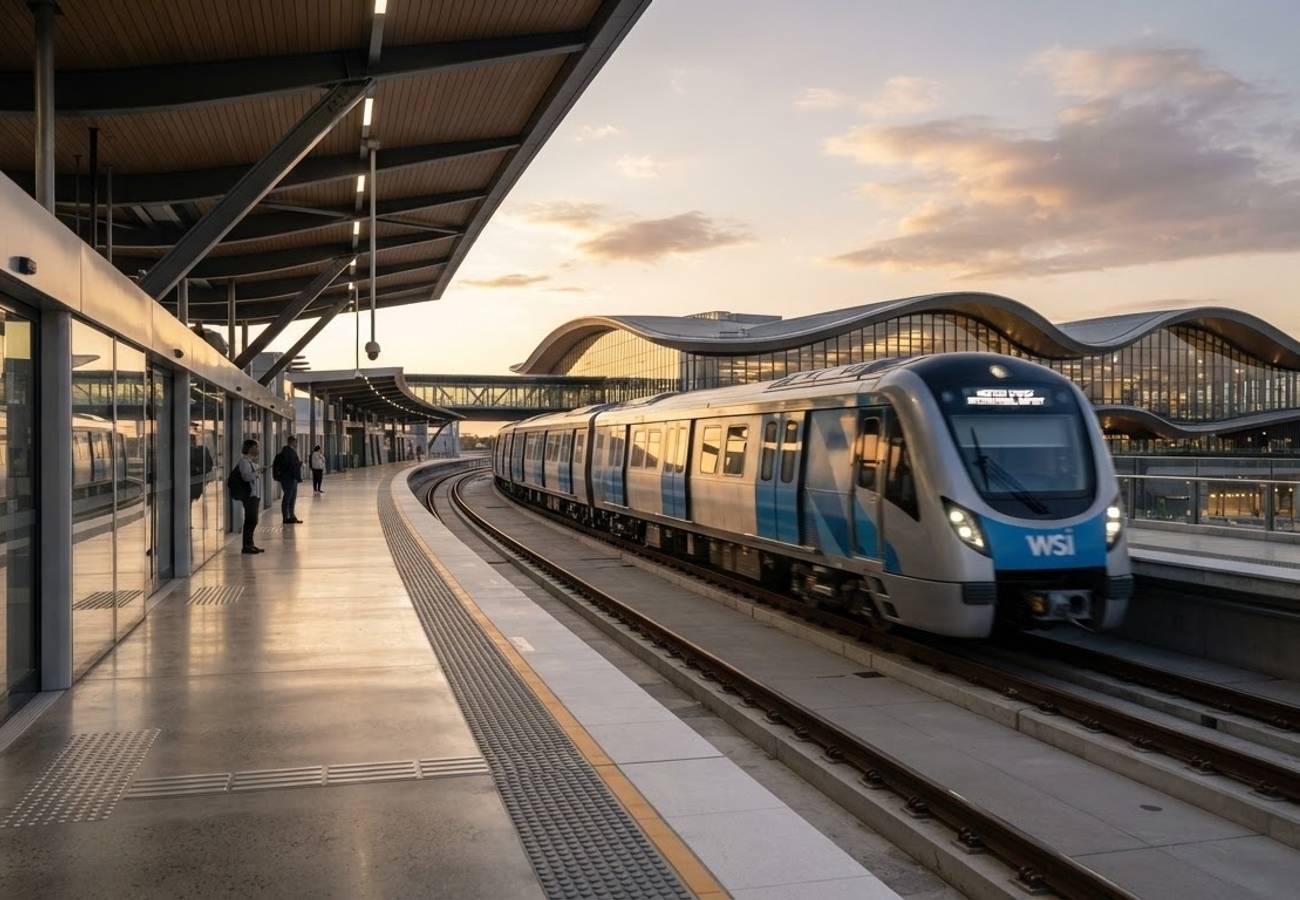
Image generated by AI
Sydney is transforming its regional transit landscape with the introduction of a purpose-built rail fleet designed to eliminate the friction of airport commutes for thousands of future passengers and employees. The first of 12 specialized trains has arrived to service the Western Sydney Airport Line, marking a shift toward integrating urban transit with high-capacity aviation logistics.
The deployment of these customized carriages represents a departure from standard urban rail design. Unlike typical commuter trains, these units are engineered specifically to accommodate travelers with heavy luggage, ensuring that the journey to the terminal is as seamless as the flight itself. This infrastructure move is aimed at supporting the rapid population growth in Western Sydney and ensuring the new aviation hub remains accessible.
Engineering a Passenger-First Transit Experience
The initial delivery consists of a new class of three-car trains, each capable of transporting 645 passengers. These vehicles are not merely standard metro cars; they have been re-engineered to handle the specific physical demands of international travel.
To accommodate the "modern traveler," the interior layout has been modified. The central aisles are approximately 30 centimeters wider than those found on the Sydney Metro M1 Line, allowing for easier movement when passengers are hauling suitcases. Furthermore, the trains feature dedicated luggage storage areas located beneath the seats, preventing the aisles from becoming congested.
Technological integration is also a priority. High-resolution screens are installed throughout the carriages to provide real-time flight data directly from the airport, reducing passenger anxiety regarding departure times. Accessibility has been baked into the design, with dedicated wheelchair spaces, hearing loops across all carriages, and bicycle storage facilities to cater to a diverse range of commuters.
Strategic Connectivity Between St Marys and Bradfield
Industry reports indicate that the success of a new aviation hub depends less on runway length and more on ground connectivity. The Western Sydney Airport Line addresses this by establishing a 23-kilometre rail artery that connects St Marys, the Western Sydney International Airport, and the emerging Bradfield city precinct.
This six-station corridor is designed to turn the airport into a connected urban hub rather than an isolated facility. For the traveler, this means the "airport experience" begins the moment they board the train. For the local community, the line provides a critical transport backbone linking residential zones with new employment opportunities in the aviation and business sectors.
The logistical scale of the project is evidenced by the journey of the first train, which traveled 23,000 kilometres from the Siemens Mobility production facility in Vienna, Austria. The remaining 11 trains are expected to arrive in phases through 2026 and 2027.
Western Sydney Airport Line Technical Specifications
| Project Feature | Current Status/Detail |
|---|---|
| Train fleet | 12 airport metro trains |
| Train capacity | 645 passengers per three-car train |
| Rail distance | 23 kilometres |
| Stations | Six new stations |
| Manufacturing location | Vienna, Austria |
| Maintenance facility | Orchard Hills, Sydney |
| Airport connection | St Marys to Western Sydney International Airport |
| Passenger journey target | Approximately 15 minutes between St Marys and Airport Terminal |
Beyond the rolling stock, the infrastructure is being reinforced with high-safety standards. Construction teams are currently installing 108 platform screen doors, and station platforms across the route have already reached completion.
Integrating Cultural Identity and Global Standards
For international visitors, the Western Sydney Airport Line is positioned to be a primary gateway into Australia. By integrating real-time aviation data into the public transport journey, Sydney is meeting the growing expectation for a "frictionless" transition from land to air.
The project also incorporates significant cultural elements to ground the international facility in local heritage. The seating upholstery features Indigenous designs representing Ngurra (Country) and Badu (water). These artworks were created by Dharug artists Alexandra Byrne, Tina Barahanos, and Leanne Watson Redpath, ensuring that the first impression for arriving global travelers is one of local identity and respect.
The Global Impact of Integrated Aviation Transit
From a travel analytics perspective, Sydney's investment in a specialized metro fleet mirrors a global trend where destination competitiveness is tied to "last-mile" efficiency. When passengers can move predictably and comfortably from a city center to a terminal, it directly influences tourism spending patterns and business travel efficiency.
By reducing reliance on road transport and ride-sharing services, the New South Wales and Australian governments are mitigating potential traffic congestion around the new airport precinct. This strategic move transforms the airport from a simple transit point into a catalyst for regional economic development.
Why This Matters: The Traveler's Perspective For the frequent flyer or the digital nomad, this shift in infrastructure means the end of the "luggage struggle" common in many global cities where airport trains are simply repurposed commuter cars. From a logistical standpoint, a 15-minute transit time between St Marys and the terminal creates a highly predictable schedule, allowing travelers to optimize their arrival windows. For the legal and business professional, the integration of the Bradfield city precinct means that the airport is no longer a distant outpost but a central node in a new business district.
Sydney is not merely adding tracks; it is redefining the urban-aviation interface to ensure the city remains a top-tier global destination.
Related Travel Guides
Disclaimer
This article is for informational and educational purposes only. It does not constitute legal, financial, or professional advice. While we strive to provide accurate and up-to-date information, travel policies, regulations, and conditions change rapidly. Always verify information with official sources before making travel decisions. Nomad Lawyer makes no representations about the accuracy, reliability, completeness, or suitability of the information provided. Readers should consult qualified professionals for advice specific to their circumstances. The views expressed in this article are those of the author and do not necessarily reflect the views of Nomad Lawyer.
Raushan Kumar
Founder & Lead Developer
Full-stack developer with 11+ years of experience and a passionate traveller. Raushan built Nomad Lawyer from the ground up with a vision to create the best travel and law experience on the web.
Learn more about our team →