
Boston Children's Museum Launches $18 Million Waterfront Resiliency Project to Combat Sea Level Rise in 2026
Boston Children's Museum begins an $18 million multi-phase waterfront upgrade in August 2026 to protect its 135-year-old structure from rising sea levels and severe storm flooding.

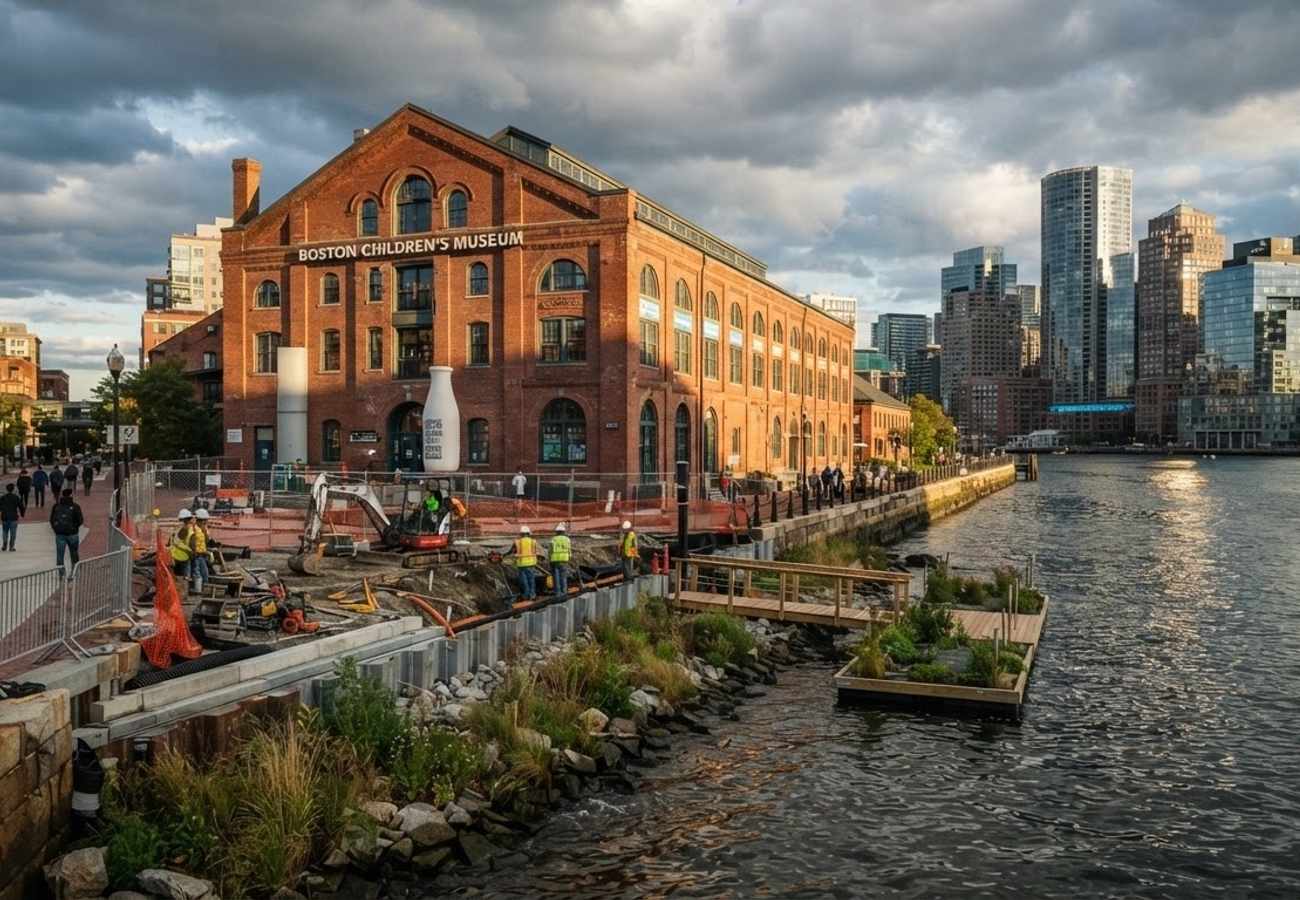
Image generated by AI
The Boston Children's Museum has initiated a multi-year Waterfront Resiliency Plan to safeguard its historic campus against escalating climate threats. This $18 million infrastructure overhaul addresses the immediate risk of flooding and sea-level rise affecting the Fort Point Channel district.
Construction officially commenced in August 2026. The project is designed to protect a 135-year-old building that has become increasingly vulnerable to severe winter storms and rising tides. Beyond structural preservation, the museum is transforming its exterior into a public-facing educational hub for climate adaptation.
Strategic Infrastructure Upgrades
The project is divided into two distinct phases to balance immediate risk mitigation with long-term urban planning.
Phase One: Immediate Protection The current construction phase focuses on "hardening" the facility. Key technical improvements include:
- Building Envelope Reinforcement: Strengthening the exterior to prevent water intrusion during surge events.
- Water Management: Installation of below-ground drainage networks, high-capacity pumps, and dedicated water storage solutions.
- Utility Migration: Relocating and protecting critical utility systems to prevent total operational failure during floods.
Phase Two: Public Integration The subsequent stage will convert the outdoor waterfront into a climate-resilient public park. This area is engineered to provide flood protection through 2070 and will include:
- Nature-Based Solutions: Implementation of living shorelines, floating gardens, and tide pool habitats.
- Public Access: Enhanced connectivity to the Harborwalk and Fort Point Channel.
- Interactive Learning: Outdoor exhibits focusing on marine environments and coastal ecosystems.
Financial and Regional Impact
The museum has secured over $15 million in funding to kickstart the first phase. This investment is viewed not only as a cultural preservation effort but as an economic necessity for the South Boston and Seaport districts.
| Project Component | Detail/Value |
|---|---|
| Total Estimated Cost | $18 Million |
| Funding Secured (Phase 1) | $15+ Million |
| Building Age | 135 Years |
| Protection Horizon | Through 2070 |
| Construction Start Date | August 2026 |
Why This Matters: Industry Analysis
From a logistical and urban planning perspective, this project signals a shift in how cultural institutions manage real estate in "high-risk" coastal zones. For travelers and families visiting the Seaport district, the real impact is the transition of the museum from a static building to a dynamic, "living" shoreline.
Our analysis of the route map suggests that the Fort Point Channel is a critical vulnerability point for Boston. By implementing these upgrades, the museum is effectively creating a "buffer zone" that reduces the flood pathway for surrounding businesses and neighborhoods. This is a blueprint for other historic coastal cities; the integration of "living shorelines" (using vegetation and natural materials) rather than just concrete sea walls is a sophisticated move that improves biodiversity while managing storm surges.
Forward Outlook
Expect the museum to remain operational during construction, though access to the immediate waterfront may be restricted. Once Phase Two is complete, the site will likely become a primary case study for urban climate adaptation in the Northeast. The success of these drainage and barrier systems will determine if similar nature-based interventions are scaled across the rest of the Boston Harborwalk.
A critical step in ensuring a 135-year-old landmark survives the next century of Atlantic storm surges.
Related Travel Guides
Disclaimer
This article is for informational and educational purposes only. It does not constitute legal, financial, or professional advice. While we strive to provide accurate and up-to-date information, travel policies, regulations, and conditions change rapidly. Always verify information with official sources before making travel decisions. Nomad Lawyer makes no representations about the accuracy, reliability, completeness, or suitability of the information provided. Readers should consult qualified professionals for advice specific to their circumstances. The views expressed in this article are those of the author and do not necessarily reflect the views of Nomad Lawyer.
Kunal K Choudhary
Co-Founder & Contributor
A passionate traveller and tech enthusiast. Kunal contributes to the vision and growth of Nomad Lawyer, bringing fresh perspectives and driving the community forward.
Learn more about our team →