
St. Beatus Caves: Switzerland's Hidden Underground World Above Lake Thun
Explore the St. Beatus Caves in Switzerland's Bernese Oberland, featuring illuminated passages, underground waterfalls, and a geological cave museum.

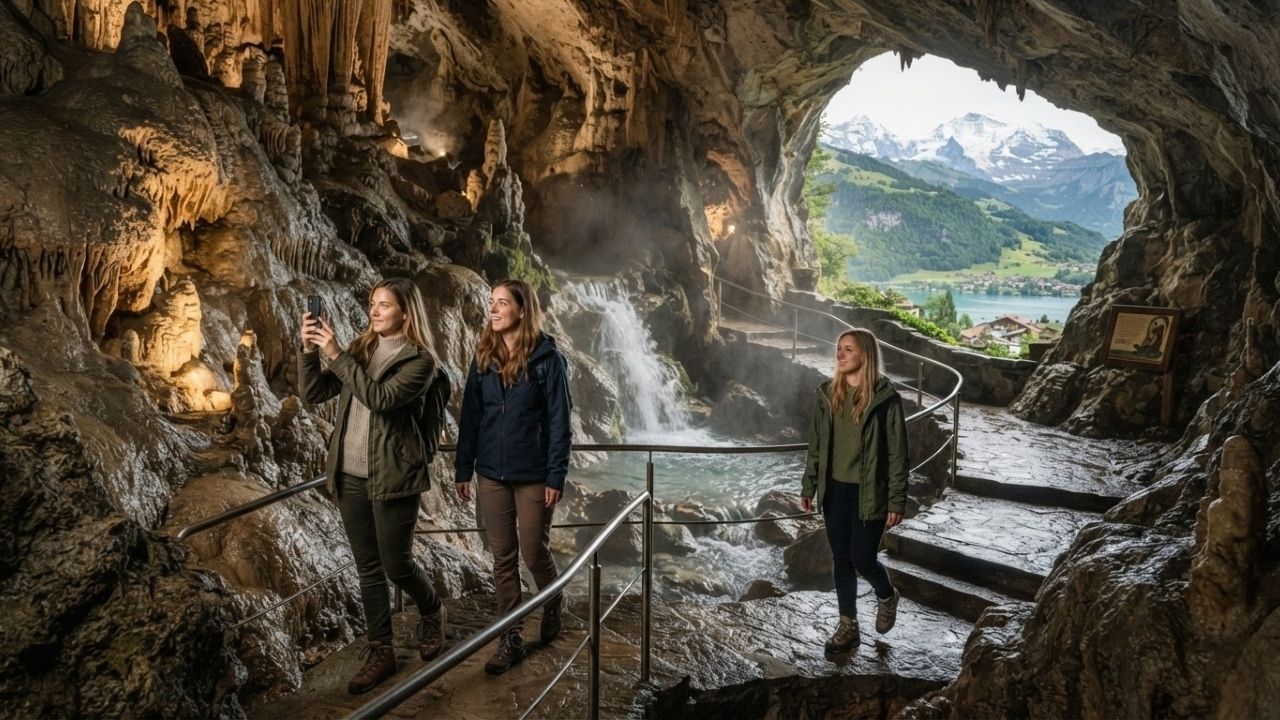
Image generated by AI
The St. Beatus Caves in the Bernese Oberland have emerged as a premier geological attraction, offering visitors a one-kilometer pathway through stalactites, stalagmites, and roaring underground waterfalls above Lake Thun.
The Local Trend: Geological and Weather-Resilient Travel
Modern travelers are increasingly looking for alternatives to high-altitude hiking, seeking weather-resilient natural experiences that combine geography, folklore, and educational elements. The St. Beatus Caves, located near Sundlauenen in the canton of Bern, address this demand by providing a stable underground environment that is accessible year-round, regardless of Swiss alpine weather conditions.
The cave system is carved into the Niederhorn mountain. Approximately one kilometer of the extensive cave network is open to the public. Illuminated concrete pathways lead visitors through narrow passages, naturally formed chambers, grottos, and underground waterfalls. The circular walking route contains exactly 297 steps, takes about one hour to complete, and features informative signboards explaining the geological origin of the stone features.
Saint Beatus and Local Folklore
The cave system holds cultural significance in Swiss folklore. According to local legend, Saint Beatus, a 6th-century monk, lived in these caverns and defeated a dragon that occupied the mountain. Today, this legend provides a cultural layer to the visitor experience, making the geological tour appealing to families and history enthusiasts.
St. Beatus Caves Visitation and Environmental Profile
| Attraction Attribute / Parameter | Technical & Operational Details | Strategic Visitor Planning Guidance |
|---|---|---|
| Geographical Location | Sundlauenen, Bernese Oberland, Switzerland | Positioned on cliff faces overlooking Lake Thun |
| Accessible Cave Route | Exactly 1 kilometer (1,000 meters) | Fully illuminated, paved pathway with handrails |
| Interior Step Count | 297 stairs / steps | Involves moderate physical exertion inside grottos |
| Average Interior Temperature | Constant 8°C to 10°C (46°F to 50°F) | Requires warm layers even during hot summer months |
| Excursion Duration | Around 1 hour | Easy to integrate with Lake Thun cruise itineraries |
| Core Facilities | Cave system, Cave Museum, restaurant | Tickets include access to the geological museum |
| Transit Connections | Bus, regional boat, and private car | Easily reached from the travel hub of Interlaken |
Cave Museum and Educational Value
To enhance the visitor experience, the St. Beatus Caves Museum is located adjacent to the cave entrance. The museum explains:
- Limestone Cave Development: The chemical process of water and limestone over thousands of years.
- Prehistoric Discoveries: Archaeological findings and fossil remains excavated within the caves.
- Scientific Research: The history of speleology (cave science) in the Niederhorn mountain area.
- Environmental Stewardship: The importance of protecting underground water basins and fragile rock formations.
The inclusion of interactive models and geological maps makes the site a key educational attraction for children and school groups visiting the canton of Bern.
Destination Specialist Local Insider Tips
To help travelers plan their excursions, local travel specialists recommend the following insider tips:
- Dress for the Constant 8–10°C Chill: The cave temperature remains at a constant 8°C to 10°C year-round. Carry a light windbreaker or fleece jacket, even if visiting in July.
- Combine Caves with a Lake Thun Boat Cruise: Take the regional boat from Interlaken to the Sundlauenen boat dock. Walk the scenic forest trail up to the cave entrance to enjoy views of the lake.
- Wear High-Traction Shoes: The 297 steps inside the grottos can be damp and slippery due to condensation and waterfall spray. Wear sturdy sneakers or hiking shoes.
- Visit During Midday in Summer: The caves offer a refreshing escape during hot summer days. Midday is also less crowded compared to early morning tour bus arrivals.
- Explore the Cave Museum First: Take 20 minutes to explore the museum before entering the caves; it gives context to the stalactite and stalagmite formations you'll see inside.
Future Outlook
By combining geological education, regional legends, and lakeside sightseeing, the St. Beatus Caves continue to strengthen the Bernese Oberland's tourism appeal. The site serves as a key template for low-impact, weather-resilient adventure tourism, allowing Switzerland to distribute visitor traffic away from crowded mountain summits to lesser-known valley walls.
Related Travel Guides
Disclaimer
This article is for informational and educational purposes only. It does not constitute legal, financial, or professional advice. While we strive to provide accurate and up-to-date information, travel policies, regulations, and conditions change rapidly. Always verify information with official sources before making travel decisions. Nomad Lawyer makes no representations about the accuracy, reliability, completeness, or suitability of the information provided. Readers should consult qualified professionals for advice specific to their circumstances. The views expressed in this article are those of the author and do not necessarily reflect the views of Nomad Lawyer.
Preeti Gunjan
Contributor & Community Manager
A passionate traveller and community builder. Preeti helps grow the Nomad Lawyer community, fostering engagement and bringing the reader experience to life.
Learn more about our team →