
Strait of Hormuz Crisis 2026: Regional Escalations Put Gulf Aviation and Tourism on High Alert
Military tensions between the US, Israel, and Iran center on the Strait of Hormuz, triggering operational shifts for Gulf airlines and heightened security for tourism hubs in Qatar and the UAE.

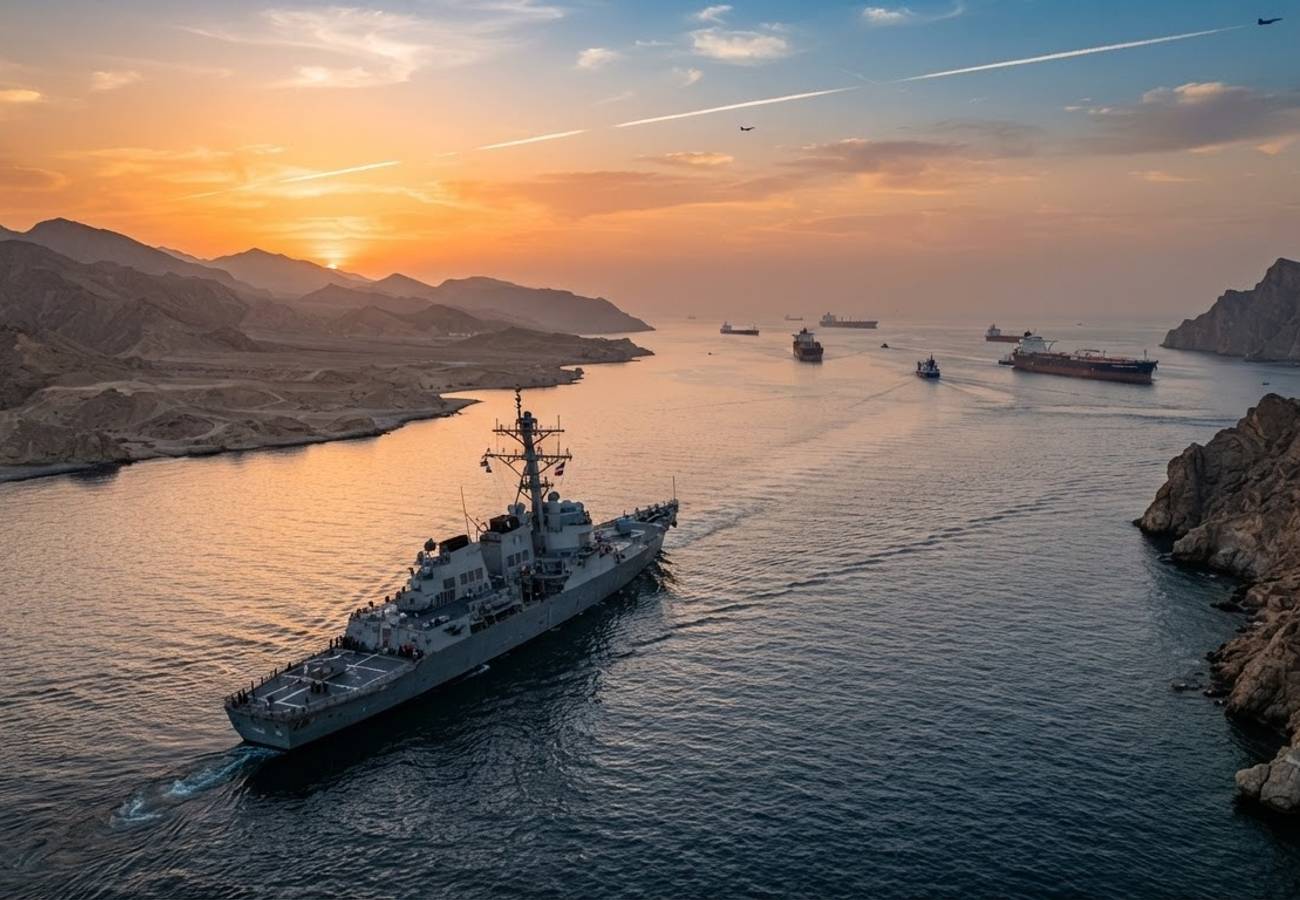
Image generated by AI
Military tensions involving the United States, Israel, and Iran have placed the Gulf region under severe security pressure, threatening the stability of global aviation and maritime tourism.
The Strait of Hormuz, a critical artery for global energy and shipping, is currently the epicenter of international security concerns. As military exchanges intensify, Gulf nations—including Qatar, the UAE, Bahrain, Oman, Saudi Arabia, and Kuwait—are implementing rigorous monitoring of their borders and airspace.
For the aviation sector, this instability is not theoretical. Airlines have already begun adjusting flight operations, and governments are reviewing security protocols to mitigate the impact of potential airspace closures.
Immediate Operational Risks in September 2026
The current crisis in the Strait of Hormuz extends beyond oil markets. Because this narrow waterway connects the Persian Gulf to the Gulf of Oman and the Indian Ocean, any military disruption creates a ripple effect across the travel industry.
Our analysis of current aviation warnings indicates that the following risks are now active:
- Flight Diversions: Mandatory route changes resulting in longer flight times and increased fuel consumption.
- Airspace Restrictions: Temporary closures of corridors used by international carriers.
- Maritime Shifts: Immediate adjustments to cruise ship itineraries to avoid high-risk zones.
- Security Bottlenecks: Heightened screening and security procedures at major regional airports.
- Demand Volatility: A sharp decline in traveler confidence for destinations within the immediate conflict zone.
Strategic Vulnerabilities: Israel and Qatar
Israel remains a primary focal point due to its direct involvement in the regional conflict. The risk of missile activity or border tensions continues to fluctuate, directly impacting tourism demand and travel advisories.
Simultaneously, Qatar's role as a global aviation gateway via Doha makes it highly sensitive to regional volatility. Qatar's exposure is driven by three primary factors:
- Its geographical position within the Gulf.
- The presence of international military facilities.
- Its status as a critical transit hub for millions of international passengers.
Regional Threat Assessment and Tourism Impact
The following data outlines the specific security concerns and the resulting impact on tourism across the affected territories.
| Country | Current Threat Concern | Tourism Impact |
|---|---|---|
| Iran | Direct conflict zone; military strikes; coastal tensions near Strait of Hormuz | Severe disruption; travel restrictions; collapse of visitor confidence |
| Israel | Risk of regional retaliation | Weakening demand; frequent updates to travel advisories |
| Qatar | Strategic location; international military importance | Flight disruptions; airspace concerns; heightened traveler caution |
| UAE | Proximity to Iran; dependence on Gulf maritime/aviation routes | Temporary uncertainty for Dubai and Abu Dhabi tourism |
| Bahrain | International military facilities; proximity to Gulf tensions | Security alerts affecting business and leisure travel |
| Oman | Proximity to Strait of Hormuz and Gulf of Oman | Monitoring of cruise and coastal tourism; shipping risks |
| Saudi Arabia | Strategic regional importance; energy export hub | Potential challenges to rapid tourism growth |
| Kuwait | Proximity to Iraq and Iran; strategic military importance | Operational challenges for aviation and business travel |
| Iraq | Presence of foreign forces; regional spillover vulnerability | Significant security concerns for all tourism |
| Jordan | Exposure to missile and security threats | Impact on religious and cultural tourism |
| Lebanon | Political instability; regional armed group activity | Continued uncertainty for tourism recovery |
| Yemen | Maritime security concerns; ongoing instability | Tourism remains severely restricted |
Market Analysis: UAE and Oman
The United Arab Emirates, specifically Dubai and Abu Dhabi, faces a unique challenge. As some of the world's busiest travel hubs, any disruption to Dubai International Airport has immediate global consequences. The UAE is currently managing a delicate balance between maintaining luxury tourism flows and addressing the reality of maritime security issues near the Strait.
Oman occupies a distinct diplomatic position, often maintaining communication with multiple regional powers. However, its geography makes it a critical watch-point. Any escalation in Omani waters directly threatens cruise operations and regional logistics.
Why This Matters: Industry Implication
From a logistical perspective, this crisis proves that the "hub-and-spoke" model of Gulf aviation is highly vulnerable to geopolitical shocks. When a primary hub like Doha or Dubai faces airspace restrictions, it doesn't just affect the destination—it disrupts global connectivity between Europe, Asia, and Africa.
For travelers and corporate entities, the real impact is the unpredictability of transit. We are seeing a shift where "security-first" routing is overriding "efficiency-first" routing. This increases operational costs for airlines, which will likely be passed down to passengers through higher fuel surcharges or insurance premiums.
Forward Outlook
The stability of Gulf tourism in late 2026 depends entirely on the de-escalation of tensions in the Strait of Hormuz. We expect to see:
- Diversification of Routes: Airlines will likely establish more permanent alternative corridors that bypass the most volatile sections of the Gulf.
- Increased Insurance Premiums: War-risk insurance for maritime vessels and aircraft operating in the region will likely spike.
- Shift in Tourism Flow: A temporary pivot toward safer regional alternatives until diplomatic stability is restored.
The Gulf's ambition to remain a global tourism leader is now tethered to the volatile security of its most critical waterway.
Related Travel Guides
Disclaimer
This article is for informational and educational purposes only. It does not constitute legal, financial, or professional advice. While we strive to provide accurate and up-to-date information, travel policies, regulations, and conditions change rapidly. Always verify information with official sources before making travel decisions. Nomad Lawyer makes no representations about the accuracy, reliability, completeness, or suitability of the information provided. Readers should consult qualified professionals for advice specific to their circumstances. The views expressed in this article are those of the author and do not necessarily reflect the views of Nomad Lawyer.
Naina Thakur
Contributor & Travel Specialist
Travel enthusiast and legal writer covering visa regulations, responsible tourism, and cultural journeys across global destinations.
Learn more about our team →