
Strait of Hormuz Blockade Triggers Global Oil Shock as Saudi Arabia, UAE and Qatar Energy Crisis Destabilizes Africa Aviation; Kenya Airways Boeing 787 Dreamliner Reinstated Amid US-Iran Conflict and Global Trade Security Threat in May 2026
A strategic blockade of the Strait of Hormuz has ignited a global energy crisis, sending oil prices to record highs. As Saudi Arabia, the UAE, and Qatar face export disruptions, Kenya Airways (KQ) reinstates its Boeing 787 Dreamliner fleet to maximize fuel efficiency and operational resilience during the 2026 oil shock.

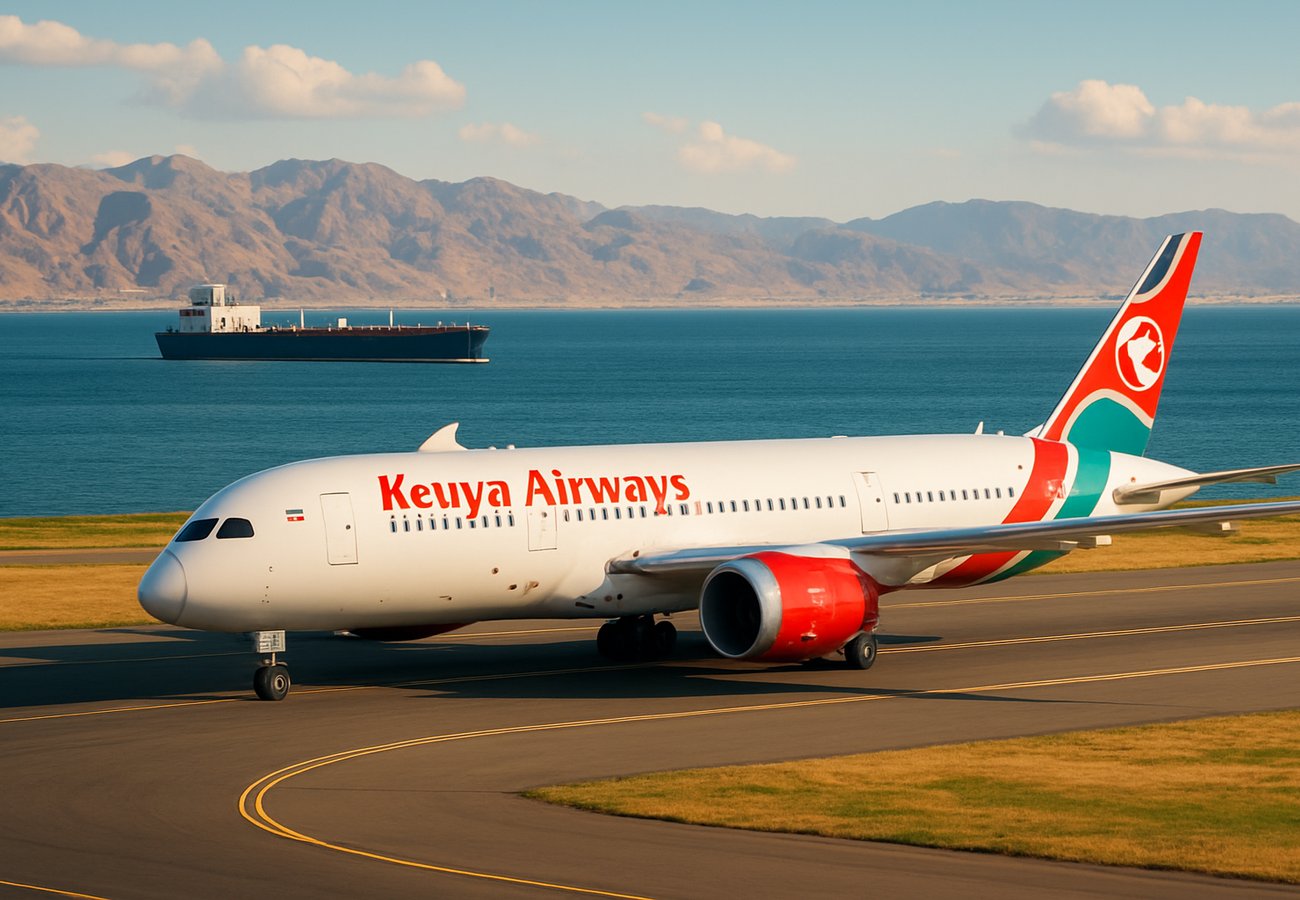
Image generated by AI
A global energy crisis of historic magnitude has erupted following the strategic blockade of the Strait of Hormuz, triggering an immediate oil price shock that is now forcing African aviation leaders to pivot toward extreme fuel efficiency. As the United States, Iran, and Gulf Cooperation Council (GCC) nations including Saudi Arabia, the UAE, and Qatar move to the brink of military conflict, Kenya Airways (KQ) has reached a critical milestone in its fleet recovery. Today, May 10, 2026, a previously grounded Boeing 787 Dreamliner successfully landed at Paris Charles de Gaulle Airport (CDG), marking the reinstatement of a vital asset in the airline’s fight for operational survival as skyrocketing jet fuel costs and a collapse in global maritime security pressure the industry.
The return of the Dreamliner is a strategic win for Kenya’s national carrier. In an era where oil prices are threatening to stabilize at $200/bbl, the Boeing 787’s advanced fuel-efficiency metrics are no longer just an environmental goal; they are the baseline for economic viability in the high-stakes geopolitical environment of 2026.
Expanded Overview: The 21% Global Oil Supply Severed
The blockade of the Strait of Hormuz — a narrow chokepoint through which 21 million barrels of oil per day (approximately 21% of global petroleum consumption) pass — represents a total collapse of international energy security. For major petroleum exporters like Kuwait, Iraq, and Bahrain, and the world’s leading LNG supplier, Qatar, the inability to access the sea has rendered their primary economic assets unreachable.
As the International Energy Agency (IEA) activates emergency protocols, African aviation hubs are feeling the heat. Kenya, a primary gateway for East African trade and tourism, is particularly vulnerable to the disruption of Gulf energy flows. By reinstating its Dreamliner fleet, Kenya Airways is attempting to "harden" its long-haul operations against the volatility of the US-Iran conflict, ensuring that its primary link to Europe remains open despite the record-high "war premiums" on aviation fuel.
Section-Wise Breakdown: Kenya Airways Fleet Recovery
The Paris Arrival: A Symbol of Resilience
The successful arrival of the Boeing 787 at Paris CDG represents more than just a completed flight; it is a signal of the airline’s technical readiness. After an extensive period of heavy checks and maintenance, the Dreamliner has been cleared for service. This aircraft is the first of several set to rejoin the active fleet before the peak summer rush, providing the much-needed capacity to handle the surge in travelers seeking safe, efficient corridors across the continent.
George Kamal’s Strategic Commitment
Kenya Airways’ Ag. Group Managing Director & CEO, George Kamal, has made it a priority to bring all grounded Dreamliners back into service by mid-May 2026. This systematic reintroduction plan is a direct response to the global energy crisis. By maximizing the use of its most efficient airframes, KQ is attempting to mitigate the financial losses caused by the oil price spike that has followed the Strait of Hormuz blockade.
Technical Excellence Under Pressure
The airline’s technical teams have worked tirelessly under the shadow of the energy crisis. Maintaining advanced airframes like the Boeing 787 requires a steady supply of parts and expertise, both of which are currently constrained by the global trade security threat. The successful return to service highlights the robustness of Kenya’s aviation infrastructure in the face of systemic geopolitical shocks.
Fleet Status and Operational Metrics
| Metric | Kenya Airways Boeing 787 Recovery Status |
|---|---|
| Aircraft Model | Boeing 787-8 Dreamliner |
| Recovery Milestone | Landing at Paris Charles de Gaulle (CDG) |
| Target Deadline | Full fleet active by mid-May 2026 |
| Key Advantage | High Fuel Efficiency (Critical for $200/bbl Oil) |
| Operational Focus | Long-Haul Europe & Asia Corridors |
Note: While the Dreamliner is back, passengers should be aware that "emergency energy surcharges" are likely to remain in place as long as the US-Iran military standoff persists in the Persian Gulf.
Passenger Impact: Comfort Amidst Volatility
For passengers flying between Nairobi and Paris, the return of the Dreamliner means a return to world-class comfort. The aircraft’s quieter cabins, improved humidity levels, and cutting-edge entertainment systems provide a necessary sanctuary during a time of global travel stress. However, the oil shock means that while the quality of service is high, the cost of long-haul travel is reaching historic peaks.
The ripple effect of the Strait of Hormuz blockade means that KQ is prioritizing its most fuel-efficient routes, which may lead to reduced frequencies on secondary routes as the airline consolidates its operations to maintain its primary international lifelines.
Industry Analysis: The Efficiency Imperative
Aviation analysts suggest that Kenya Airways is leading a broader trend in African aviation: the "efficiency imperative." "In 2026, you cannot afford to fly old, thirsty aircraft," says one senior energy and aviation strategist. "The Strait of Hormuz blockade has changed the math. The Boeing 787 is the 'energy-security airframe' of choice for mid-sized carriers trying to survive the global oil shock. If you can’t fly efficiently, you can’t fly at all."
According to IATA, the African aviation sector is particularly exposed to the US-Iran conflict, as many carriers lack the fuel-hedging reserves of their larger Western counterparts. KQ’s aggressive fleet recovery is seen as a necessary defensive maneuver.
Conclusion: Securing the Future of African Skies
The successful return of the Boeing 787 Dreamliner to service is a significant achievement for Kenya Airways. As Saudi Arabia, the UAE, and Qatar navigate the fallout of the Strait of Hormuz blockade, African carriers must continue to innovate to stay airborne. By prioritizing technical excellence and fuel efficiency, Kenya Airways is ensuring that it remains a central node in global connectivity, even as the world’s primary energy corridors remain under threat.
Key Takeaways
- Strait of Hormuz blockade continues to drive a global energy crisis, pressuring African airlines to modernize.
- Kenya Airways (KQ) successfully reinstates its Boeing 787 Dreamliner fleet.
- Paris CDG Arrival: The first recovered airframe lands in France, signaling operational readiness.
- CEO George Kamal commits to full fleet recovery by mid-May 2026 to combat the oil shock.
- Fuel Efficiency: The Dreamliner’s advanced metrics are critical for survival in a $200/bbl oil market.
- US-Iran Conflict: Regional instability is forcing airlines to "harden" their long-haul operations.
- Travelers are advised to leverage KQ’s efficient long-haul routes as a buffer against regional travel disruptions.
Related Travel Guides
Strait of Hormuz Blockade Triggers Global Oil Shock: 119 Flights Delayed at LAX Airport
European Aviation Chaos: 2,233 Flights Delayed as Global Energy Crisis Hits Heathrow and Frankfurt
Nairobi Hub Survival Guide: Navigating African Aviation During the 2026 Oil Shock
Disclaimer: Fleet recovery details for Kenya Airways are based on official corporate releases as of May 10, 2026. Geopolitical events and their impact on global energy markets are subject to rapid change. Travelers are advised to verify all flight details directly with Kenya Airways and monitor official government travel advisories.
Kunal K Choudhary
Co-Founder & Contributor
A passionate traveller and tech enthusiast. Kunal contributes to the vision and growth of Nomad Lawyer, bringing fresh perspectives and driving the community forward.
Learn more about our team →