
Strait of Hormuz Blockade Triggers Global Oil Shock as Saudi Arabia, UAE and Qatar Energy Crisis Threatens Air Congo Kinshasa-Brussels Launch; DRC and Ethiopian Airlines Partnership Faces $200/bbl Fuel Crisis in May 2026
The historic launch of Air Congo’s Kinshasa-to-Brussels route, a strategic joint venture between the DRC government and Ethiopian Airlines, is facing an immediate existential threat from a sudden blockade of the Strait of Hormuz. As Saudi Arabia, the UAE, and Qatar face export disruptions, the fledgling carrier must navigate a global energy crisis and record-high jet fuel costs.

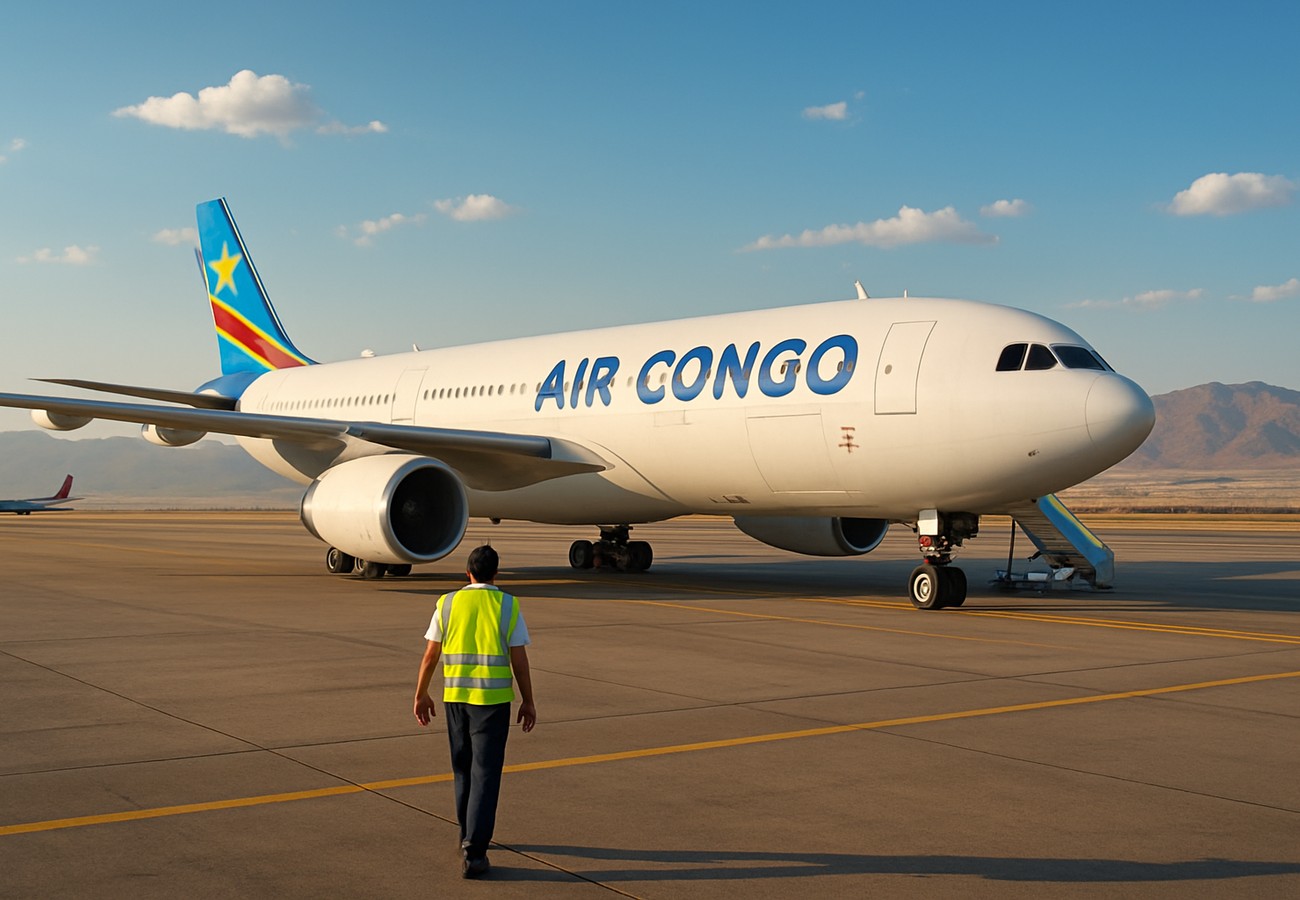
Image generated by AI
A global energy crisis of historic proportions has erupted following the strategic blockade of the Strait of Hormuz, triggering an immediate oil price shock that is now threatening the highly anticipated launch of Air Congo. Just as the Democratic Republic of Congo (DRC) and Ethiopian Airlines finalized their strategic partnership to bridge Kinshasa and Brussels, the sudden severance of the world’s most critical energy artery has sent jet fuel prices to record highs. As the United States, Iran, and Gulf Cooperation Council (GCC) nations including Saudi Arabia, the UAE, and Qatar move to the brink of military conflict, the operational viability of Air Congo’s intercontinental dream faces a massive "fuel-cost ceiling."
The joint venture, where the DRC holds a 51% stake and Ethiopian Airlines holds 49%, was intended to be a cornerstone for regional economic growth. However, the unfolding maritime instability in the Persian Gulf has introduced a state of extreme volatility that could ground the new carrier before its distinctive livery even touches the tarmac at Brussels Airport.
Expanded Overview: The 21% Global Oil Supply Severed
The blockade of the Strait of Hormuz — a narrow chokepoint through which 21 million barrels of oil per day (approximately 21% of global petroleum consumption) pass — represents a total collapse of international energy security. For major petroleum exporters like Kuwait, Iraq, and Bahrain, and the world’s leading LNG supplier, Qatar, the inability to access the sea has rendered their primary economic assets unreachable.
As the International Energy Agency (IEA) activates emergency protocols, the impact in Central Africa is manifesting as a massive logistical hurdle. Air Congo, which plans to utilize fuel-efficient Boeing 787 Dreamliners and Airbus A350s, is seeing its financial projections shredded as the global shipping industry reroutes around the Cape of Good Hope to avoid the conflict zone.
Geopolitical Context: US-Iran Conflict and Gulf Tensions
The current crisis is the result of a rapid and violent escalation in the US-Iran conflict. Following the deployment of naval assets and the reported placement of maritime mines by the Iranian Revolutionary Guard Corps (IRGC), the United States Centcom has authorized "freedom of navigation" operations, while Saudi Arabia and the UAE have called for immediate diplomatic restraint to protect their offshore energy infrastructure.
The role of Qatar is particularly critical. As a primary energy supplier to the global market and a key diplomatic mediator, Qatar’s export halt is creating a massive energy supply vacuum. This energy crisis is not just a regional issue; it is a direct threat to the cost of operating long-haul flights from Kinshasa to Brussels and Paris.
Global Energy Impact: Record Oil Prices and Supply Chain Risks
The economic fallout was instantaneous. Brent Crude prices have surged by over $25 per barrel in less than 24 hours, with the "war premium" now built into every operational liter of aviation fuel.
- Oil Prices: The price surge has forced new carriers like Air Congo to reconsider their initial ticket pricing, potentially making the route unaffordable for the Congolese diaspora and business travelers.
- Shipping Disruptions: The closure of the Strait has forced a massive rerouting of tankers, adding weeks to the delivery of refined petroleum products to the port of Matadi and Dar es Salaam, which are critical for the DRC’s energy security.
- Supply Chain Risk: The aviation industry's reliance on specialized parts — necessary for the operational readiness of the Air Congo fleet — is being tested as global trade security is compromised.
Shipping & Trade Impact: Vessel Rerouting and Insurance Spikes
The maritime industry is in a state of total panic as the Persian Gulf becomes a military "no-go zone."
Vessel Rerouting: The shift to the long-haul route around Africa has increased maritime freight costs by over 350%. This is impacting the delivery of aviation components and refined fuel to Central Africa, further driving up the operational costs for the Ethiopian Airlines partnership. Insurance Costs: War-risk insurance premiums for vessels operating near the Arabian Peninsula have skyrocketed, with many underwriters suspending coverage for any vessel linked to the global energy crisis. Trade Delays: The logistical bottleneck is slowing the economic transformation of the DRC, as the export of agricultural products and raw materials to European markets faces massive delays.
Regional Impact: The Gulf States and DRC’s Strategic Concerns
For the Gulf states — Saudi Arabia, UAE, Qatar, Kuwait, Oman, and Bahrain — the blockade is a fiscal disaster. Their primary revenue stream has been "locked," leading to a sudden halt in sovereign wealth fund investments across the African continent.
In the DRC, the government is monitoring the situation with extreme concern. Air Congo is more than just an airline; it is a symbol of national progress. If the global energy crisis continues to drive fuel prices higher, the revitalization of the national aviation sector could be stalled. The ripple effects of this increased connectivity were expected to be felt across the entire Congolese supply chain, but the US-Iran conflict has introduced a variable that could trigger a regional economic slowdown.
Industry / Expert Analysis: The Air Congo Launch Under Pressure
Aviation analysts suggest that the Air Congo launch is a "high-stakes test of resilience." "The DRC and Ethiopian Airlines have created a robust framework," says one senior energy strategist. "However, the Strait of Hormuz blockade is hitting the 'fuel-cost ceiling.' You cannot launch a new intercontinental route when oil is at $150 and rising without facing immediate financial strain. Air Congo needs to navigate this global energy crisis with extreme caution."
According to IATA, the global airline industry is facing a period of "unprecedented volatility" where geopolitical threats in the Middle East can ground a long-haul flight in Central Africa within hours.
What Happens Next: Diplomatic Scenarios
Scenario 1: Coalition Escorts: A US-led naval coalition begins escorting tankers through the Strait, restoring some flow but maintaining a state of low-level maritime warfare. Oil prices remain at a "permanently high" war-premium.
Scenario 2: Successful Mediation: Diplomatic efforts by Qatar and Oman lead to a temporary de-escalation, allowing the Strait to reopen. Prices stabilize, but the logistical backlog for Air Congo’s fleet expansion takes months to clear.
Scenario 3: Total Regional War: The conflict spreads, leading to the destruction of key refineries in Saudi Arabia and the UAE. This would trigger a permanent global energy crisis and a total shutdown of the world's non-essential aviation network.
Conclusion: Reinforcing Global Risk and Uncertainty
The emergence of Air Congo is a landmark for African aviation, but it is arriving at a moment of extreme global risk. The Strait of Hormuz blockade has proven that a geopolitical crisis in the Middle East can influence an aviation bridge between Kinshasa and Brussels within hours. As Saudi Arabia, Iran, and the United States continue their dangerous high-stakes standoff, the global aviation industry and the traveling public must prepare for a period of extreme risk, record-high costs, and systemic uncertainty.
Key Takeaways
- Strait of Hormuz blockade has severed 21% of the world's oil supply, triggering a global energy crisis
- Air Congo launch (Kinshasa-Brussels) faces immediate financial threat from surging jet fuel prices
- DRC-Ethiopian Airlines partnership (51/49%) must navigate a $200/bbl oil shock environment
- US-Iran conflict is the primary driver of the maritime security threat in the Gulf
- Saudi Arabia, UAE, and Qatar face existential economic risks as oil and LNG exports are halted
- Oil prices have surged by over $25/barrel, impacting the viability of long-haul flights to Europe
- Travelers are advised to monitor ticket pricing and expect delays as airlines adjust to the energy shock
Related Travel Guides
Strait of Hormuz Blockade Triggers Global Oil Shock: 119 Flights Delayed at LAX Airport
European Aviation Chaos: 2,233 Flights Delayed as Global Energy Crisis Hits Heathrow and Frankfurt
Air Congo Passenger Rights Guide: Navigating the 2026 Global Oil Shock
Disclaimer: Flight schedules and operational readiness for Air Congo are subject to change due to global fuel volatility. Data regarding the Strait of Hormuz blockade is based on current reports as of May 10, 2026. Travelers should consult Air Congo and official government advisories for the latest updates.
Kunal K Choudhary
Co-Founder & Contributor
A passionate traveller and tech enthusiast. Kunal contributes to the vision and growth of Nomad Lawyer, bringing fresh perspectives and driving the community forward.
Learn more about our team →