
FAA Integrates SpaceX Starship Flight 13 into Southern US Airspace to Coordinate Safety for Commercial Flights: Starship Flight 13 Aviation Impact 2026: New Travel Alert
Starship Flight 13 aviation impact 2026: Discover FAA airspace planning, airline hubs safety, Indian Ocean splashdown, and travel tips.

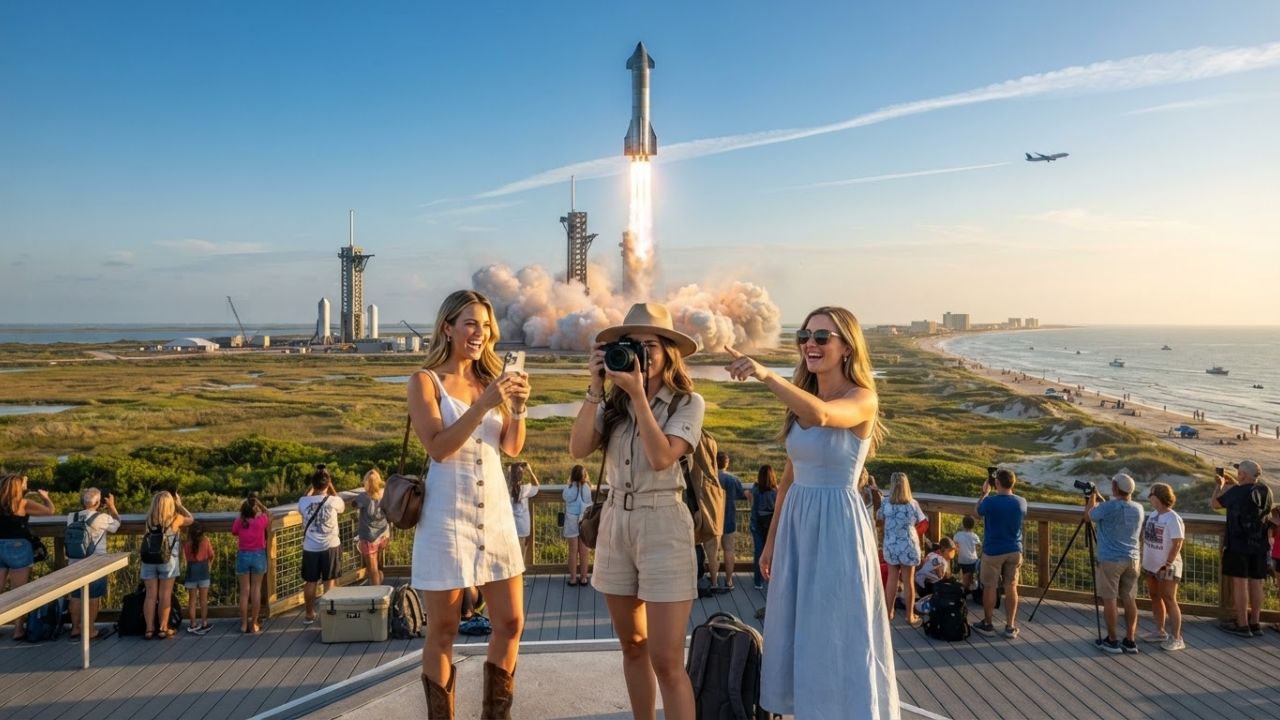
Image generated by AI
Published on July 26, 2026
For airline passengers flying through Gulf Coast corridors and space tourists visiting South Texas, the documentation of Starship Flight 13 aviation impact 2026 highlights a major step in spaceflight and commercial aviation integration. Following SpaceX's July launch from Cameron County, the Federal Aviation Administration (FAA) successfully managed route reroutings and flight restrictions without causing major airline delays. Travelers are advised to monitor flight schedules through Texas hubs, use flexible hotel booking options in South Padre Island, and respect security zones near the launch pad.
Quick Summary
- Launch Outcome: SpaceX launched Starship Flight 13 from Cameron County, successfully deploying twenty Starlink V3 satellites.
- Controlled Re-entry: The upper stage survived atmospheric re-entry and completed its softest Indian Ocean splashdown to date.
- Booster landing failure: The Super Heavy booster suffered a hard water impact due to an incomplete landing engine restart.
- FAA Airspace Integration: The FAA coordinated route adjustments and temporary flight restrictions to separate rockets from passenger flights.
- No Airline Cancellations: Major carriers, including American, Delta, United, and Air Canada, reported no flight cancellations.
Context and Background: Developing Starship Flight 13 Aviation Impact 2026
The rapid expansion of commercial spaceflight in South Texas requires careful management of the national airspace system. According to operations guidelines from the Federal Aviation Administration (FAA), airspace managers must coordinate launch windows to protect commercial aircraft from falling components and launch vehicles. As space flights become more frequent, aviation planners are shifting from treating launches as rare anomalies to integrating them directly into daily flight routing models, minimizing delays for passenger airlines.
Event/Incident Details: Flight Metrics under the Starship Flight 13 Aviation Impact 2026
The performance details of the Starship upper stage and Super Heavy booster during the July 2026 test flight are summarized in the matrix below:
| Starship Flight 13 Components | Technical Objectives | Realized Flight Outcome | Traveller & Maritime Implications |
|---|---|---|---|
| Super Heavy Booster | 33 Raptor engine liftoff, hot-stage separation, boostback, soft Gulf landing | Hard water impact (landing engine reignition failed) | Security maritime hazard zones set in the Gulf of Mexico |
| Starship Upper Stage | Satellite deployment, in-space engine restart, controlled re-entry | Indian Ocean splashdown (controlled re-entry successful) | Indian Ocean airspace re-entry coordinates monitored in Asia |
| Starlink Payload | Deploy next-generation V3 test satellites | 20 satellites deployed successfully | Demonstrates heavy-lift orbital capability |
| Thermal Protection System | Heat-shield tile retention under high dynamic pressure | Successful survival (Musk confirmed test was successful) | Confirms progress toward future fully reusable vehicles |
In the aviation sector, the FAA Air Traffic Control System Command Center coordinated routes with major transborder and domestic airlines:
| Airline Carrier | Operational Hub / Texas Routes | Confirmed flight disruptions | Practical Passenger Guidelines |
|---|---|---|---|
| American Airlines | Major Dallas (DFW) and regional hubs | None officially reported | Check live flight schedules during South Texas launch windows |
| Delta Air Lines | Southern US and transborder routes | None officially reported | Possible rerouting around Gulf corridors, check airline apps |
| United Airlines | Major Houston (IAH) international gateway | None officially reported | Departures from Gulf hubs may experience spacing adjustments |
| Southwest Airlines | Large domestic network across Texas | None officially reported | Monitor local airport and regional carrier notifications |
| Air Canada | Transborder services linking US & Canada | None officially reported | Canadian connections remain relevant only if routes cross restricted zones |
As documented in official logs by SpaceX, the uncrewed Starship liftoff occurred from the Starbase launch complex in Cameron County, validating critical hot-stage separation systems and Raptor engine restarts in deep space.
Risk/Impact: Obstacles facing the Starship Flight 13 Aviation Impact 2026
While Flight 13 did not cause widespread travel delays, the rising frequency of space launches presents several airspace and local risks:
- Airspace Rerouting and Fuel Increases: Rerouting commercial flights around protected launch corridors can increase passenger flight times and fuel burn.
- Temporary Flight Restrictions (TFRs): Unannounced changes in launch windows can trigger sudden airspace closures, forcing pilots to hold in pattern.
- Localized Road Closures: Security roadblocks around Cameron County and Boca Chica beach limit access for local residents and space tourists.
- Booster Landing Anomalies: Failed landing engine relights and hard water impacts present localized maritime hazards in the Gulf of Mexico.
- Coincidence with Severe Weather: When launch delays overlap with summer thunderstorms, passenger flight delays can increase rapidly.
What Authorities Are Saying
SpaceX founder and CEO Elon Musk described Starship Flight 13 as a successful engineering milestone, particularly praising the vehicle’s thermal protection system:
'The test was successful. The flight was intentionally flown with higher acceleration to test whether the heat shield tiles would remain attached under high dynamic pressure.'
According to technical reviews from the NASA Artemis Program, testing Starship's propulsion and flight control systems is critical for developing the Human Landing System (HLS) for future crewed lunar missions.
At the same time, FAA airspace coordinators emphasize that safe separation between passenger aircraft and rockets is the agency's primary concern, requiring airlines to remain flexible during active launch windows.
Practical Traveler Advice Section
For tourists planning launch-viewing trips and airline passengers flying through Texas hubs in 2026, travel experts suggest the following tips:
- Monitor Airline Apps: Check departure times and gate connections through Dallas or Houston hubs during South Texas launch windows.
- Allow Extra Transfer Layovers: Avoid scheduling short transfer flights when connecting through Gulf region airports on launch days.
- Book Flexible Space Tourism Hotels: Utilize refundable bookings for accommodations in South Padre Island or Brownsville to protect against launch delays.
- Respect Security Perimeters: Never enter restricted areas or block public roads near Starbase during launch sequences.
- Check Local Marine Notices: Boat operators must verify maritime exclusion zones in the Gulf of Mexico before departure.
Broader Context Section
The rise of Starbase has transformed South Texas—including Brownsville, Port Isabel, and South Padre Island—into a global hub for space tourism. This development has also brought attention to neighboring Mexican regions like Matamoros and Tamaulipas.
Additionally, the Indian Ocean re-entry and splashdown highlight why international maritime and aviation bodies must coordinate safety zones when space vehicles cross global shipping corridors, proving that commercial spaceflight requires worldwide coordination.
What to Expect Next / Looking Ahead
Looking ahead, SpaceX engineers will study Super Heavy engine restart data to improve landing relight reliability for Flight 14. The FAA will review Air Traffic Control Command Center operations to further streamline route designs and reduce commercial flight detours.
Additionally, NASA will monitor subsequent Starship tests to evaluate progress on fuel transfer technologies and orbital navigation systems. Locally, Cameron County officials will continue assessing space tourism traffic to upgrade tourist parking facilities and road infrastructure around Boca Chica.
Conclusion
In conclusion, Starship Flight 13 represents a significant milestone in the integration of space travel and commercial aviation. By tracking launch updates, booking flexible arrangements, and respecting local security rules, travelers can enjoy a safe and rewarding experience. Remaining prepared and informed will guarantee a responsible and memorable trip to South Texas's space coast.
FAQ: Starship Flight 13 Aviation Impact 2026
Did Starship Flight 13 cause airline cancellations?
No official evidence confirms that Flight 13 caused flight cancellations or major delays for American, Delta, United, or Air Canada.
Where was Starship Flight 13 launched from?
The uncrewed rocket was launched from the SpaceX Starbase facility in Cameron County, near Brownsville and Boca Chica, South Texas.
What happened to the Super Heavy booster?
The booster completed its boostback maneuver but suffered a hard water impact in the Gulf of Mexico due to an incomplete landing engine relight.
Where did the Starship upper stage splash down?
After surviving a controlled atmospheric re-entry, the upper stage completed a soft splashdown in the Indian Ocean.
What payload did Starship Flight 13 carry?
The experimental flight successfully deployed twenty next-generation Starlink V3 test satellites into orbit.
Related Travel Guides
- European Union Approves Free Adjacent Seating for Children Under Fourteen, Strengthening Family Airline Seating Rights Across Member States: New Travel Alert
- 7.4 Magnitude Earthquake Hits Southern Mexico Pacific Coast Triggering Safety Alerts for Oaxaca and Guerrero
- Air France Suspends Flights to Dubai, Riyadh, and Beirut Amid Heightened Middle East Security Risks: New Travel Alert
Suggested SEO Metadata & Assets
- Meta Title: Starship Flight 13 Aviation Impact & Space Tourism 2026
- Meta Description: Starship Flight 13 aviation impact 2026: Discover FAA airspace planning, airline hubs safety, Indian Ocean splashdown, and travel tips.
- URL Slug: starship-flight-13-aviation-impact-2026
- Tags:
Airline News,FAA Airspace,Space tourism,Starship Flight 13,Travel Alert - Featured Image Alt Text: A massive silver Starship rocket stands on its launch pad under a clear blue sky at the Starbase facility in Boca Chica, Texas.
Disclaimer
This article is for informational and educational purposes only. It does not constitute legal, financial, or professional advice. While we strive to provide accurate and up-to-date information, travel policies, regulations, and conditions change rapidly. Always verify information with official sources before making travel decisions. Nomad Lawyer makes no representations about the accuracy, reliability, completeness, or suitability of the information provided. Readers should consult qualified professionals for advice specific to their circumstances. The views expressed in this article are those of the author and do not necessarily reflect the views of Nomad Lawyer.
Kunal K Choudhary
Co-Founder & Contributor
A passionate traveller and tech enthusiast. Kunal contributes to the vision and growth of Nomad Lawyer, bringing fresh perspectives and driving the community forward.
Learn more about our team →