
UNESCO World Heritage Committee Inscribes Seventeen New Cultural and Natural Landmarks in Busan Meeting, Boosting Regional Tourism Networks: UNESCO World Heritage Sites 2026: New Travel Alert
UNESCO World Heritage sites 2026: Discover Sarnath updates, Japan ancient capitals, China porcelain sites, and travel safety tips.

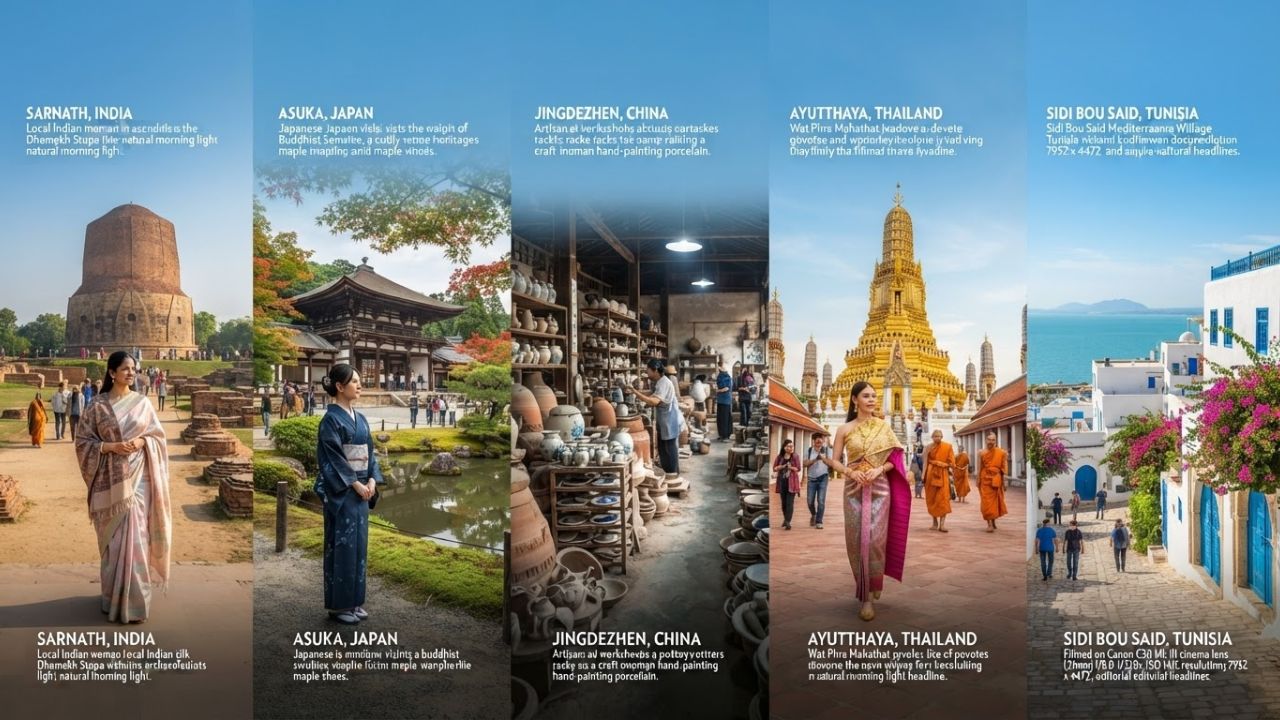
Image generated by AI
Published on July 26, 2026
In a sweeping decision to expand international heritage corridors, the official listing of UNESCO World Heritage sites 2026 has added seventeen new cultural and natural properties across the globe. Announced during the committee's forty-eighth session in Busan, the newly inscribed landmarks range from Sarnath's ancient Buddhist ruins in India to the scenic Mediterranean village of Sidi Bou Said in Tunisia. Travelers planning cultural itineraries are advised to secure hotel bookings early in regional hubs, verify domestic transit links, and strictly follow conservation guidelines.
Quick Summary
- Seventeen New Sites Inscribed: UNESCO's 2026 Busan meeting added twelve cultural and five natural properties to the World Heritage list.
- Buddhist Circuit Integration: Sarnath's inclusion increases India's total properties to forty-five, strengthening the sacred Buddhist pilgrimage route.
- Birthplace of early civilization: Japan's Asuka and Fujiwara ancient capitals represent Nara Prefecture's transition to a centralized state.
- Porcelain Capital Heritage: China's legendary Jingdezhen ceramic production sites gain recognition for over 1,000 years of global trade.
- Natural Ecosystem Protections: New natural listings include South Sudan's Boma–Badingilo migratory corridors and Jordan's Aqaba Marine Reserve.
Context and Background: Developing UNESCO World Heritage Sites 2026
The inscriptions completed during the forty-eighth World Heritage Committee session represent a global effort to promote sustainable travel and heritage preservation. According to policy guidelines from the UNESCO World Heritage Committee, adding sites to the list improves conservation funding and international promotion. For travelers, these listings encourage multi-destination cultural loops, distributing visitor spend outside primary capitals to support rural preservation, archaeology, and local communities.
Event/Incident Details: Inscription Matrix under the UNESCO World Heritage Sites 2026
The newly inscribed properties, their locations, and core visitor appeal are summarized in the database below:
| Inscribed Property Name | Location (Country & Region) | Property Type | Core Historical & Architectural Appeal | Primary Tourism Opportunity |
|---|---|---|---|---|
| Sarnath Buddhist Site | Varanasi, Uttar Pradesh, India | Cultural | Dhamekh and Dharmarajika Stupas, Ashokan Pillar remains, Chaukhandi Stupa | Strengthens the Indian Buddhist Circuit pilgrimage route |
| Asuka & Fujiwara Capitals | Nara Prefecture, Japan | Cultural | 19 components: palaces, government complex, temples, burial mounds | Golden Route extension representing early Japanese civilization |
| Jingdezhen Porcelain Sites | Jiangxi Province, China | Cultural | Historic kilns, ceramic workshops, water management networks | Handicraft heritage tourism, ceramic workshops, and museums |
| Wat Phra Mahathat | Nakhon Si Thammarat, Thailand | Cultural | 8th-century active temple with India and Sri Lanka influences | Living Buddhist heritage outside Bangkok, Phuket, and Chiang Mai |
| Sidi Bou Said | Tunis, Tunisia | Cultural | Whitewashed buildings, blue doors, clifftop Mediterranean views | North African architectural and coastal cultural travel |
| Mangystau Rock Mosques | Mangystau, Kazakhstan | Cultural | Underground rock-carved mosques, nomadic Sufi shrines | Sacred pilgrimage journeys and desert explorations |
| Tashkent Modernist Architecture | Tashkent, Uzbekistan | Cultural | Post-1966 earthquake modernist public buildings | Soviet-era architectural and urban design walks |
| Xiongnu Nobility Cemeteries | Mongolia | Cultural | Royal tombs, ancient nomadic empire ceremonial sites | Archaeological exploration of early Asian nomadic cultures |
| Mount Amel Castles | Lebanon | Cultural | Medieval fortifications and regional history | Crusader-era and medieval heritage tourism |
| Historic Sultanate Medinas | Comoros | Cultural | Traditional Medinas representing Indian Ocean heritage | East African coastal and island cultural tourism |
| Colonial Roças | São Tomé and Príncipe | Cultural | Historic plantation complexes and colonial landscapes | Historical agriculture and plantation estate tours |
| Sebastia | State of Palestine | Cultural | Ancient archaeological ruins and cultural landscapes | Historical Levant exploration and conservation audits |
| Aqaba Marine Reserve | Jordan | Natural | Globally significant coral reefs and marine life | Marine ecotourism, diving, and coastal conservation |
| Boma–Badingilo Landscape | South Sudan | Natural | Massive mammal migration corridors and grasslands | Wildlife safaris and high-value conservation ecotourism |
| Okefenokee Wildlife Refuge | Georgia, United States | Natural | Vast wetlands, cypress swamps, and endemic wildlife | North American swamp exploration, birding, and photography |
| Western Limfjord Fossils | Denmark | Natural | Bony fish fossil records embedded in geological strata | Geological walks, fossil hunting, and science tourism |
| Wadi Wurayah | United Arab Emirates | Natural | Mountain landscapes, freshwater pools, and biodiverse zones | Eco-trekking, conservation visits, and wildlife tracking |
To coordinate domestic flights and rail routes, travelers can utilize the nearest international airport corridors:
| Inscribed Property | Nearest Airport Gateway | Domestic/International Rail & Air Transit Advantages |
|---|---|---|
| Sarnath, India | Lal Bahadur Shastri Airport, Varanasi | Direct domestic links to major cities; expanding international connections |
| Asuka & Fujiwara, Japan | Kansai International Airport, Osaka | Easy rail transit to Nara, Osaka, Kyoto, and regional routes |
| Jingdezhen, China | Jingdezhen Luojia Airport | Direct domestic flights connecting major Chinese metropolises |
| Wat Phra Mahathat, Thailand | Nakhon Si Thammarat Airport | Strong domestic connections from Bangkok's hubs |
| Sidi Bou Said, Tunisia | Tunis-Carthage International Airport | Short road drive from the capital's international gateway |
Official heritage updates from the Archaeological Survey of India (ASI) confirm that Sarnath's ancient remains are being integrated into the national Buddhist Circuit visitor guide, helping pilgrims organize multi-destination trips.
Risk/Impact: Obstacles facing the UNESCO World Heritage Sites 2026
While World Heritage status boosts local economies, it introduces several operational and preservation risks:
- Rapid Overtourism Strain on Fragile Ruins: A sudden increase in visitor numbers at sensitive sites like Sarnath or Asuka can accelerate structural wear.
- Environmental Degradation at Natural Reserves: Rising foot traffic at Jordan's Aqaba Marine Reserve or the UAE's Wadi Wurayah requires strict limits to protect ecosystems.
- Local Infrastructure and Hotel Shortages: Smaller destinations often lack the hotel room capacity and transport networks needed to handle large-scale tourism.
- Strict Conservation Zoning Laws: Inscription requires governments to restrict development around buffer zones, which can cause local planning delays.
- Varying Visitor Guidelines and Caps: Historic sites may introduce strict daily visitor limits, resulting in entry delays for unprepared tourists.
What Authorities Are Saying
Heritage boards and regional tourism ministers emphasize that conservation must remain the primary goal of the new listings. Directors at the Japan National Tourism Organization (JNTO) state that Nara's ancient palaces and temple mounds represent the roots of early Japanese culture, requiring careful visitor management to prevent damage.
UNESCO committee representatives remind host governments that maintaining Outstanding Universal Value is a binding obligation.
Furthermore, Indian conservationists note that Sarnath's inscription is a major milestone for Uttar Pradesh tourism, proving that spiritual corridors can attract high-value international travelers without compromising historical integrity.
Practical Traveler Advice Section
For tourists planning to experience these newly inscribed cultural and natural sites in 2026, travel experts suggest the following guidelines:
- Book Regional Hotels Months in Advance: Secure your rooms in Varanasi or Nakhon Si Thammarat early to avoid seasonal occupancy spikes.
- Engage Licensed Heritage Guides: Use official, certified guides to gain authentic historical context and support site preservation.
- Respect Active Religious Customs: Dress modestly and follow quiet rules when visiting active pilgrimage spots like Wat Phra Mahathat.
- Confirm Local Transit Connections: Verify regional flight schedules and rail transit times before departing for remote sites like Jingdezhen.
- Follow Site Photography Guidelines: Respect local photography bans inside protected tombs and underground rock mosques.
Broader Context Section
The 2026 inscriptions highlight a major shift in global travel preferences toward meaningful, educational, and sustainable tourism. Historically, international arrivals were concentrated around major landmarks like Kyoto, Bangkok, or Rome.
Today, newly listed sites—ranging from Tashkent's post-earthquake modernist architecture to Mongolia's Xiongnu royal tombs—allow travelers to discover lesser-known chapters of human history. This dispersal of travel spend supports local preservation efforts and helps distribute economic benefits to regional communities.
What to Expect Next / Looking Ahead
Looking ahead, host governments will begin upgrading visitor centers, adding bilingual signs, and launching digital guides at the seventeen locations. The UNESCO World Heritage Committee will monitor site management, requiring annual reports to ensure conservation standards are maintained.
In the travel sector, agencies will roll out new multi-destination tour packages linking newly listed sites with existing heritage circuits. Locally, environmental monitoring programs will track visitor impact on fragile ecosystems like Jordan's Aqaba Marine Reserve and South Sudan's migratory landscapes.
Conclusion
In conclusion, the 2026 UNESCO inscriptions offer a vast array of unique cultural, pilgrimage, and nature journeys. By booking your transport early, choosing certified guides, and respecting local conservation rules, you can enjoy a safe and rewarding holiday. Remaining prepared and informed will guarantee a memorable and responsible trip to the world's newest heritage landmarks.
FAQ: UNESCO World Heritage Sites 2026
What are the new UNESCO World Heritage Sites added in 2026?
UNESCO added seventeen new sites (twelve cultural and five natural properties) during its Busan meeting, including Sarnath in India, Asuka and Fujiwara in Japan, and Sidi Bou Said in Tunisia.
Why is Sarnath's inscription significant?
Sarnath is traditionally recognized as the place where Lord Buddha delivered his first sermon, making it a sacred pilgrimage destination. Its inscription strengthens India's Buddhist Circuit and increases its total properties to forty-five.
What did Japan's Asuka and Fujiwara capitals represent?
Dating between the sixth and eighth centuries, the Nara Prefecture serial property documents the birthplace of early Japanese civilization and the transition to a centralized state.
What natural wonders were added to the list?
Five natural properties were added, including Aqaba Marine Reserve (Jordan), Boma–Badingilo Landscape (South Sudan), and Okefenokee Wildlife Refuge (United States).
How does UNESCO recognition affect tourism?
It increases international visibility, attracts more visitors, and supports conservation funding, but requires governments to follow strict guidelines to protect the site's authenticity.
Related Travel Guides
- European Union Approves Free Adjacent Seating for Children Under Fourteen, Strengthening Family Airline Seating Rights Across Member States: New Travel Alert
- 7.4 Magnitude Earthquake Hits Southern Mexico Pacific Coast Triggering Safety Alerts for Oaxaca and Guerrero
- Air France Suspends Flights to Dubai, Riyadh, and Beirut Amid Heightened Middle East Security Risks: New Travel Alert
Disclaimer
This article is for informational and educational purposes only. It does not constitute legal, financial, or professional advice. While we strive to provide accurate and up-to-date information, travel policies, regulations, and conditions change rapidly. Always verify information with official sources before making travel decisions. Nomad Lawyer makes no representations about the accuracy, reliability, completeness, or suitability of the information provided. Readers should consult qualified professionals for advice specific to their circumstances. The views expressed in this article are those of the author and do not necessarily reflect the views of Nomad Lawyer.
Kunal K Choudhary
Co-Founder & Contributor
A passionate traveller and tech enthusiast. Kunal contributes to the vision and growth of Nomad Lawyer, bringing fresh perspectives and driving the community forward.
Learn more about our team →