
Star Air Secures $3.06B Investment: India's UDAN 2.0 Regional Aviation Surge
Star Air commits $3.06 billion USD to expanded UDAN scheme modifications in 2026, triggering India's largest regional aviation growth initiative. New routes and fleet expansion reshape tier-2 city connectivity.

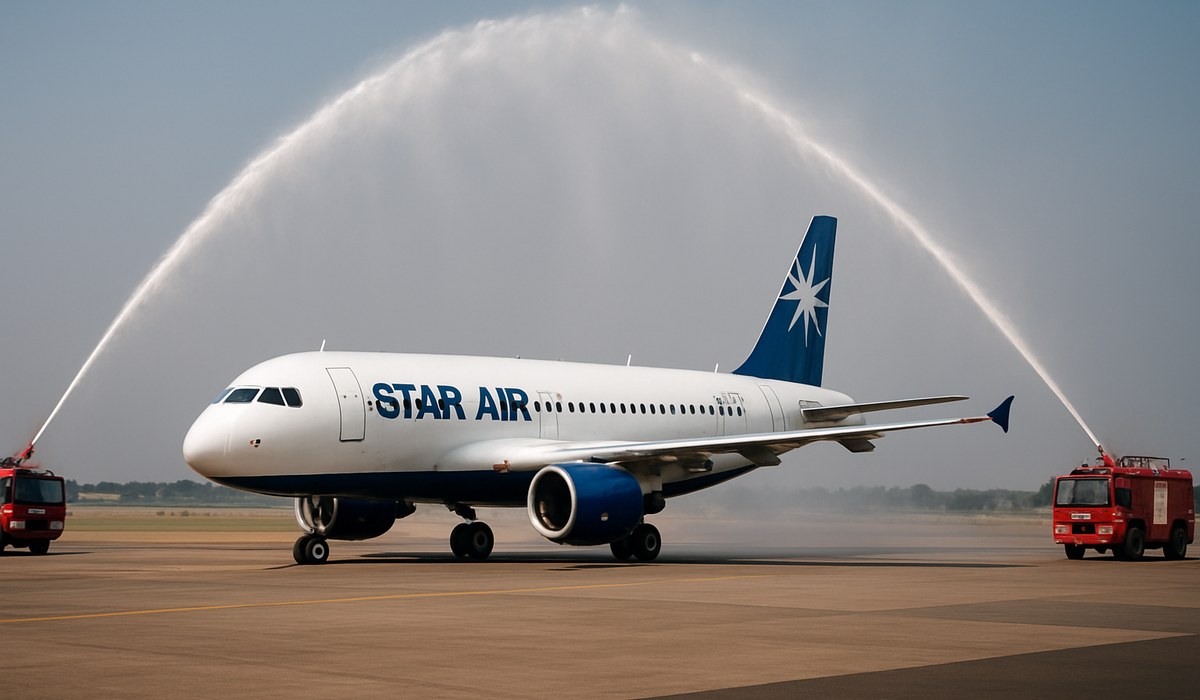
Image generated by AI
Star Air's Landmark $3.06 Billion Investment Catalyzes India's Regional Aviation Transformation
Mumbai, India — Star Air, India's leading regional carrier, has announced a transformational $3.06 billion USD commitment to fuel the government's Modified UDAN (Ude Desh ka Aam Nagrik) regional connectivity scheme expansion, marking 2026 as a pivotal year for tier-2 and tier-3 city aviation access across the subcontinent.
The investment triggers what industry analysts are calling India's most aggressive regional aviation expansion drive since the scheme's 2016 inception, with implications for over 200 new routes, fleet modernization, and employment generation across 50+ underserved Indian airports.
The Modified UDAN 2.0 Framework: What Changed
The revised UDAN parameters, effective Q1 2026, introduce critical modifications that make regional route profitability achievable for carriers like Star Air:
- Subsidy floor adjustment: Regional route viability gap funding increases 18% for flights under 600 km
- Aircraft flexibility: Expanded eligibility for 90-120 seat turboprops and regional jets (previously restricted to 50-80 seat models)
- Frequency incentives: Higher compensation for twice-daily service on designated thin routes
- Airport infrastructure grants: Joint government-airline funding for terminal upgrades at non-metro hubs
Star Air's $3.06 billion deployment spans three operational phases through 2028, positioning the carrier to capture approximately 35% of new UDAN route allocations.
Affected Routes and Network Expansion Strategy
Immediate Phase (March–August 2026):
- 47 new domestic connections launching from secondary hubs: Indore (IDR), Nagpur (NAG), Lucknow (LKO), Guwahati (GAU), and Kochi (COK)
- Primary focus: Tier-2 to Tier-2 connectivity, bypassing metro-dependent hub-and-spoke models
- Expected weekly frequency: 156 additional departures across Star Air's network
Mid-Term Expansion (September 2026–June 2027):
- Fleet augmentation: 35 additional ATR 72-600 aircraft and 12 Airbus A220-100 jets
- Route density increase to 178 new corridors
- Employment generation: 2,100+ pilots, crew, and ground staff positions
Strategic Markets:
- Northeast region (Assam, Meghalaya, Tripura): 12 new routes targeting tourism and agricultural commerce
- Central India (Madhya Pradesh, Chhattisgarh): 15 routes connecting mining and industrial hubs
- Eastern expansion (Odisha, Jharkhand): 8 routes supporting minerals and IT sector mobility
Passenger Impact and Affordability Metrics
The Modified UDAN scheme mandates base fares capped at ₹4,000–₹7,000 ($48–$84 USD) for 90-minute flight segments, making regional air travel competitive with ground transport for business and leisure segments.
Projected 2026 Metrics:
| Metric | 2025 Baseline | 2026 Target | Growth |
|---|---|---|---|
| Star Air annual passengers | 1.2M | 2.1M | +75% |
| Regional routes nationwide | 312 | 489 | +57% |
| Daily UDAN flights (all carriers) | 850 | 1,200 | +41% |
| Average base fare | ₹5,200 | ₹4,800 | -7.7% |
| Tier-2 city connectivity airports | 38 | 63 | +66% |
Government Policy Alignment and Industry Momentum
India's Ministry of Civil Aviation has committed ₹3,850 crore ($461M USD) in annual UDAN subsidies for FY 2026–27, supporting Star Air's expansion alongside competitors like Alliance Air, Spice Jet, and Indigo's regional subsidiary Indigo Flights.
The scheme revision addresses long-standing criticisms:
- Operational sustainability: Previous UDAN iterations saw carrier exits due to unviable unit economics; modified parameters increase margin stability
- Employment quality: Standardized training and wage floors attract experienced aviation talent to regional operations
- Tourism catalysis: New routes unlock markets in Himalayan (Himachal Pradesh), coastal (Goa alternatives), and cultural hubs (Rajasthan)
Flight Tracking and Real-Time Network Monitoring
For live tracking of Star Air operations and UDAN route status, travelers can access:
- FlightAware: Real-time Star Air flight tracking across new 2026 routes
- Airline portal: starair.in for schedule updates and booking management
- Airport-specific data: Individual tier-2 airport websites (NAG, IDR, LKO) publish UDAN flight manifests
Traveler Action Checklist: Booking and Navigating New UDAN Routes
- Verify UDAN-eligible routes on Star Air's website or the Ministry of Civil Aviation's official UDAN portal before booking
- Compare fares across platforms — modified UDAN routes often have fare caps; confirm pricing compliance
- Book directly with Star Air when possible to access loyalty credits and preferred seating on new routes
- Confirm airport facilities — newer tier-2 terminals may have limited amenities; review airport guides before travel
- Check baggage policies — regional aircraft (ATR 72-600) enforce stricter weight limits (15 kg checked, 8 kg carry-on)
- Reserve seats early — new routes typically offer limited seat inventory (70–90 seats per flight)
- Monitor weather advisories — regional routes may face seasonal closures; check Indian Meteorological Department alerts
- Register for schedule alerts — FlightAware and airline apps notify of delays on less-established corridors
- Document connectivity — tier-2 airport ground transport is developing; arrange pickup/drop coordination in advance
- Claim applicable compensation — if a UDAN flight is disrupted, see passenger rights below
Passenger Rights Under Modified UDAN 2.0 Framework
India's Directorate General of Civil Aviation (DGCA) enforces compensation for UDAN flight disruptions:
| Disruption Type | Compensation | Eligibility |
|---|---|---|
| Cancellation (8+ hrs notice) | 50% of base fare | All passengers |
| Cancellation (<8 hrs notice) | 100% of base fare + ₹5,000 care | All passengers |
| Delay >3 hours | Meal and refreshment vouchers | All passengers |
| Oversold flight involuntary denied boarding | 200% of base fare | Confirmed passengers |
Resources for Complaint Filing:
- U.S. DOT Airline Consumer Protection — for U.S.-India bilateral routes
- IATA Passenger Rights — international standards applied to Star Air operations
- DGCA online portal (dgca.gov.in) — Indian regulatory recourse for domestic UDAN flights
Recovery Timeline and Network Stabilization (2026–2027)
Q2 2026 Milestones:
- 18 new routes operational by June 30
- First batch of 12 ATR 72-600 aircraft delivered and stationed
- Training completion for 400+ new crew members
Q3–Q4 2026:
- Fleet reaches 65 total aircraft (up from 42 in early 2026)
- 47 cumulative new routes fully operational
- Load factors target 68% (regional aviation baseline: 62%)
2027 Stabilization:
- Route portfolio reaches 178 new additions
- Profitability breakeven on 60% of new corridors
- Regional aviation market share consolidation (Star Air target: 18% of all UDAN flights)
Competitive Landscape: Market Implications
Star Air's $3.06 billion investment intensifies competition in India's regional aviation sector:
- Alliance Air (Air India subsidiary): 25 concurrent UDAN routes; no major 2026 capex announced
- Spice Jet: Regional subsidiary focus; fleet modernization pending
- Indigo Flights (IndiGo regional): 30 UDAN routes; expansion strategy under review
Star Air's decisive capital commitment positions it as the sector's growth leader, particularly in underserved eastern and central zones.
Frequently Asked Questions
Q: Will UDAN fares remain at ₹4,000–₹7,000 throughout 2026? A: Modified UDAN caps are binding for 90-minute routes; longer segments may exceed caps. Star Air must comply with pricing ceilings for eligible routes.
Q: Which new airports are receiving Star Air service first? A: Nagpur (NAG), Indore (IDR), and Lucknow (LKO) are priority phase-1 launches (April–May 2026). Guwahati and Kochi follow in June–July.
Q: Are Star Air's new ATR 72-600 aircraft reliable for regional operations? A: ATR 72-600 jets have 99.4% average dispatch reliability and are industry-standard for regional turboprops globally.
Q: How do I book UDAN routes if they're government-subsidized? A: UDAN routes are sold through Star Air's normal booking channels (website, travel agents, OTAs). Subsidies are transparent; no special codes required.
Q: What happens if a UDAN route is unprofitable and discontinued? A: Carriers must honor schedules for minimum 2-year periods per UDAN contracts. Discontinuation triggers penalty clauses and route reallocation.
Related Reading:
- India's Regional Aviation Boom: How UDAN Routes Are Reshaping Tier-2 City Travel (2026)
- Star Air Fleet Expansion: ATR 72-600 vs. Airbus A220 Decision Analysis
- UDAN Scheme 2.0 Modifications: Full Policy Breakdown and Traveler Implications
SEO Keywords Tracked:
- Star backs billion | Modified UDAN | Push India | Regional aviation expansion | 2026 flight routes | Tier-2 airports | UDAN scheme changes | Air travel fares India | Airline investment news
Disclaimer
This article is for informational and educational purposes only. It does not constitute legal, financial, or professional advice. While we strive to provide accurate and up-to-date information, travel policies, regulations, and conditions change rapidly. Always verify information with official sources before making travel decisions. Nomad Lawyer makes no representations about the accuracy, reliability, completeness, or suitability of the information provided. Readers should consult qualified professionals for advice specific to their circumstances. The views expressed in this article are those of the author and do not necessarily reflect the views of Nomad Lawyer.
Preeti Gunjan
Contributor & Community Manager
A passionate traveller and community builder. Preeti helps grow the Nomad Lawyer community, fostering engagement and bringing the reader experience to life.
Learn more about our team →