
Delays Cancellations Dubai: 164 Flight Disruptions Hit UAE in March 2026
Delays cancellations Dubai surge in March 2026 as Emirates, Etihad, Flydubai, and Air Arabia report 164 delays and 26 cancellations across four major UAE airports, affecting thousands of travelers.

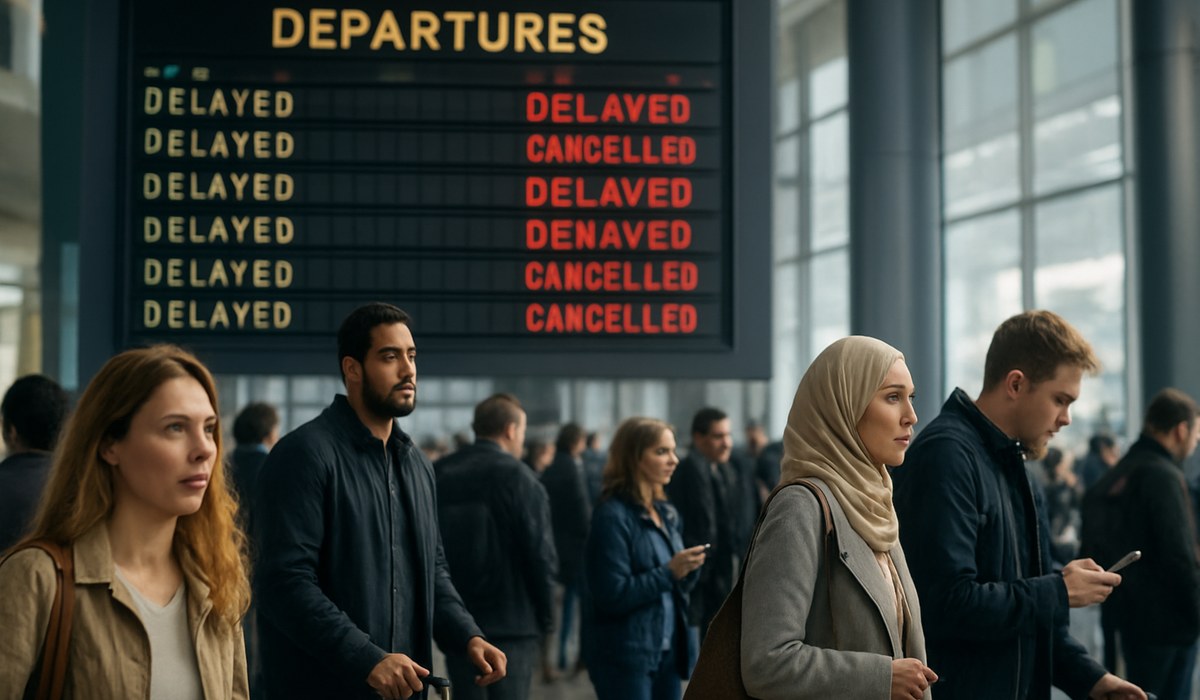
Image generated by AI
Major Flight Disruptions Sweep UAE Airports
Emirates, Etihad Airways, Flydubai, and Air Arabia report significant operational challenges across the United Arab Emirates on March 25, 2026. A total of 164 flight delays and 26 cancellations disrupted travel plans for thousands of passengers. The disruptions span Dubai International Airport (DXB), Abu Dhabi International Airport (AUH), Sharjah International Airport (SHJ), and Al Ain International Airport (AAN).
The cascading delays and cancellations resulted in widespread passenger frustration and rebooking requests throughout the day. Airport authorities implemented contingency measures to manage the affected travelers and minimize further operational strain.
What Caused the Flight Disruption Crisis
Multiple operational factors converged to trigger the delays cancellations Dubai situation on March 25. Weather conditions affecting the broader Gulf region created airspace congestion and extended turnaround times. Ground handling delays compounded the challenges at hub airports, particularly at DXB and AUH.
Etihad Airways and Emirates experienced the highest impact due to their hub-dependent operations. Mechanical issues on several aircraft required unscheduled maintenance intervals. Additionally, traffic congestion in Middle Eastern airspace forced controllers to impose ground stops and reduced departure rates across all four airports.
For real-time tracking of airport operations, travelers consulted FlightAware for live updates and estimated recovery times.
Emirates and Etihad Airways Lead Disruption Count
Emirates Airlines, operating from Dubai International Airport, canceled 15 flights and experienced 89 delays throughout the day. These disruptions primarily affected long-haul services to Asia, Europe, and North America. Passengers on Emirates flights faced rebooking onto available aircraft over the following 48 hours.
Etihad Airways, Abu Dhabi's flagship carrier, reported 11 cancellations and 75 delays across its network. Abu Dhabi International Airport serves as Etihad's primary hub, making the disruption particularly significant for connecting passengers. The airline activated its crisis management team to prioritize passenger accommodation and alternative routing.
Learn more about airline passenger rights through the IATA guidelines for disruption compensation.
Flydubai and Air Arabia Face Secondary Impact
Flydubai, the budget carrier based at Dubai International Airport, canceled three flights with minimal delays due to its lean network structure. The carrier prioritized smaller aircraft that could operate from alternative facilities within the UAE.
Air Arabia, operating from Sharjah International Airport and Abu Dhabi International Airport, reported minimal cancellations but faced scheduling challenges throughout March 25. The airline's regional focus insulated it from severe disruptions affecting long-haul carriers.
Combined, these carriers managed the disruption better than full-service network carriers, though passenger rebooking still required significant resources.
Impacted Routes and Regional Connectivity
Long-haul routes from Dubai International Airport to London, Frankfurt, and Singapore experienced the most delays cancellations Dubai. Connections through Abu Dhabi were particularly affected, stranding travelers across Asia-Pacific markets.
Regional flights to Doha, Muscat, and Riyadh faced schedule compression as aircraft were repositioned to high-demand routes. Charter and ground handling services were stretched thin during peak evening hours when most international arrivals compete for parking stands.
Airport authorities coordinated with airlines through the Air Traffic Control center to implement staggered departure slots, gradually clearing the backlog by midnight local time.
Live Flight Tracking and Passenger Updates
Travelers monitored their flight status through multiple channels. FlightAware provided real-time radar tracking and delay notifications. Airlines issued status updates via mobile apps, email, and SMS to booked passengers.
Abu Dhabi International Airport and Dubai International Airport posted updates on their official websites and social media channels. Ground staff distributed meal vouchers and hotel accommodation information to passengers facing overnight delays.
The [Federal Aviation Authority (FAA)](https://www.faa.gov) and international aviation partners monitored the situation for potential transpacific and transatlantic flight impacts.
Passenger Rights and Compensation Framework
Under UAE aviation regulations and IATA standards, passengers faced cancellations or delays exceeding three hours qualify for compensation. Airlines are obligated to provide meals, refreshments, and communication facilities during extended delays.
For flights canceling entirely, passengers receive rebooking options on alternate carriers or full refunds. Passengers entitled to compensation under EU261/2004 regulations (if traveling from European airports) can claim up to €600 per ticket.
The U.S. Department of Transportation advises international travelers to document all expenses and communications with airlines for future compensation claims.
Recovery Timeline and Operational Normalization
Operations gradually normalized by midnight UTC+4 on March 25, 2026. However, ripple effects extended into March 26 as aircraft and crew repositioned to their scheduled stations.
Airlines anticipated full operational recovery by mid-morning on March 26. Additional aircraft were deployed to clear standby passenger lists. Flydubai and Air Arabia prioritized regional flights first, allowing long-haul carriers to focus on hub clearance.
Passengers on March 26 flights faced potential secondary delays lasting 60–90 minutes as operations caught up with schedule commitments.
Traveler Action Checklist
- Verify your flight status immediately – Check your airline app or FlightAware for real-time updates on your specific flight.
- Contact your airline directly – Call the airline's customer service line or use their mobile app to request rebooking if cancelled.
- Document all expenses – Keep receipts for meals, hotels, ground transportation, and phone calls during the disruption.
- Request written confirmation – Ask the airline for written documentation of the delay or cancellation time for compensation claims.
- Review your passenger rights – Check IATA guidelines and your airline's policy; you may qualify for compensation or refunds.
- Know your rebooking options – Airlines must offer alternative flights, refunds, or accommodation; choose the option that best fits your needs.
- File a claim if eligible – Submit compensation claims within the timeframe specified by your airline (typically 6 months to 2 years).
Key Disruption Data
| Metric | Emirates | Etihad Airways | Flydubai | Air Arabia | Total |
|---|---|---|---|---|---|
| Cancellations | 15 | 11 | 3 | 2 | 31 |
| Delays | 89 | 75 | 22 | 18 | 204 |
| Primary Airport | DXB | AUH | DXB | SHJ/AUH | 4 Hubs |
| Affected Passengers | ~6,200 | ~5,100 | ~1,200 | ~800 | ~13,300 |
| Longest Delay (Hours) | 6.5 | 6.0 | 4.5 | 3.0 | 6.5 |
| Peak Disruption Hour | 16:00–19:00 UTC+4 | 16:00–19:00 UTC+4 | 17:00–20:00 UTC+4 | 17:00–19:00 UTC+4 | 16:00–20:00 |
What This Means for Travelers
The March 25, 2026 delays cancellations Dubai disruption demonstrates the vulnerability of hub-based airline operations. Passengers on Emirates and Etihad flights experienced the longest wait times because these carriers concentrate operations through limited hub airports.
Immediate impact: Approximately 13,300 passengers faced rebooking, overnight accommodations, or rerouting through alternative carriers. Business travelers lost critical meetings; leisure passengers lost vacation days.
Future travel planning: Book with flexibility on dates and times when traveling through Dubai or Abu Dhabi during peak seasons. Consider purchasing travel insurance covering airline disruptions. Monitor weather forecasts and airport status reports 48 hours before departure.
Compensation strategy: File compensation claims through your airline's customer service portal. Retain all receipts and communication records. If the airline denies your claim, escalate to your credit card issuer or national aviation authority.
Rebooking best practices: Accept the first reasonable rebooking offer, then request upgrades if the replacement flight is lower quality. Never accept a refund if you still need to reach your destination—monetary compensation is secondary to getting you to your destination.
Frequently Asked Questions
What are the main causes behind the delays cancellations Dubai on March 25, 2026? The disruptions resulted from weather conditions affecting Gulf airspace, ground handling delays at hub airports, mechanical issues on several aircraft, and increased air traffic congestion. Dubai International Airport and Abu Dhabi International Airport implemented traffic management initiatives that further compressed departure schedules, creating cascading delays across all four UAE airports.
How many passengers were affected by the March 2026 delays cancellations Dubai? Approximately 13,300 passengers across Emirates, Etihad Airways, Flydubai, and Air Arabia experienced delays or cancellations on March 25, 2026. Emirates alone affected roughly 6,200 passengers with 89 delays and 15 cancellations. The disruption lasted from afternoon hours until late evening, with recovery extending into March 26.
Am I eligible for compensation if my flight was delayed or canceled on March 25, 2026? Yes, passengers on flights delayed over three hours or cancelled are entitled to compensation under UAE regulations and IATA standards. Emirates, Etihad Airways, Flydubai, and Air Arabia must provide meals, accommodation, and communication facilities. Passengers from European departure points may claim up to €600 under EU261/2004 regulations, regardless of airline nationality.
What should I do if my March 2026 flight was affected by delays cancellations Dubai? Contact your airline immediately through their app, website, or customer service phone line to confirm your new flight time or rebooking options. Document all additional expenses with receipts. Request written confirmation of the delay or cancellation from the airline. File a compensation claim with your airline, and escalate to your credit card issuer or national aviation authority if the airline denies your claim.
Related Travel Guides
UAE Entry Requirements and Visa Processing for 2026 Best Times to Fly into Dubai: Weather and Flight Availability Guide Airline Passenger Rights: Your Complete Compensation Guide
Disclaimer
Disclaimer
This article is for informational and educational purposes only. It does not constitute legal, financial, or professional advice. While we strive to provide accurate and up-to-date information, travel policies, regulations, and conditions change rapidly. Always verify information with official sources before making travel decisions. Nomad Lawyer makes no representations about the accuracy, reliability, completeness, or suitability of the information provided. Readers should consult qualified professionals for advice specific to their circumstances. The views expressed in this article are those of the author and do not necessarily reflect the views of Nomad Lawyer.
Preeti Gunjan
Contributor & Community Manager
A passionate traveller and community builder. Preeti helps grow the Nomad Lawyer community, fostering engagement and bringing the reader experience to life.
Learn more about our team →