
Sri Lanka Crosses 1.5 Million Tourist Arrivals as Free ETA Visa Reforms for 40 Nations Reshape Asian Travel in 2026

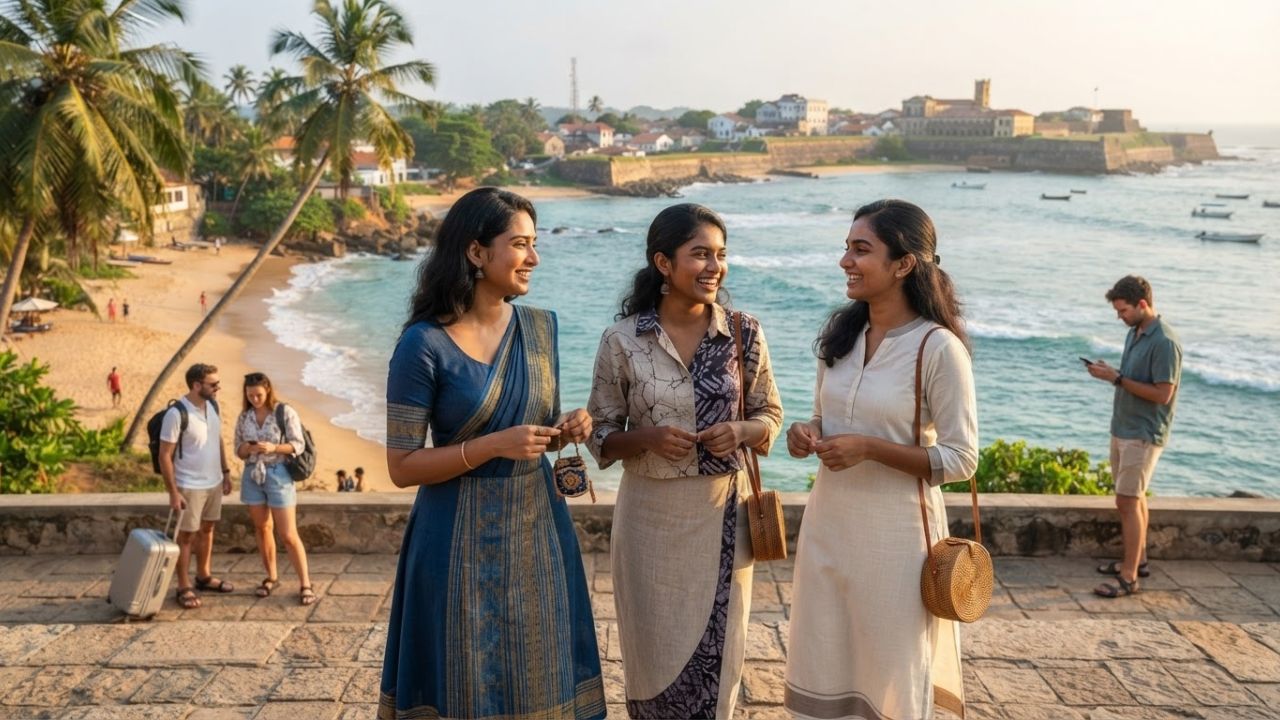
Surpassing 1.5 million international tourist arrivals between January and August 2026, Sri Lanka has emerged as one of Asia's most dynamic travel success stories, propelled by a landmark policy waiving Electronic Travel Authorization (ETA) processing fees for 40 countries alongside comprehensive digital border modernization. As Asian destinations engage in unprecedented competition for global leisure and business travelers, Colombo's 30-day fee-free visa scheme aligns with regional accessibility campaigns across Thailand, Vietnam, Japan, India, Indonesia, Malaysia, and the Philippines.
Announced in late spring and taking effect on May 25, 2026, Sri Lanka’s visa liberalization has removed upfront financial barriers for travelers from primary source markets, including India, China, the United Kingdom, Germany, France, Australia, Japan, and South Korea. By transforming its entry protocols into a swift, cost-free digital registration, the island nation has accelerated its post-crisis economic recovery, reinvigorating coastal resort communities, tea-country heritage railways, and ancient cultural heritage circuits.
This surge unfolds within an intensely competitive regional travel environment. Across the Asia-Pacific basin, national tourism ministries are dismantling bureaucratic friction, recognizing that simplified entry requirements directly drive airline route profitability, hotel occupancy rates, and small-business revenue. From Southeast Asia’s digital nomad corridors to East Asia’s regional dispersion programs, border accessibility has become the defining battleground for international tourism in 2026.
The Local Trend Revealed: Fee-Free ETA Access and Border Digitalization
Sri Lanka’s decision to grant fee-free tourist ETAs to citizens of 40 nations represents a calculated pivot toward volume-driven economic impact. Under the updated framework implemented on May 25, 2026, eligible international visitors receive a 30-day tourist visa without paying standard processing charges. The system also grants double-entry privileges within the 30-day window, providing immense flexibility for travelers taking regional side trips to the Maldives or southern India before returning to Colombo.
While the processing fee is waived, travelers must still apply for and secure an approved digital ETA via official governmental channels before boarding their flights. This digital pre-clearance enables immigration authorities to maintain rigorous border security and identity verification while eliminating physical queues at Bandaranaike International Airport (CMB) in Katunayake and Mattala Rajapaksa International Airport (HRI) in Hambantota.
| Nation | Strategic Tourism Growth Initiative in 2026 | Distinctive Travel Advantage |
|---|---|---|
| Sri Lanka | Free 30-day ETA for 40 nations, digital immigration, global campaigns | Frictionless entry for high-volume European and Asian markets |
| Thailand | Flexible visa categories, expanded wellness and digital nomad programs | Extended durations of stay and high per-capita spending |
| Vietnam | E-visa validity expansion, air route expansion, coastal development | Fast digital access and budget-friendly cultural exploration |
| Japan | Regional digital transit passes, rural community tourism promotion | Dispersal of visitors beyond Tokyo, Kyoto, and Osaka corridors |
| India | Upgraded electronic visa categories, airport modernization, regional circuits | Vast spiritual, wildlife, and heritage travel accessibility |
| Indonesia | Extended digital nomad permits, "Beyond Bali" infrastructure funding | Sustainable eco-tourism in destinations like Labuan Bajo and Raja Ampat |
| Malaysia | Enhanced ASEAN flight frequencies, culinary and multicultural circuits | Seamless regional transit hub with strong heritage integration |
| Philippines | Simplified entry options for South Asia, island hopping promotions | World-class marine biodiversity, diving, and island experiences |
The economic returns have been swift. Achieving over 1.5 million foreign arrivals in the first eight months of 2026 represents a dramatic revitalization of Sri Lanka's hospitality infrastructure. Supported by coordinated promotional campaigns across India, China, the UK, Germany, Russia, and Australia, the policy has converted spontaneous travel interest into confirmed hotel bookings and flight reservations ahead of the high-demand winter season.
The Asia-Wide Tourism Arena: Comparative National Strategies in 2026
Sri Lanka's visa reform is not an isolated initiative; it mirrors a comprehensive restructuring of immigration policy across the continent. Asian governments have recognized that international travelers in 2026 exhibit acute price sensitivity and low tolerance for cumbersome administrative paperwork.
In Thailand, the strategy balances broad entry access with a deliberate pivot toward high-yield tourism. Having expanded visa exemptions and electronic processing, Thai authorities are targeting luxury wellness seekers, remote digital workers, and convention travelers. While primary hubs like Bangkok, Phuket, Pattaya, and Chiang Mai continue to attract heavy traffic, promotional initiatives direct spending toward secondary provinces to alleviate overcrowding and spread economic benefits.
Vietnam has positioned itself as Southeast Asia's fastest-rising star by combining comprehensive electronic visa reforms with aggressive aviation expansion. By granting long-stay electronic visas to travelers from North America, Europe, and Northeast Asia, Vietnam has made extended coastal and cultural circuits remarkably easy to execute. International arrivals have surged into destinations like Danang, Hoi An, Phong Nha, and the northern mountain regions.
Japan is tackling the challenge of overtourism through regional digital connectivity. Rather than concentrating international travelers within the saturated Golden Route of Tokyo, Kyoto, and Osaka, Japanese authorities are promoting rural prefectures, historic mountain villages, and seasonal agricultural festivals through digital rail integration and localized artisanal workshops.
India has simultaneously strengthened its position through steady airport expansion, expanded digital e-visa processing, and dedicated spiritual and wildlife corridors. Simplified entry permits have made it easier for international travelers to explore heritage destinations across Rajasthan, Kerala, and the Himalayan foothills.
Indonesia is deliberately directing focus away from overdeveloped southern Bali, channeling investments into sustainable eco-destinations such as Labuan Bajo in Flores, the ancient temple complex of Borobudur in Central Java, and the marine reserves of Raja Ampat. Malaysia is utilizing its central geographic position in Southeast Asia to promote regional ASEAN air passes and multicultural food tourism, while the Philippines is expanding simplified entry channels to capture emerging source markets such as India for its dive resorts in Palawan and the Visayas.
Cultural & Environmental Value: Responsible Heritage and Wildlife Stewardship
For travelers visiting Sri Lanka under the expanded ETA scheme, the island offers an extraordinary concentration of cultural and ecological wonders within a compact territory. Sri Lanka contains eight UNESCO World Heritage Sites, spanning ancient royal capitals, sacred forest sanctuaries, and colonial fortifications.
In the Cultural Triangle, visitors encounter the ancient engineering marvels of Sigiriya—the fifth-century fortress rock rising abruptly from forested plains—alongside the expansive monastic ruins of Anuradhapura and Polonnaruwa. In the central highlands, the sacred city of Kandy houses the Temple of the Sacred Tooth Relic (Sri Dalada Maligawa), where daily drumming rituals and religious ceremonies reflect centuries of unbroken spiritual tradition.
For the traveler, the real impact is experiencing how sustainable tourism revenue directly bolsters local communities and grassroots conservation. When international visitors choose locally managed guesthouses, dine at neighborhood rice-and-curry taverns, and hire certified community guides, tourism dollars flow directly to tuk-tuk drivers, smallholder spice farmers, and traditional craftspeople.
Equally significant, Sri Lanka ranks among the world's most biologically rich territories. The island's national parks protect thriving populations of Asian elephants, leopards, sloth bears, and endemic bird species. In Minneriya and Kaudulla National Parks, visitors witness "The Gathering"—one of Earth's great wildlife spectacles, where hundreds of wild elephants congregate around ancient irrigation reservoirs during dry periods. Along the southern coast from Mirissa to Galle, nutrient-rich Indian Ocean currents support resident pods of blue whales and spinner dolphins.
Supporting ethical wildlife practices is an essential responsibility for every visitor. By patronizing safari operators that maintain respectful distances from wildlife, refusing to support unethical captive elephant riding venues, and contributing to community-led marine turtle conservation hatcheries along the southwest coast, travelers ensure that natural habitats remain protected for future generations.
Visitor Insider Tips: Navigating Sri Lanka's Monsoons, Temples, and Rails
Maximizing a journey through Sri Lanka requires strategic planning around regional microclimates, transport bookings, and local cultural norms. Keep these expert tips in mind:
- Navigate the Dual Monsoon Cycles: Sri Lanka's unique topography creates two distinct weather patterns. The Southwest Monsoon (Yala) brings rain to the south and west coasts (Colombo, Galle, Bentota, Mirissa) from May through September. During these months, head to the east coast (Arugam Bay for world-class surfing, Nilaveli and Pasikuda for calm, crystal-clear diving conditions). Conversely, when the Northeast Monsoon (Maha) brings rain to the east from October to January, the southern and western beaches enjoy sun-drenched, dry weather. The Cultural Triangle and Hill Country offer rewarding travel throughout most of the year.
- Apply Exclusively via the Official ETA Portal: Ensure you complete your application only through the official government portal (
eta.gov.lk). Numerous third-party agency websites mimic the official interface and charge exorbitant service fees for what is an entirely fee-free authorization for eligible nationalities. Print your approved ETA confirmation and retain a digital copy on your smartphone. - Secure Hill Country Train Tickets 30 Days in Advance: The train journey between Kandy, Nanu Oya (for Nuwara Eliya), and Ella is widely regarded as one of the world's most scenic rail routes, winding through misty tea plantations and mountain viaducts. Tickets for reserved second and third-class seats open online via the Sri Lanka Railways portal exactly 30 days prior to travel. Book unairconditioned reserved carriages, which feature openable windows ideal for unobstructed photography.
- Observe Strict Temple Dress Codes and Photo Etiquette: When entering Buddhist and Hindu sacred sites—including the Temple of the Tooth in Kandy, Dambulla Cave Temples, and sacred ruins in Anuradhapura—dress modestly. Cover both shoulders and knees; white or pale-colored clothing is considered respectful in Buddhist tradition. Remove footwear and hats before entering temple grounds. Never turn your back on a Buddha statue to take a selfie, and never pose alongside religious iconography; doing so is considered deeply disrespectful and can lead to immediate legal penalties.
- Savor Regional Culinary Specialties: Skip standard hotel buffets and seek out authentic culinary establishments. Taste fresh Kottu Roti (shredded flatbread stir-fried with vegetables, egg, meat, and rich curry gravy on a rhythmic iron griddle) at roadside stalls. For breakfast, enjoy hoppers (crisp, bowl-shaped rice-flour pancakes with a soft steamed center, often topped with an egg) paired with fiery pol sambol (fresh coconut, chili, and lime relish). When visiting the northern Jaffna peninsula, sample distinctive crab curries flavored with roasted curry powders and fresh drumstick leaves.
- Drink Single-Estate Ceylon Teas at High-Altitude Plantations: When exploring the cool highlands of Nuwara Eliya and Hatton, visit independent tea factories that practice orthodox manufacturing. Learn the delicate distinctions between Broken Orange Pekoe (BOP) and high-grown flowery pekoes, tasting single-estate teas straight from the drying floor.
Tourism Outlook: Sustainable Infrastructure and Long-Term Yield
Sri Lanka’s crossing of the 1.5-million visitor threshold demonstrates that the island has reclaimed its rightful status on the international travel map. Moving into 2027 and 2028, the strategic challenge facing the Sri Lanka Tourism Development Authority (SLTDA) and regional stakeholders is transitioning from rapid recovery to high-yield sustainable management.
International airline connectivity is rebounding strongly. Major global carriers—including SriLankan Airlines, Emirates, Qatar Airways, Singapore Airlines, Air India, and European charter operators—are adding seasonal capacity and opening direct connections into Colombo. Concurrently, investments in renewable energy, community homestay networks, and high-speed highway extensions connecting Colombo with the central highlands are reducing travel times and distributing tourist expenditure into rural farming districts.
As Asia's tourism sector becomes increasingly competitive, Sri Lanka's winning formula combines frictionless visa accessibility, warm hospitality, profound cultural heritage, and pristine wildlife habitats. By keeping administrative barriers low and environmental stewardship high, the island nation is setting a compelling benchmark for modern, sustainable travel across Asia.
Related Travel Guides
- National Geographic and G Adventures Unveil 30 Immersive Journeys for 2027: Peru, Thailand, Galápagos, and Europe Lead Experiential Travel Expansion
- Australia Tourism Encounters Headwinds as Asian Markets Shift: High Airfares and Living Costs Trigger 4.3% Visitor Drop in 2026
- Thailand Overhauls Tourist Visa Policy: 60-Day Entry Ends for 21 Countries as Digital e-Visa Rules Begin September 15, 2026
Disclaimer
This article is for informational and educational purposes only. It does not constitute legal, financial, or professional advice. While we strive to provide accurate and up-to-date information, travel policies, regulations, and conditions change rapidly. Always verify information with official sources before making travel decisions. Nomad Lawyer makes no representations about the accuracy, reliability, completeness, or suitability of the information provided. Readers should consult qualified professionals for advice specific to their circumstances. The views expressed in this article are those of the author and do not necessarily reflect the views of Nomad Lawyer.
Raushan Kumar
Founder & Lead Developer
Full-stack developer with 11+ years of experience and a passionate traveller. Raushan built Nomad Lawyer from the ground up with a vision to create the best travel and law experience on the web.
Learn more about our team →