
Australia Tourism Encounters Headwinds as Asian Markets Shift: High Airfares and Living Costs Trigger 4.3% Visitor Drop in 2026

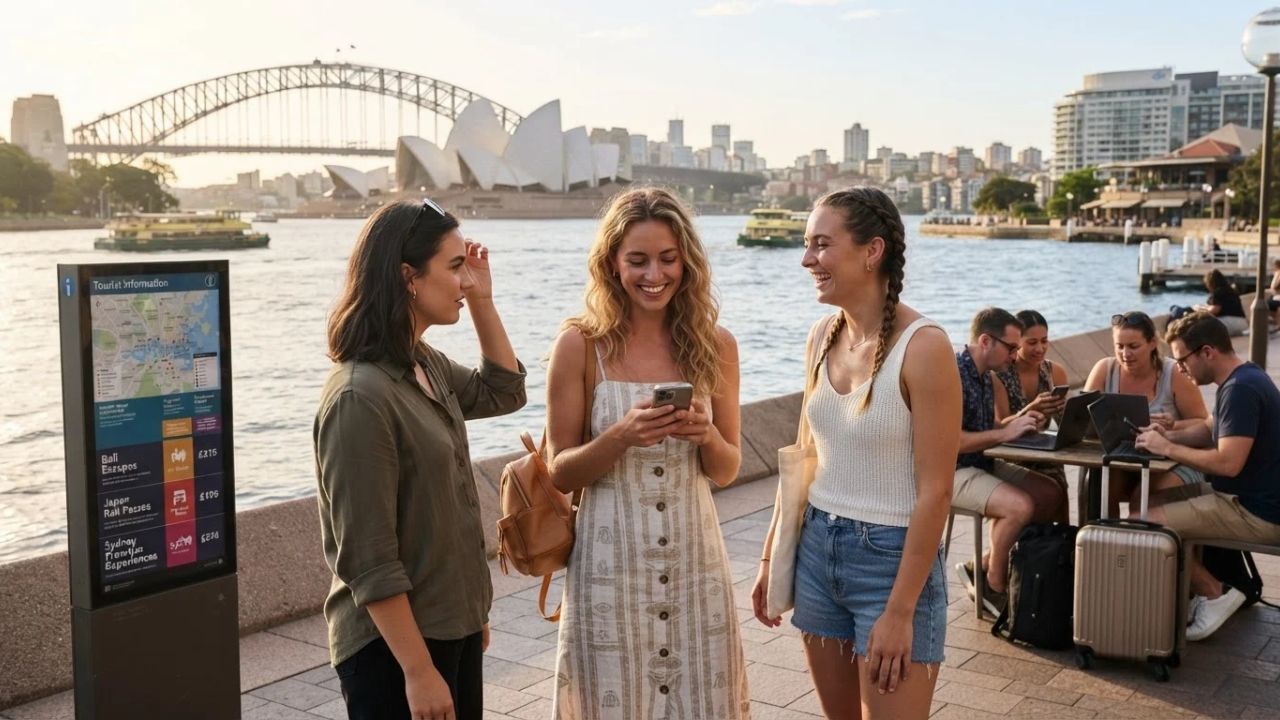
Australia's international visitor arrivals experienced a 4.3% year-on-year drop in July 2026 to 710,980 short-term trips, as soaring airfares, elevated hospitality tariffs, and aggressive pricing from Southeast Asian competitors divert key source markets including Singapore, Indonesia, South Korea, India, and China. While overall tourism remains strong with 9.2 million international trips and A$40.9 billion in foreign expenditure for the year ending March 2026, Tourism Australia and state tourism authorities are intensifying regional investments, First Nations cultural experiences, and targeted air-connectivity initiatives to overcome perception barriers surrounding travel affordability.
The mid-year data underscores an operational turning point for the nation's leisure and hospitality sectors. While marquee attractions like the Great Barrier Reef, Sydney Harbour, Uluru, Melbourne's vibrant arts scene, and Tasmania's wilderness sanctuaries continue to command global reverence, changing holiday economics across the Asia-Pacific basin are testing Australia's inbound resilience. Travel planners and consumers in neighboring hubs are scrutinizing holiday value, frequently opting for short-haul, lower-cost destinations over long-haul journeys southward.
Despite the recent dip, Australia's long-term tourism fundamentals remain solid. The 9.2 million international visitor arrivals and A$40.9 billion in international visitor expenditure recorded across the twelve-month window ending March 2026 reflect an extensive post-pandemic recovery. However, monthly arrival figures from mid-2026 reveal that traveler price sensitivity is reshaping international booking patterns, prompting tourism boards and airline partners to reassess their global promotional playbooks.
The Local Trend Revealed: Mid-Year Contraction and Shifting Asian Travel Choices
Data released by federal authorities tracking overseas arrivals and departures showed that short-term international visitor trips totaled 710,980 in July 2026, marking a 4.3% year-on-year reduction. The contraction does not signify a systemic collapse of Australian inbound travel, but rather a realignment driven by heightened consumer price awareness in major Asian feeder markets.
| Tourism Performance Metric | Recorded Figure | Market Context & Indicator |
|---|---|---|
| Short-Term Visitor Trips (July 2026) | 710,980 arrivals | Down 4.3% compared to July 2025 performance |
| International Visitor Trips (Year Ending March 2026) | 9.2 million trips | Demonstrates solid multi-year recovery volume |
| International Visitor Spending (Year Ending March 2026) | A$40.9 billion | Reflects high per-trip yield among long-stay guests |
| Primary Competing Regional Destinations | Indonesia, Thailand, Japan, Vietnam | Gaining market share through lower lodging and flight tariffs |
For years, travelers from Singapore, Indonesia, China, India, South Korea, and the Philippines viewed Australia as an aspirational yet accessible long-haul getaway. In 2026, however, persistent inflation in aviation jet fuel, elevated ground transportation rates, rising hotel room tariffs across capital cities, and domestic cost-of-living adjustments have altered that value equation. When Asian vacationers evaluate total trip budgets, regional alternatives across Southeast Asia and East Asia present formidable financial advantages.
Singapore, Indonesia, and East Asia: The Appeal of Regional Alternatives
Singapore has long stood as one of Australia's most reliable high-spending inbound markets, drawn by direct aviation links, safe urban environments, world-class culinary experiences, and premier wine regions like the Yarra Valley, Margaret River, and Barossa. Yet Singaporean travelers in 2026 are increasingly weighing trip expenses across several critical variables: international flight pricing, hotel room rates, currency conversion ratios, and overall on-the-ground value.
With flight times under four hours and luxury resort packages priced at fractions of Australian capital city lodging, destinations such as Thailand, Vietnam, Indonesia, and Japan have emerged as compelling substitutes. A family traveling from Singapore can book an extended beachside villa holiday in Danang, Koh Samui, or Bali for a fraction of the cost required for a comparable stay in coastal New South Wales or Queensland.
The dynamic with Indonesia is especially nuanced. Indonesia acts as both an essential source of inbound visitors to Australia and its most aggressive regional competitor. Australian travelers themselves are flocking to Bali, Lombok, and the Gili Islands in record numbers, drawn by affordable five-star accommodations, favorable currency purchasing power, and budget-friendly aviation routes. Simultaneously, middle-class and affluent Indonesian tourists who previously favored Perth, Melbourne, or Sydney for school holiday breaks are recalculating expenses. Confronted with premium long-haul airfares and expensive city dining, many Indonesian families are choosing domestic luxury escapes or traveling to nearby regional hubs like Malaysia and Thailand.
North Asian markets reflect similar economic calculations. South Korean holidaymakers, who historically sought out Australian outdoor adventure, farm stays, and working holiday programs, now enjoy expanded low-cost carrier access to Japan, Taiwan, and Vietnam. These destinations offer brief flight durations, deeply familiar cultural affinities, and highly competitive hospitality packages.
In China, the world's largest pre-pandemic outbound source market, traveler habits have undergone a structural transformation. While recovery continues, Chinese outbound tourists in 2026 are more cautious, value-conscious, and selective. Many are prioritizing domestic travel or exploring visa-free Southeast Asian nations like Thailand, Malaysia, and Singapore over long-distance Australian circuits that require detailed visa filings and substantial foreign exchange outlays.
India remains a massive long-term growth frontier for Australian tourism, fueled by deep cricket ties, academic exchanges, and an expanding diaspora. Indian visitors are highly valued because they often log extended durations of stay, travel across regional states to visit family and relatives (VFR), and contribute substantial per-person expenditure. Nevertheless, sharp airfare hikes on direct routes connecting Delhi and Mumbai with Sydney and Melbourne have prompted price-conscious Indian travelers to consider shorter-haul alternatives across Southeast Asia, where competitive airfare packages and simplified visa policies facilitate spontaneous bookings.
A similar trend affects the Philippines, where rising flight tariffs and overseas living expenses have dampened outbound leisure departures toward Oceania, encouraging Filipino vacationers to explore closer ASEAN destinations with relaxed visa entry rules.
Key Economic Pressures Reshaping Cross-Border Itineraries
The slowing momentum in selected Asian source markets stems from a confluence of structural economic factors rather than diminished interest in Australian natural wonders:
- Elevated International Airfares: Post-pandemic aviation recovery has seen airline yields remain high. Limited seat capacity on specific bilateral routes between Asian gateways and Australian cities has kept economy and premium fares significantly above historical averages.
- Capital City Hospitality Costs: Hotel rates in Sydney, Melbourne, Brisbane, and Perth have risen due to elevated staffing costs, utility expenses, and local operational overheads, reducing perceived holiday value for international visitors.
- Currency Valuation Pressures: Fluctuations in regional exchange rates have magnified the cost of Australian hospitality, dining, domestic transport, and retail shopping for Asian tourists holding currencies that have depreciated against major western benchmarks.
- Flight Duration and Vacation Time: For working professionals across Singapore, Jakarta, Manila, or Seoul taking five-to-seven-day breaks, an eight-to-twelve-hour flight each way consumes valuable holiday time compared to brief two-to-four-hour regional flights.
- Domestic Policy Charges and Ancillary Fees: Rising state and federal passenger movement charges, visa processing levies, and airport terminal fees have reinforced the international perception that Australia operates as a premium-cost destination.
Cultural & Environmental Value: Elevating First Nations Heritage and Eco-Tourism
To address cost sensitivities without devaluing the destination, Tourism Australia and state tourism organizations are shifting away from generic city marketing. The strategic priority for 2026 focuses on high-yield, experience-led travel that highlights Australia's irreplaceable natural and cultural heritage—assets that low-cost beach destinations cannot replicate.
Central to this strategy is the expansion of First Nations tourism. Australia is home to the world's oldest living continuous cultures, spanning over 65,000 years of Aboriginal and Torres Strait Islander history. International visitors are increasingly seeking authentic Indigenous-led experiences that offer profound cultural immersion rather than superficial sightseeing.
Throughout the Northern Territory, Western Australia, and Far North Queensland, Aboriginal-owned and operated tourism enterprises provide travelers with firsthand traditional knowledge:
- Guided walks through ancient rock art galleries in Kakadu National Park and Arnhem Land, where traditional custodians interpret millennia-old creation stories.
- Immersive cultural camps in the Kimberley region, where travelers learn traditional foraging techniques, fire-making, and sustainable coastal fishing practices.
- Desert astronomy and songline interpretations in the Red Centre, connecting visitors directly with the sacred geology surrounding Uluru and Kata Tjuta.
For the traveler, the real impact is discovering that authentic cultural tourism actively finances environmental conservation and local community empowerment. Revenues generated from Indigenous tourism concessions flow directly into regional Aboriginal corporations, funding ranger programs, habitat preservation, native language restoration, and youth training initiatives in remote settlements.
In parallel, sustainable eco-tourism initiatives are providing clear differentiators. The Great Barrier Reef is safeguarded through rigorous environmental management, where tourist visits contribute to the Environmental Management Charge (EMC). Programs like Master Reef Guides and the Eye on the Reef monitoring system invite travelers to participate in citizen science, observing coral health and supporting marine recovery. Across the cool-temperate rainforests of Tasmania and the ancient karri forests of southwest Western Australia, eco-certified lodges operate off renewable micro-grids, implement zero-waste gastronomy, and provide ethical wildlife encounters with endemic marsupials.
Visitor Insider Tips: Navigating Australia on a Value-Driven Budget
Exploring Australia does not require compromising on comfort or missing iconic experiences. With tactical planning and local insider knowledge, international visitors can experience premier regional attractions while managing daily expenses effectively:
- Target Shoulder-Season Travel Windows: Avoid the peak summer rush (December to January) and Easter school holidays, when domestic demand drives accommodation and domestic flight tariffs to seasonal highs. The optimal travel windows are autumn (March to May) and spring (September to November). During these months, weather conditions across southern cities and regional wine belts are pleasant, outback temperatures are moderate, and accommodation rates soften by 25% to 40%.
- Master Urban Public Transit Fare Caps: In Sydney, avoid pricey airport station access fees by taking local bus route 420 to Mascot before hopping on the suburban train network. Use a contactless bank card or Opal card to take advantage of daily and weekend travel caps. In Melbourne, take full advantage of the Free Tram Zone covering the central business district and Docklands, avoiding local transport expenses entirely within the city center.
- Embrace Regional Self-Drive Routes: Instead of booking expensive organized group tours, rent a fuel-efficient vehicle or campervan to explore world-renowned scenic routes. The Great Ocean Road in Victoria, the Grand Pacific Drive in New South Wales, and the Coral Coast Highway in Western Australia allow independent travelers to access national parks, coastal reserves, and ocean lookouts at their own pace with minimal entry fees.
- Prioritize Ethical Cultural Etiquette: When visiting sacred First Nations sites such as Uluru-Kata Tjuta or Aboriginal heritage reserves in the outback, observe all signposted cultural requests. Do not climb sacred geological formations, respect strict photography bans around spiritual ceremonial grounds, and always listen with humility during Welcome to Country ceremonies.
- Protect Marine Sanctuaries with Compliant Sunscreens: When swimming, snorkeling, or diving on the Great Barrier Reef or Ningaloo Marine Park, use only mineral-based, non-nano zinc oxide reef-safe sunscreens. Chemical formulas containing oxybenzone and octinoxate bleach delicate coral colonies and are strictly discouraged by marine park authorities.
- Savor Local Produce at Historic Public Markets: Skip overpriced hotel breakfasts and tourist-heavy harbor dining. Instead, explore heritage food markets like Melbourne's Queen Victoria Market, the Adelaide Central Market, and Hobart's Salamanca Market. Sample fresh Tasmanian oysters, artisan sourdough, tropical Queensland mangoes, and native botanical specialties like lemon myrtle tea and mountain pepperberry seasoning directly from local producers.
- Seek Out Community Wildlife Sanctuaries: Rather than visiting commercial urban zoos, support regional conservation sanctuaries such as the Healesville Sanctuary in Victoria, the Bonorong Wildlife Sanctuary in Tasmania, or the Currumbin Wildlife Sanctuary in Queensland, where visitor fees directly support injured wildlife rescue and endangered species breeding programs.
Tourism Outlook: Aviation Diplomacy and High-Yield Visitor Strategies
The future of Australian inbound tourism hinges on strategic adaptation rather than passive waiting. To counterbalance the competitive advantages of low-cost Asian destinations, Tourism Australia, state promotional agencies (including Destination NSW, Visit Victoria, Tourism NT, and Tourism and Events Queensland), and international airline partners are executing a coordinated recovery blueprint.
A core component involves aggressive aviation diplomacy. Rebuilding airline capacity across key Asian transit hubs is essential to lower airfare premiums. Federal authorities are working with international carriers—including Singapore Airlines, Garuda Indonesia, Cathay Pacific, VietJet, and Indian aviation operators—to increase weekly frequencies, establish direct secondary city links, and restore seat supply above pre-2020 baselines.
Simultaneously, marketing strategies are shifting from raw volume metrics to high-yield, long-stay visitor demographics. Instead of chasing quick weekend package tourists who stay only in central city hotels, Australia's global campaigns target passionate travelers seeking niche culinary, golfing, walking, and conservation adventures. These travelers stay longer, distribute expenditure into regional farming communities and Indigenous settlements, and generate higher economic returns per arrival.
While cost pressures in Singapore, Indonesia, and across Asia present immediate headwinds, Australia's distinctive strengths remain unchallenged. Its ancient cultural narratives, strictly protected marine parks, wildlife biodiversity, and premier regional food and wine culture provide an enduring global allure. By harmonizing sustainable tourism investments with competitive aviation access and fair-value consumer experiences, Australia is steadily repositioning itself to win back Asian holidaymakers throughout the remainder of 2026 and into the future.
Related Travel Guides
Disclaimer
This article is for informational and educational purposes only. It does not constitute legal, financial, or professional advice. While we strive to provide accurate and up-to-date information, travel policies, regulations, and conditions change rapidly. Always verify information with official sources before making travel decisions. Nomad Lawyer makes no representations about the accuracy, reliability, completeness, or suitability of the information provided. Readers should consult qualified professionals for advice specific to their circumstances. The views expressed in this article are those of the author and do not necessarily reflect the views of Nomad Lawyer.
Raushan Kumar
Founder & Lead Developer
Full-stack developer with 11+ years of experience and a passionate traveller. Raushan built Nomad Lawyer from the ground up with a vision to create the best travel and law experience on the web.
Learn more about our team →