
Self-Drive Tuk-Tuk Rentals Redefine Sri Lanka's Micro-Mobility Scene
Independent self-drive three-wheeler rentals emerge as a popular eco-conscious travel trend in Sri Lanka, redistributing tourism earnings directly to rural communities.

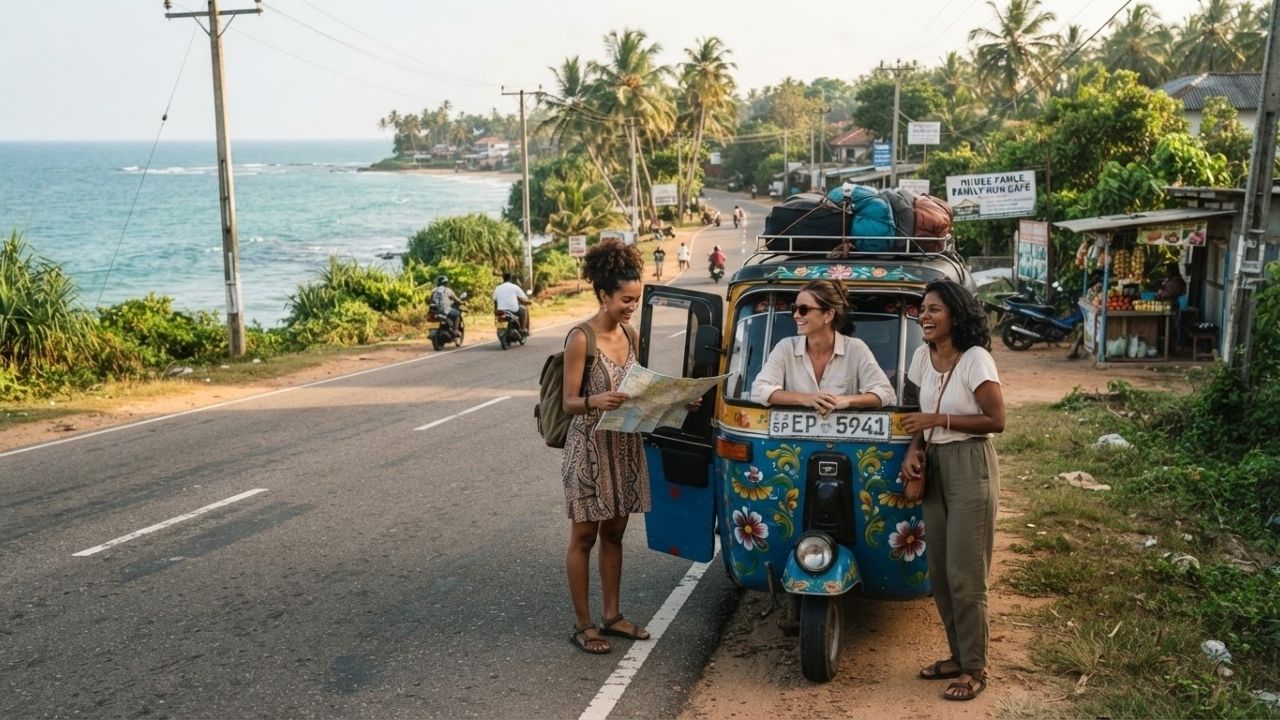
Image generated by AI
Independent self-drive three-wheeler rentals have emerged as a leading micro-mobility travel trend in Sri Lanka, redistributing foreign currency directly to rural households while generating a highly efficient 25 to 30 kilometers per liter fuel yield.
Reorienting Tourism Spend through Micro-Mobility
Statistical evaluations indicate that Sri Lanka welcomed a record 2,362,521 international visitors in 2025, representing a 15.1% increase compared to 2024. Total sector earnings reached approximately USD 3.219 billion, with an average duration of stay recorded at 8.29 nights. However, Central Bank figures revealed an estimated daily visitor expenditure of USD 148.26 with an average stay of 8.3 nights, which is shorter than the 10.8 nights registered back in 2018. During the first six months of 2026, arrivals adjusted to 1,146,573, accompanied by an 11.8% year-on-year contraction in overall sector revenue to roughly USD 1.511 billion.
These financial metrics highlight a critical reality: simply increasing visitor volumes does not guarantee long-term economic stability for the broader hospitality sector. The travel industry requires high-value, immersive experiences that encourage longer stays and distribute tourist capital directly to regional villages. Independent, self-drive tuk-tuk rentals address this need by enabling autonomous travelers to bypass group itineraries, injecting travel funds directly into rural roadside diners, village guesthouses, and regional workshops that remain invisible to traditional tour networks.
Compliance Standards and Insurance Infrastructure
The transition of self-drive three-wheeler rentals from an informal holiday activity to a recognized travel sector requires strict compliance standards. Following enforcement updates implemented by transport authorities, foreign travelers operating tuk-tuks must carry a validated International Driving Permit (IDP) alongside a recognized Category B1 motorized three-wheeler endorsement, or an official temporary driving permit issued directly in Colombo. Rental providers operating across major hubs like Kandy, Galle, and Negombo face document verification protocols. Failure to comply incurs statutory fines of up to LKR 25,000 for vehicle owners who assign unregistered three-wheelers to unvetted drivers.
Integrating robust insurance policies remains a central safeguard for sustaining this travel trend. Standard third-party vehicle coverage in South Asia typically excludes international drivers operating commercial transport assets without explicit rental endorsements. To close this gap, specialized rental providers partner with domestic underwriters to supply comprehensive collision damage waivers, personal accident insurance, and 24-hour breakdown assistance across key travel corridors, such as the Southern Expressway and scenic hill-country routes connecting Nuwara Eliya to Ella.
Sri Lanka Self-Drive Tuk-Tuk Operational and Economic Profile (2026)
| Operational Parameter / Metric | Verified Data / Specification | Strategic Tourism & Economic Impact |
|---|---|---|
| 2025 International Arrivals | 2,362,521 visitors (up 15.1% YoY) | Baseline record volume for island recovery |
| H1 2026 Arrivals | 1,146,573 visitors | Revenue adjusted to approximately USD 1.511 billion |
| Average Daily Visitor Spend | USD 148.26 (2025 Central Bank data) | Driven by short stays (8.3 nights vs 10.8 nights in 2018) |
| Tuk-Tuk Fuel Efficiency | 25 to 30 kilometers per liter | Highly efficient, low-emission alternative to diesel buses |
| Non-Compliance Penalty | Up to LKR 25,000 fine | Imposed on owners renting to unvetted international drivers |
| Required Driving Permit | IDP with Category B1 endorsement | Or temporary permit issued directly in Colombo |
| Regional Pickup Stations | Negombo and Colombo | Centers for hands-on orientation and training |
Household Revenue Streams and Green Fleet Expansion
The self-drive tuk-tuk model provides a direct asset-monetization framework for private vehicle owners. Rather than relying solely on daily passenger fares, local vehicle owners lease their personal three-wheelers to specialized rental platforms during peak travel months. This system yields consistent passive income for rural households and micro-entrepreneurs in regions such as Bandarawela, Jaffna, and Trincomalee, helping fund family education, property upgrades, and local business expansions.
From an environmental perspective, three-wheeler rentals offer an efficient alternative to heavy diesel-powered tour buses. Modern three-wheelers operating across Sri Lanka average a fuel efficiency of 25 to 30 kilometers per liter, generating lower carbon emissions per passenger kilometer. To support this efficiency, local fleet operators are expanding electric three-wheeler conversions and battery-swapping stations along popular coastal routes in Hikkaduwa and Mirissa.
To ensure safety on busy public roads, authorized rental agencies mandate comprehensive practical orientation sessions covering vehicle mechanics, manual gear shifting, braking dynamics, and local traffic norms. Operating out of primary pickup stations in Negombo and Colombo, these programs are backed by digital support networks offering real-time GPS tracking and emergency roadside mechanics. If mechanical failures occur along remote stretches between Sigiriya and Polonnaruwa, technicians handle repairs on-site.
Destination Specialist Local Insider Tips
To help travelers plan their self-drive three-wheeler journeys, local travel specialists recommend the following insider tips:
- Obtain the Colombo Validation Early: Before picking up your vehicle, ensure your International Driving Permit is validated or obtain a local temporary permit at the AAA in Colombo.
- Pre-Book Hands-On Training: Request a 1-hour practice session with your rental company covering manual gear shifting and cornering before entering busy highways.
- Stick to Secondary Coastal Roads: Avoid busy urban highways. Drive along scenic coastal roads or rural lanes connecting Nuwara Eliya, Ella, and Mirissa.
- Observe the LKR 25,000 Owner Rule: Verify your rental vehicle has valid commercial third-party insurance and SLTDA registration to avoid police fines.
- Support Rural Small Business Owners: Use your freedom of route to purchase fruits, coconut water, and local crafts directly from independent village vendors.
Future Outlook
The demand for self-drive tuk-tuk rentals in Sri Lanka reflects a global shift in traveler behavior toward independent, experiential journeys over structured group tours. Establishing a clear policy framework — including driver safety training, verified licenses, and commercial insurance — enables destination management bodies to protect domestic transport livelihoods while expanding their international appeal. This balanced strategy offers a proven roadmap for global destinations seeking sustainable, community-driven tourism development.
Related Travel Guides
Disclaimer
This article is for informational and educational purposes only. It does not constitute legal, financial, or professional advice. While we strive to provide accurate and up-to-date information, travel policies, regulations, and conditions change rapidly. Always verify information with official sources before making travel decisions. Nomad Lawyer makes no representations about the accuracy, reliability, completeness, or suitability of the information provided. Readers should consult qualified professionals for advice specific to their circumstances. The views expressed in this article are those of the author and do not necessarily reflect the views of Nomad Lawyer.
Preeti Gunjan
Contributor & Community Manager
A passionate traveller and community builder. Preeti helps grow the Nomad Lawyer community, fostering engagement and bringing the reader experience to life.
Learn more about our team →