
SR-71 Blackbird's Black Paint Engineering: How Dark Coating Made Mach 3 Flight Possible
The SR-71 Blackbird's iconic dark coating wasn't for camouflage—it was a critical thermal management system that allowed sustained flight at Mach 3 and temperatures exceeding 1,000°F.

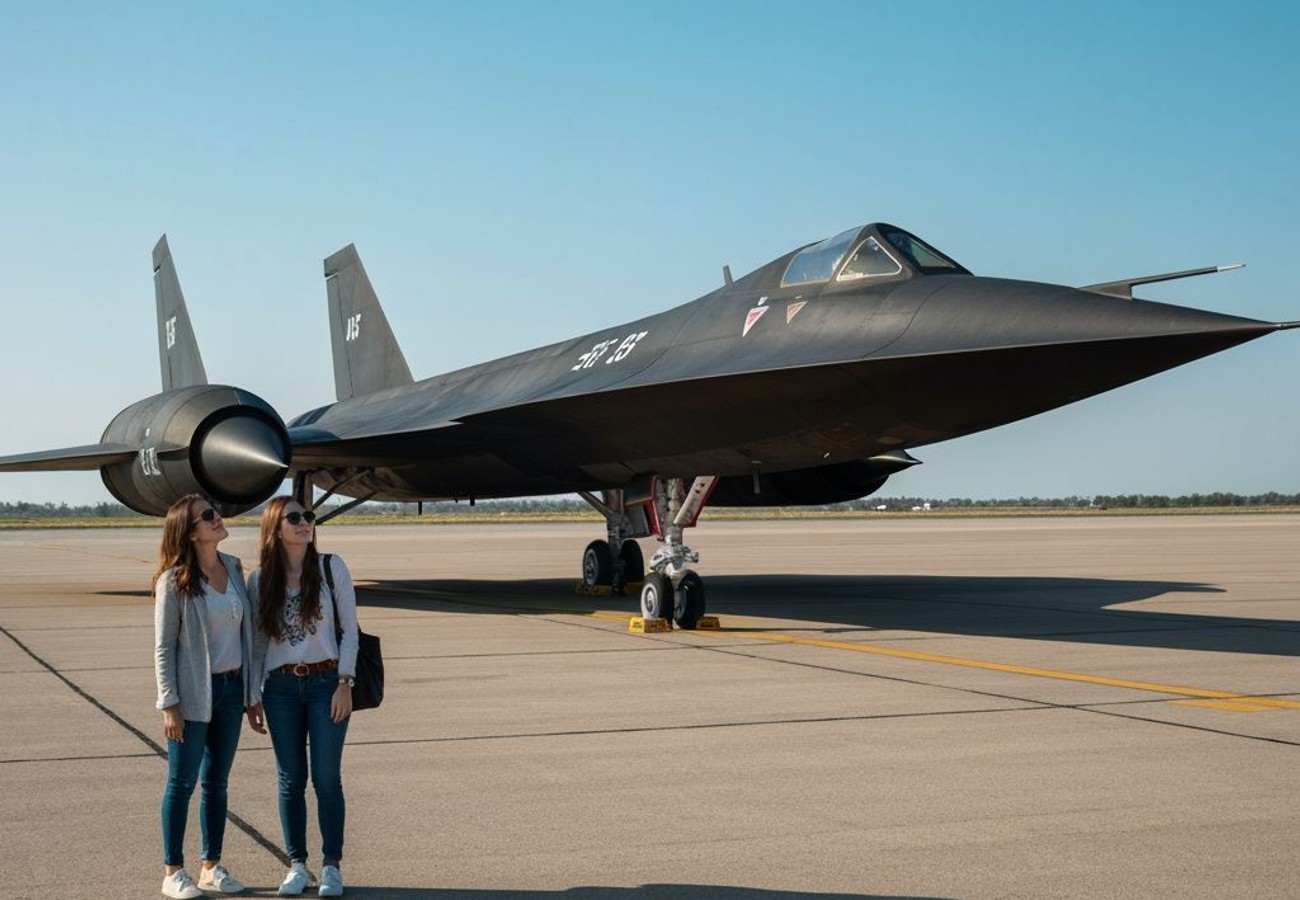
Image generated by AI
The Fastest Reconnaissance Bird Ever Built
The SR-71 Blackbird remains an unmatched engineering triumph—not merely for its speed, but for its ability to operate continuously in conditions that would destroy conventional aircraft. During the Cold War, Lockheed designed this high-altitude spy plane to cruise routinely above Mach 3—more than 2,000 miles per hour (3,219 km/h)—while soaring higher than 80,000 feet (24,384 meters).
But speed alone doesn't explain the Blackbird's legend. The real story lies in how engineers solved a problem that standard aerospace theory couldn't address: friction heating.
When Friction Became the Enemy
At Mach 3, the atmosphere itself transforms into a weapon. Aerodynamic friction heats the SR-71's titanium skin to temperatures between 600°F and 1,000°F (315°C to 538°C)—hot enough to weld steel and soften aluminum into uselessness.
The nose chines, engine nacelles, wing leading edges, and forward fuselage absorbed the most brutal thermal loads. Pilots reported that cockpit surfaces grew so warm they could heat meals against the canopy glass. Yet the aircraft had to maintain these hellish conditions for hours, not minutes.
Reddit: "The SR-71 wasn't just fast—it was basically a flying oven that had to keep its avionics working while flying backwards through time." — r/aviation
Traditional materials simply couldn't survive. Lockheed's engineers couldn't treat heat as a side effect anymore. They had to build the entire aircraft around thermal survival.
The Dark Coating: A Thermal Radiator in Disguise
Here's where the SR-71's famous dark exterior enters the story—and it wasn't about camouflage.
The coating wasn't pure black but an extremely dark blue engineered with specialized materials specifically selected for heat radiation. Engineers mixed ferrite-based compounds into the paint to serve a dual purpose: dispersing extreme heat while absorbing radar energy.
The numbers are striking. Historical testing revealed the treated surface dispersed heat approximately 2.5 times faster than bare titanium alone. At temperatures approaching 1,000°F (538°C), that efficiency difference meant the difference between structural integrity and failure.
The coating possessed high-emissivity characteristics—meaning it could radiate thermal energy away from the aircraft continuously. Rather than trapping heat inside the airframe, the dark exterior turned the Blackbird's skin into a massive thermal radiator. Every surface became part of the heat-management system.
Without this engineered coating, thermal stress would have accumulated aggressively, accelerating metal fatigue and shortening the aircraft's operational lifespan dramatically.
Radar Absorption: Stealth Before Stealth
The ferrite additives served another critical function. They helped absorb incoming radar energy, reducing the aircraft's radar reflectivity and complicating enemy tracking efforts during reconnaissance operations over hostile territory.
The SR-71 wasn't invisible to radar—especially Soviet systems—but reducing radar return significantly improved survivability. Enemy operators frequently struggled to maintain stable tracking solutions against an aircraft traveling above Mach 3 at extreme altitude.
This was an early example of multifunctional stealth engineering. Rather than bolting on separate radar-absorption systems, Lockheed incorporated radar-reduction properties directly into the thermal coating. Long before publicly acknowledged stealth aircraft, the Blackbird demonstrated how advanced materials could enhance survivability without changing the airframe's shape.
Titanium: The Material That Almost Never Existed
Approximately 90% of the SR-71 was constructed from titanium alloy—the only material capable of retaining structural strength at the extreme temperatures encountered during cruise.
Aluminum, which formed the backbone of conventional aircraft, weakened dramatically under prolonged thermal stress. There was no alternative.
But securing titanium during the Cold War presented an extraordinary problem. The United States lacked sufficient domestic supply.
In one of the era's most ironic intelligence operations, American intelligence agencies covertly purchased massive quantities of Soviet titanium through front companies and indirect commercial transactions. Material sourced from the USSR ultimately became part of the aircraft designed to spy on Soviet military activity.
Manufacturing titanium created additional nightmares. The metal was difficult to machine and highly reactive during fabrication at elevated temperatures. Conventional tooling methods failed repeatedly. Lockheed engineers had to develop entirely new production techniques—advances in metallurgy and industrial manufacturing that pushed Cold War technology forward.
The Complete Thermal System
The Blackbird's dark coating, titanium construction, specialized fuel system, and expansion joints all worked together as a coordinated thermal-management system. No single component solved the Mach 3 challenge alone.
The aircraft's iconic appearance wasn't aesthetic. Every visible detail—from the dark blue finish to the distinctive nose chines—served a direct engineering purpose. The SR-71 represented aerospace innovation functioning at the edge of what materials science permitted.
The Blackbird proved that at the limits of physics, form and function become indistinguishable.
Related Travel Guides
Disclaimer
This article is for informational and educational purposes only. It does not constitute legal, financial, or professional advice. While we strive to provide accurate and up-to-date information, travel policies, regulations, and conditions change rapidly. Always verify information with official sources before making travel decisions. Nomad Lawyer makes no representations about the accuracy, reliability, completeness, or suitability of the information provided. Readers should consult qualified professionals for advice specific to their circumstances. The views expressed in this article are those of the author and do not necessarily reflect the views of Nomad Lawyer.
Kunal K Choudhary
Co-Founder & Contributor
A passionate traveller and tech enthusiast. Kunal contributes to the vision and growth of Nomad Lawyer, bringing fresh perspectives and driving the community forward.
Learn more about our team →