
The Collapse of the ULCC Price Floor: Decoding the Fallout of Spirit Airlines' Shutdown Across U.S. Gateways

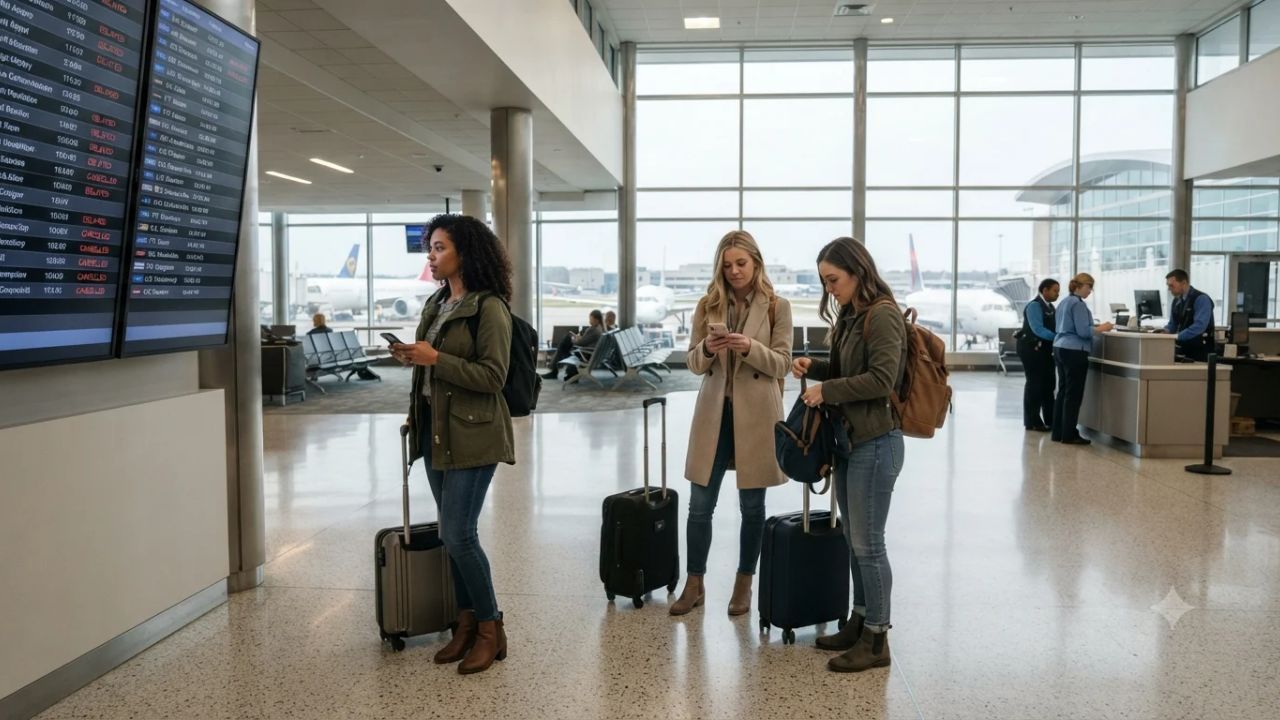
Eliminating 100% of commercial airline service at Pennsylvania’s Arnold Palmer Regional Airport and removing a dominant 12.4% passenger market share at New Orleans Louis Armstrong International Airport, the operational shutdown of Spirit Airlines has initiated the most severe contraction in American ultra-low-cost seat capacity in modern aviation history. The abrupt exit of the country's pioneer ultra-low-cost carrier (ULCC) has sent shockwaves through state aviation authorities, destabilizing municipal airport operating budgets from the mid-Atlantic to the Gulf Coast while instantly removing millions of entry-level budget seats from domestic reservation engines.
For municipal airport commissions, tourism development authorities, and cost-conscious flyers, Spirit’s departure is not merely an isolated corporate failure; it represents the structural dismantling of the domestic fare ceiling. By anchoring cut-rate competition on high-density leisure corridors connecting the Northeast and Midwest to Florida, the Caribbean, and Nevada, Spirit forced legacy network giants to maintain basic economy fare tiers. With that competitive counterbalance vanished, airports face severe deficits in passenger facility charges, while travelers confront immediate double-digit fare inflation across primary vacation routes.
Structural Vulnerability: The Immediate Shocks Across Regional and Gateway Airfields
The severity of the disruption exposes the extreme vulnerability of municipal airports that relied heavily on a single discount operator to sustain passenger throughput. The most acute crisis unfolded in Westmoreland County, Pennsylvania, where Spirit’s cessation stripped Arnold Palmer Regional Airport (LBE) in Latrobe of all scheduled passenger traffic. Operating as an exclusive commercial tenant, the airline’s exit immediately grounded local passenger processing, leaving terminal facilities deserted and forcing regional travelers to undertake long highway commutes to larger commercial hubs.
A parallel disruption hit New Jersey’s Atlantic City International Airport (ACY), where Spirit conducted approximately half of all scheduled commercial flight movements. As the dominant low-cost pipeline funneling vacationers into the coastal casino resort district, the sudden cancellation of half the airfield's schedule dealt a direct blow to South Jersey gaming revenues, hotel occupancy, and regional airport employment.
At major metropolitan hubs, the shock manifested as a sudden contraction in price competition. At Pittsburgh International Airport, Spirit accounted for approximately 3.5% of total passenger throughput prior to its departure. While Pittsburgh maintains diversified operations with Southwest Airlines, American Airlines, Delta Air Lines, United Airlines, and Frontier Airlines, the loss of Spirit's daily departures removed critical discount capacity on dense leisure runs to Orlando and Fort Lauderdale. Meanwhile, at Newark Liberty International Airport (EWR), where Spirit carried millions of travelers representing approximately 6% of terminal passenger traffic, the void left behind leaves fortress tenant United Airlines in an even stronger pricing position across the New York metropolitan market.
Airport Exposure Matrix: Quantifying Capacity Losses Across State Corridors
The commercial consequences of Spirit’s grounding vary widely based on carrier concentration, terminal scale, and alternative airline presence:
| Airport Facility & Code | State Jurisdiction | Pre-Shutdown Market Share | Immediate Network & Passenger Impact | Competing / Replacement Carriers |
|---|---|---|---|---|
| Arnold Palmer Regional (LBE) | Pennsylvania | 100% of commercial flights | Complete loss of scheduled commercial airline operations | None currently; airport actively soliciting regional carriers |
| Atlantic City Int'l (ACY) | New Jersey | ~50% of total flights | Halving of commercial flight schedule; deep leisure disruption | Seeking emergency backfill from regional discount operators |
| Louis Armstrong Int'l (MSY) | Louisiana | ~12.4% passenger share | Removal of major discount carrier; reduced leisure access | Southwest, Delta, American, United, Breeze, Frontier |
| Newark Liberty Int'l (EWR) | New Jersey | ~6.0% passenger volume | Millions of discount seats eliminated at major global hub | United (dominant), Delta, American, JetBlue |
| Pittsburgh Int'l (PIT) | Pennsylvania | ~3.5% passenger share | Loss of key leisure frequencies to Florida vacation corridors | Southwest, American, Delta, United, Frontier |
| Fort Lauderdale-Hollywood (FLL) | Florida | Major operating base | Contraction in South Florida domestic and Caribbean routes | JetBlue, Southwest, Allegiant, Frontier |
| Orlando International (MCO) | Florida | High-volume leisure base | Disappearance of budget family vacation inventory | Southwest, Frontier, Delta, American, JetBlue |
Data tracked by the Bureau of Transportation Statistics (BTS) indicates that low-cost carriers previously restrained domestic average ticket prices by up to 20% on competitive non-stop routes. In Florida leisure gateways like Orlando International (MCO) and Fort Lauderdale-Hollywood International (FLL), Spirit’s extensive route map formed the backbone of low-fare access for millions of domestic tourists and Latin American transit passengers.
While competing carriers such as Frontier Airlines, Breeze Airways, Allegiant Air, and JetBlue are scrambling to acquire gate leases and pick up abandoned route authorities, the replacement process remains slow and geographically uneven. Ultra-low-cost carriers cannot expand their fleet sizes overnight to absorb Spirit's stranded passenger volumes, leaving dozens of secondary point-to-point markets completely unserved.
Expert Analysis: Yield Inflation, The Disappearing Price Umbrella, and Re-Fleet Realities
From an aviation economics and regulatory standpoint, the death of Spirit Airlines removes the "Spirit Effect"—the well-documented economic phenomenon where the presence of a bare-bones ULCC on a city-pair forces all competing legacy airlines to reduce base tariffs.
The pricing pressure this creates means legacy carriers operating out of hubs like Newark, Pittsburgh, and New Orleans are aggressively capturing displaced demand at premium yields. Rather than discounting seats to fill rear cabins, network airlines are raising basic economy price thresholds. On routes between the Northeast and South Florida where Spirit once operated multiple daily flights, round-trip basic fares that routinely sold for under $100 have surged past $250 to $350, disproportionately pricing out leisure travelers, students, and working-class families.
For travelers booking this route, the direct consequence is that low-fare domestic flexibility has vanished, requiring consumers to plan vacations six to eight months in advance to avoid punitive walk-up tariffs. Additionally, travelers in regional catchment zones like Latrobe must now budget an additional $100 to $150 in ground transportation, rideshare fees, and long-term parking to access departures out of Pittsburgh or Cleveland.
Additionally, municipal airport finance is entering a volatile phase. Under safety and modernization guidelines monitored by the Federal Aviation Administration (FAA), airports fund debt service on capital terminal bonds through per-passenger facility charges and parking revenues. When passenger traffic drops abruptly by 12% in New Orleans or 50% in Atlantic City, municipal airport authorities face severe non-aeronautical revenue shortfalls. To avoid bond downgrades, airport directors are forced to hike landing fees and gate rentals on surviving airlines, initiating an inflationary feedback loop that ultimately drives consumer ticket prices even higher.
Key Takeaways
- Total shutdown hits secondary airports hardest: Arnold Palmer Regional lost 100% of scheduled airline service, while Atlantic City suffered an immediate 50% reduction in commercial flights.
- 12.4% capacity erased in New Orleans: Spirit’s exit eliminated one of MSY’s largest carriers, significantly reducing low-fare access to the Gulf Coast tourism hub.
- Domestic ticket prices face sharp upward pressure: The removal of Spirit’s low-fare competition allows network carriers to raise basic economy price floors by 25% to 40% on leisure routes.
- Replacement flying remains slow and fragmented: While Frontier, Breeze, and Allegiant are adding selective frequencies, fleet limitations prevent them from replacing Spirit’s nationwide capacity.
- Travelers must adjust booking horizons: Securing affordable domestic leisure fares now requires booking months in advance and evaluating alternative regional airport gateways.
FAQ: Spirit Airlines Shutdown and U.S. Budget Travel 2026
Which airports were most severely impacted by Spirit's shutdown?
Arnold Palmer Regional Airport lost all commercial service, Atlantic City International lost roughly half its flights, and New Orleans lost 12.4% of its passenger capacity.
Will other budget airlines replace Spirit's canceled routes?
Airlines like Frontier, Breeze, and Allegiant are selectively adding flights, but replacement capacity is uneven and cannot instantly absorb Spirit’s entire network footprint.
How does Spirit’s exit affect domestic U.S. airfares?
Without Spirit setting a low price floor, competing legacy airlines have raised base fares and basic economy prices, driving significant airfare inflation on popular vacation routes.
What should travelers do if they hold tickets from Spirit Airlines?
Affected ticket holders should file claims through the designated bankruptcy claims portal, contact their credit card issuers for chargeback refunds, and rebook travel on alternative carriers immediately.
The sudden demise of Spirit Airlines marks the end of an era in budget aviation, permanently raising the price of American mobility.
Related Travel Guides
Disclaimer
This article is for informational and educational purposes only. It does not constitute legal, financial, or professional advice. While we strive to provide accurate and up-to-date information, travel policies, regulations, and conditions change rapidly. Always verify information with official sources before making travel decisions. Nomad Lawyer makes no representations about the accuracy, reliability, completeness, or suitability of the information provided. Readers should consult qualified professionals for advice specific to their circumstances. The views expressed in this article are those of the author and do not necessarily reflect the views of Nomad Lawyer.
Raushan Kumar
Founder & Lead Developer
Full-stack developer with 11+ years of experience and a passionate traveller. Raushan built Nomad Lawyer from the ground up with a vision to create the best travel and law experience on the web.
Learn more about our team →