
Spirit Airlines Faces Liquidation Crisis, Seeks Emergency U.S. Government Bailout
Breaking airline news and aviation industry updates for 2026.

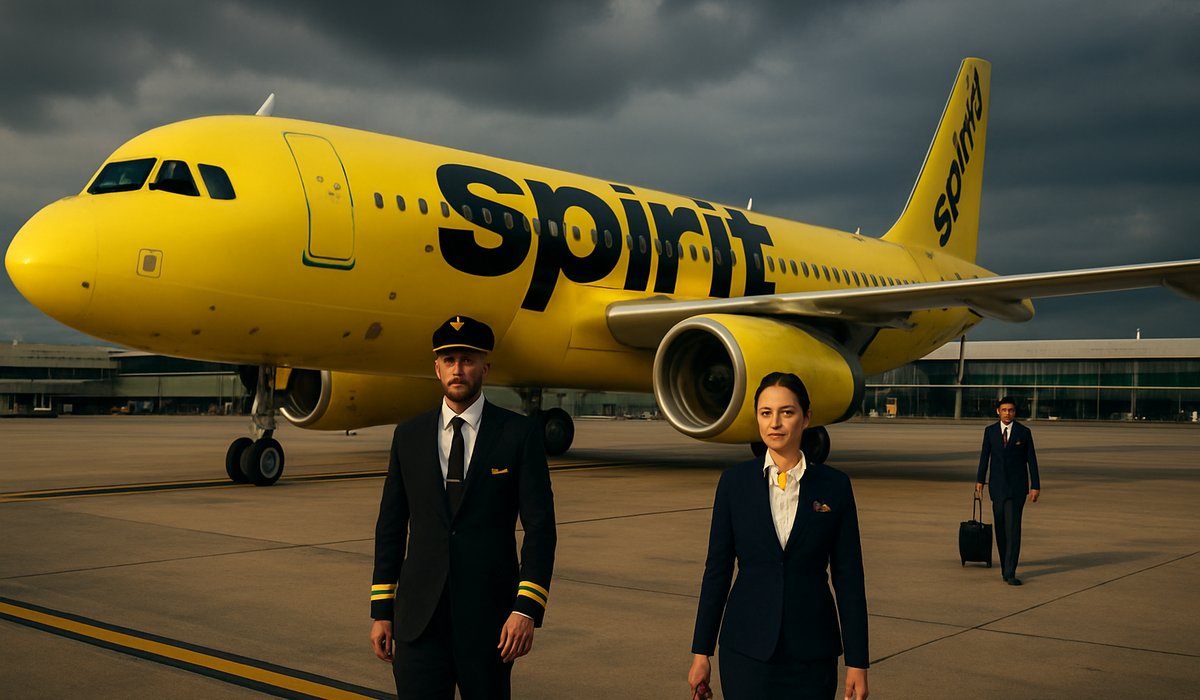
Image generated by AI
Spirit Airlines Faces Liquidation Crisis, Seeks Emergency U.S. Government Bailout
Budget carrier's financial collapse signals deeper distress in America's ultra-low-cost aviation sector
Struggling Budget Carrier Approaches Trump Administration for Lifeline
Spirit Airlines, one of America's most recognizable ultra-low-cost carriers, has escalated its financial crisis beyond internal restructuring measures and is now pursuing an emergency government bailout to prevent complete liquidation. The Fort Lauderdale-based airline has directly petitioned the Trump administration for federal intervention, marking a dramatic shift from earlier cost-cutting strategies and highlighting the severity of challenges threatening the carrier's survival.
The move underscores mounting pressure from creditors alongside deteriorating operational economics that have pushed the airline to the brink. Industry sources suggest the carrier's already fragile financial position has been further weakened by persistently elevated jet fuel prices, which continue to compress margins across the aviation sector despite recent global oil price fluctuations.
Structural Challenges Compounding Financial Distress
Spirit Airlines entered recent months carrying substantial debt obligations and a notoriously thin balance sheet—vulnerabilities that have become untenable as the airline confronts mounting operational headwinds. The ultra-low-cost carrier model, which depends on aggressive fee-based revenue generation and minimal operational spending, has proven particularly susceptible to fuel price volatility and shifting passenger demand patterns.
The airline's business model, heavily reliant on ancillary revenue streams including baggage charges and seat selection fees, has failed to offset rising costs. These revenue sources, once sufficient to maintain profitability in the ultra-low-cost segment, have proven inadequate against current economic pressures and competitive capacity additions across the American aviation market.
Broader Implications for Budget Aviation Sector
Spirit's predicament reflects systemic vulnerabilities within America's budget aviation ecosystem. The ultra-low-cost carrier segment, which revolutionized domestic travel by offering bare-bones fares and aggressive pricing structures, now faces existential questions about sustainability. Industry analysts note that several carriers operating on similarly compressed margins face heightened bankruptcy risk if fuel costs resurge or demand deteriorates further.
The potential collapse of a major ultra-low-cost operator could reshape competitive dynamics across North American aviation, potentially reducing consumer choice and eliminating price pressure that has traditionally benefited budget-conscious travelers. A government intervention—if granted—would represent an unprecedented direct bailout for a commercial airline outside of pandemic-related emergency scenarios.
FAQ: Spirit Airlines Crisis and Aviation Industry Impact
Q1: Why is Spirit Airlines seeking a government bailout? Spirit faces imminent liquidation due to elevated jet fuel prices, mounting creditor pressure, and structural weaknesses in its ultra-low-cost business model that depends heavily on ancillary fees like baggage charges.
Q2: How do rising fuel prices affect airline fees and ticket prices? Elevated fuel costs force airlines to increase ancillary revenue streams (baggage fees, seat selection) and base fares to maintain profitability, directly impacting consumer travel costs.
Q3: Could Spirit Airlines' collapse affect consumer airfares? Yes—the loss of a major ultra-low-cost competitor would reduce price competition, potentially increasing average fares across the U.S. aviation market for budget-conscious travelers.
Q4: What is an ultra-low-cost carrier model, and why is it struggling? Ultra-low-cost carriers operate on razor-thin margins using aggressive cost-cutting and high ancillary fees. Current fuel prices and competitive pressures have made this model unsustainable for financially weak operators.
Q5: Has the U.S. government bailed out airlines before? Yes—the federal government provided substantial pandemic relief to airlines in 2020-2021, though routine commercial airline bailouts outside crises are historically rare and controversial.
Related Travel Guides
Flight Delay Compensation Guide 2026
Understanding Airline Route Changes
Airport Security Process Updated (2026)
External Resources
Disclaimer
This article is for informational and educational purposes only. It does not constitute legal, financial, or professional advice. While we strive to provide accurate and up-to-date information, travel policies, regulations, and conditions change rapidly. Always verify information with official sources before making travel decisions. Nomad Lawyer makes no representations about the accuracy, reliability, completeness, or suitability of the information provided. Readers should consult qualified professionals for advice specific to their circumstances. The views expressed in this article are those of the author and do not necessarily reflect the views of Nomad Lawyer.
Raushan Kumar
Founder & Lead Developer
Full-stack developer with 11+ years of experience and a passionate traveller. Raushan built Nomad Lawyer from the ground up with a vision to create the best travel and law experience on the web.
Learn more about our team →