
Spain Tourism Boom Tests Water Resources As Coastal Destinations Seek Sustainable Solutions: All You Need to Know
Spain Tourism Boom Tests Water Resources As Coastal Destinations Seek Sustainable Solutions: All You Need to Know

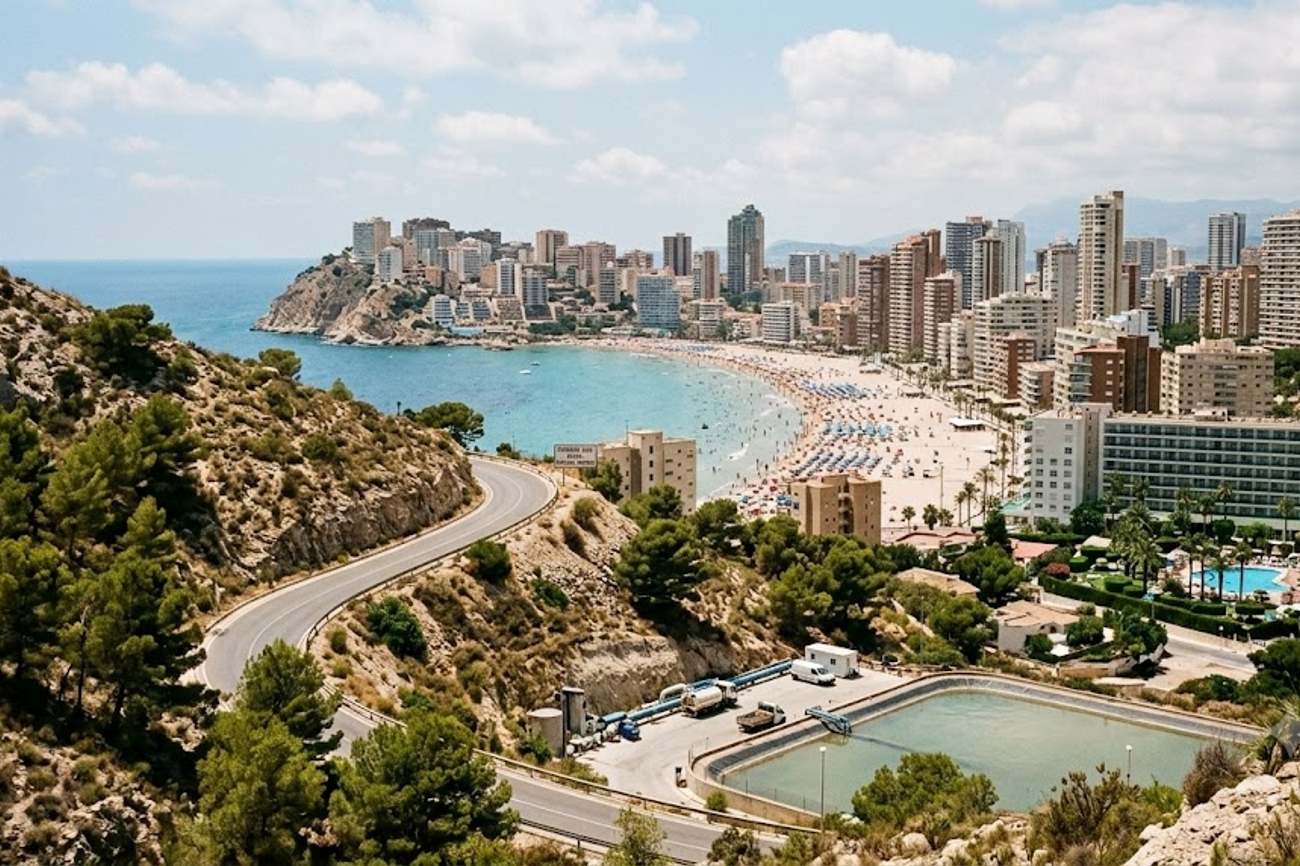
Image generated by AI
84% of Spain's total reservoir capacity on May 26, 2026, plummeted to 61.8% by September 15 of the same year, illustrating a volatile hydrological cycle that directly threatens the stability of the Mediterranean's most popular tourism hubs. While a national average suggests a moderate buffer, the granular data reveals a precarious reality for coastal regions where millions of visitors converge during the peak of summer heat.
The Hydrological Divide of Mediterranean Tourism
The fundamental tension in Spanish tourism is not a lack of water in the aggregate, but a severe geographical mismatch between where water is stored and where it is consumed. Spain's tourism model relies heavily on "sun and beach" destinations that are naturally prone to water scarcity. When international arrivals peak in June and July, they do so in basins that are often already under stress.
This is not a uniform crisis but a fragmented one. The national average of 61.8% (representing 34,662 cubic hectometres) masks critical deficits in the east. For instance, the Ebro basin dropped to 49.8% by mid-September, and the Segura basin hit 52.8%. These figures represent the actual lifeblood of the regions supporting the Costa Blanca and other eastern resorts.
The disparity becomes clear when comparing the internal basins of Catalonia, which remained relatively robust at 75.3% in September, against the Júcar basin at 52.9%. For the traveler, this means that the "drought experience"—ranging from restrictive hotel water policies to the closure of public fountains or swimming pool limitations—will vary wildly depending on whether they are staying in Barcelona or Alicante.
Regional Capacity and Demand Metrics
The following data outlines the reservoir levels as of September 15, 2026, highlighting the vulnerability of the eastern coast compared to the national average.
| Region / Basin | Reservoir Capacity (Sept 15, 2026) |
|---|---|
| Spain (National Average) | 61.8% |
| Catalonia Internal Basins | 75.3% |
| Guadalquivir | 71.0% |
| Mediterranean Andalusia | 65.7% |
| Júcar | 52.9% |
| Segura | 52.8% |
| Ebro | 49.8% |
The pressure on these basins is exacerbated by the extreme concentration of visitors. In June 2026 alone, the Balearic Islands recorded over 7.2 million overnight stays, the highest of any Spanish tourism area. When 34% of all international hotel stays are concentrated in the Balearics, the local infrastructure is pushed to its absolute limit.
Expert Analysis: The Infrastructure Debt of Mass Tourism
The data suggests that Spain is moving toward a "tiered" tourism economy where the ability to attract high-spending visitors depends entirely on the resilience of local water infrastructure. For travelers booking these routes, the direct consequence is a shift in the "invisible" costs of travel. As the Spanish Ministry for the Ecological Transition monitors these basins, the cost of desalination and wastewater reuse is increasingly baked into hotel room rates and municipal tourism taxes.
The current strategy—seen in the Balearic Government's March 2026 allocation of €4.5 million for Alcúdia’s reservoir and €6.6 million for Ciutadella de Menorca—indicates a shift toward "hard" engineering solutions. However, the pricing pressure this creates is significant. When a region like Andalusia accounts for 22.4% of domestic stays but faces a Mediterranean basin capacity of only 65.7%, the competition for water between luxury golf resorts, agriculture, and local residents becomes a political flashpoint.
Spain's tourism boom has led to increased pressure on the country's water resources, particularly in coastal destinations such as Barcelona and Mallorca, prompting the Spanish Government to seek sustainable solutions to mitigate the impact of tourism on the environment. For the latest information on Spain's tourism policies and initiatives, visitors can check the official website of the Spanish Tourism Board. The board provides valuable insights and resources for travelers looking to explore Spain's diverse regions while minimizing their environmental footprint.
For the nomad or long-term traveler, this means that "water-conscious" tourism is no longer an ethical choice but a logistical necessity. We are seeing the beginning of a regulatory shift where water-intensive activities—such as expansive landscaped resorts or traditional swimming pools—may face seasonal restrictions or "scarcity surcharges." The reliance on the International Air Transport Association (IATA) for flight logistics is one thing, but the actual viability of a destination now rests on its cubic hectometres.
Key Takeaways
- Extreme Volatility: National reservoir levels dropped 22.2 percentage points in less than four months (May to September 2026).
- Regional Vulnerability: The Ebro, Segura, and Júcar basins are the most critical, all hovering near or below 53% capacity.
- Concentrated Demand: The Balearic Islands bear the heaviest load, hosting 34% of all international hotel overnight stays.
- Market Dominance: British (29%) and German (16.3%) travelers remain the primary drivers of this seasonal demand.
- Infrastructure Pivot: Investment is shifting toward desalination and reservoir connections, funded partly by sustainable tourism taxes.
FAQ: Spain Water Management 2026
Will water shortages affect my hotel stay in Spain? Depending on the region, you may encounter "water-conscious" policies. In basins like Segura or Júcar, hotels may implement stricter towel reuse programs, low-flow showers, or limited pool hours to manage the 52% reservoir levels.
Which regions are most at risk for water restrictions? The eastern coast and islands are most vulnerable. Specifically, destinations in the Ebro, Segura, and Júcar basins face higher risks than those in Catalonia or the Guadalquivir basin.
How is the Spanish government funding water resilience? The Balearic Islands are utilizing a Sustainable Tourism Tax to fund critical projects, including millions of euros in new reservoir connections for Mallorca and Menorca.
Does tourism cause the water shortages in Spain? No. While tourism increases seasonal demand, scarcity is driven by a complex mix of rainfall patterns, temperature increases, and heavy agricultural water use.
The luxury of the Mediterranean coast now depends on the precision of its pipes.
Tags: Balearic Islands 2026, Spanish Ministry for the Ecological Transition, Costa del Sol Water Crisis, Júcar Basin, Sustainable Tourism Tax Spain
Related Travel Guides
Disclaimer
This article is for informational and educational purposes only. It does not constitute legal, financial, or professional advice. While we strive to provide accurate and up-to-date information, travel policies, regulations, and conditions change rapidly. Always verify information with official sources before making travel decisions. Nomad Lawyer makes no representations about the accuracy, reliability, completeness, or suitability of the information provided. Readers should consult qualified professionals for advice specific to their circumstances. The views expressed in this article are those of the author and do not necessarily reflect the views of Nomad Lawyer.
Naina Thakur
Contributor & Travel Specialist
Travel enthusiast and legal writer covering visa regulations, responsible tourism, and cultural journeys across global destinations.
Learn more about our team →