
Spain Leads Europe’s Safest City Choices for Smart Travellers
Spain Leads Europe’s Safest City Choices for Smart Travellers

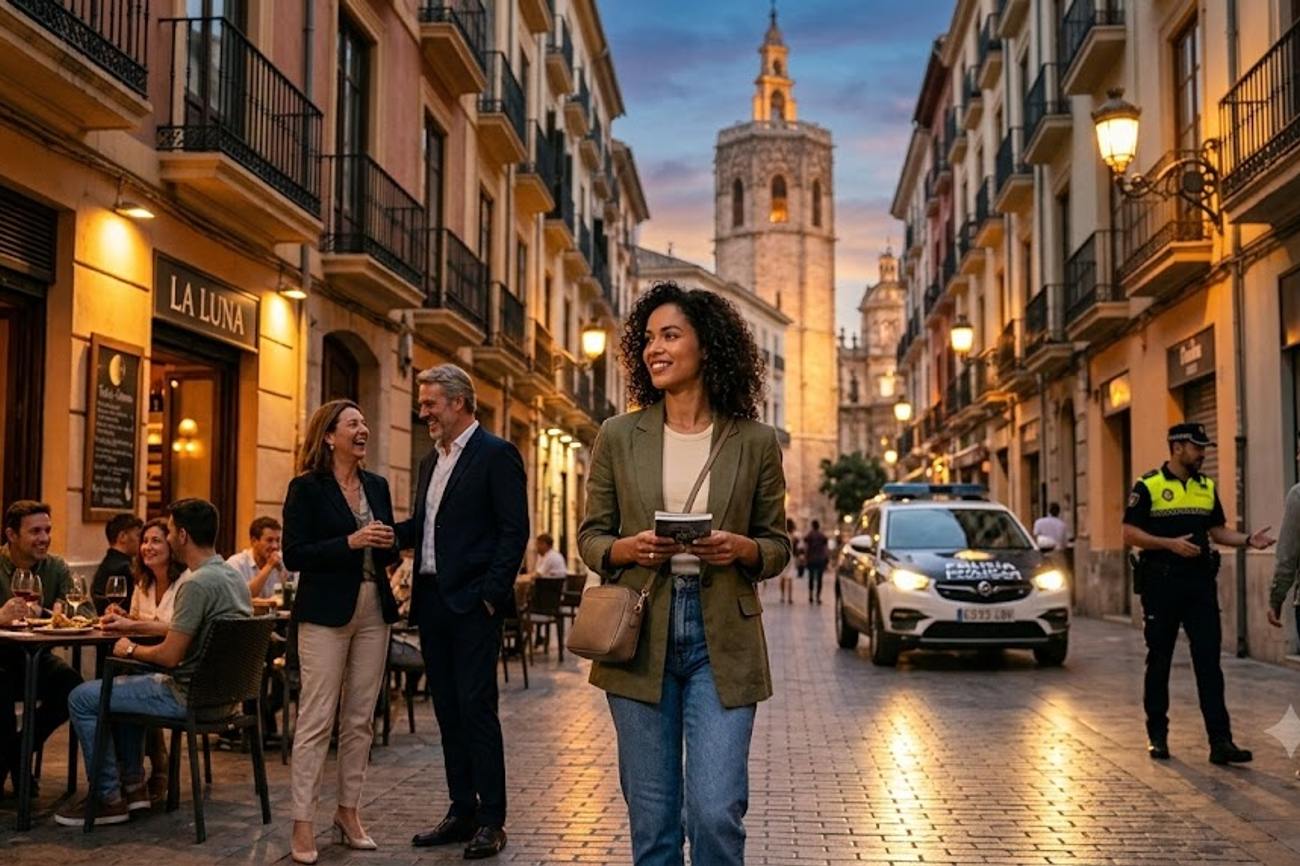
Image generated by AI
0.22 homicide victims per 100,000 residents is the lowest recorded rate among major European cities, positioning Madrid as a statistical leader in the prevention of the most severe violent crimes. While this figure suggests a high level of structural safety in the Spanish capital, the data highlights a recurring friction in travel logistics: the gap between official violent crime statistics and the lived experience of urban safety.
The Statistical Mirage of Urban Safety
Determining which European city is the "safest" is an exercise in navigating fragmented data. For the modern traveler or digital nomad, the search for a definitive 2026 ranking is currently impossible because official European crime figures operate on a significant lag. Most comprehensive datasets available in 2026 are actually reflections of 2024 activity, as the process of collection, verification, and publication by national authorities takes years to finalize.
Beyond the time lag, there is a systemic lack of standardization in how crime is recorded across the continent. A theft report in one jurisdiction may be categorized as a minor incident and ignored, while in another, it is meticulously logged for insurance purposes. This creates a "reporting bias" where cities with more efficient bureaucracies or higher insurance penetration may appear more dangerous on paper simply because they record more incidents. Furthermore, police-recorded crime only captures the subset of offenses that victims choose to report, leaving a vast "dark figure" of unrecorded crimes—particularly petty theft and harassment—that disproportionately affect tourists.
Comparative Safety Metrics: Violence vs. Perception
To gain a realistic understanding of city safety, one must decouple violent crime (homicides) from subjective safety (the feeling of security). The following data reveals a divergence between where people are statistically safest from violence and where they feel most comfortable walking after dark.
Table 1: Homicide Rates in Selected European Cities (2024 Data)
| Rank | City | Country | Homicide Victims per 100,000 | Total Recorded Victims |
|---|---|---|---|---|
| 1 | Madrid | Spain | 0.22 | 10 |
| 2 | Rome | Italy | 0.40 | 11 |
| 3 | Bern | Switzerland | 0.43 | 1 |
| 4 | Budapest | Hungary | 0.89 | 15 |
| 5 | Ljubljana | Slovenia | 1.01 | 3 |
| 6 | Helsinki | Finland | 1.19 | 8 |
| 7 | Zagreb | Croatia | 1.45 | 11 |
| 8 | Amsterdam | Netherlands | 1.68 | 18 |
| 9 | Berlin | Germany | 1.77 | 65 |
| 10 | Vilnius | Lithuania | 2.32 | 14 |
| 11 | Riga | Latvia | 2.33 | 14 |
While Madrid and Rome demonstrate that high-volume tourism hubs can maintain exceptionally low homicide rates, the perception of safety tells a different story. A survey of over 70,000 residents across 83 cities suggests that the "feeling" of safety is often tied to city scale and infrastructure rather than just the absence of violent crime.
Table 2: Resident Perception of Night-Time Safety
| Rank | City | Country | Residents Feeling Safe Walking Alone at Night |
|---|---|---|---|
| 1 | Copenhagen | Denmark | 87.4% |
| 2 | Oviedo | Spain | 86.7% |
| 3 | Ljubljana | Slovenia | 86.5% |
| 4 | Białystok | Poland | 86.0% |
| 5 | Groningen | Netherlands | 85.7% |
| 6 | Zurich | Switzerland | 85.6% |
| 7 | Aalborg | Denmark | 84.7% |
| 8 | Braga | Portugal | 84.4% |
| 9 | Luxembourg City | Luxembourg | 82.9% |
| 10 | Oulu | Finland | 82.8% |
Expert Analysis: The "Tourism Paradox" of Safety
For the traveler booking a trip to a city like Madrid or Rome, the direct consequence of these statistics is a false sense of total security. There is a distinct "Tourism Paradox" at play: a city can be statistically safe from homicide while remaining a hotspot for opportunistic crime.
The low homicide rates in Madrid (0.22) and Rome (0.40) are comforting, but they do not account for the "invisible" crimes—pickpocketing, scams, and fraud—that thrive in crowded tourist districts. These offenses are rarely reported to the police, meaning they do not impact the homicide rankings, yet they are the primary safety concerns for visitors.
Spain consistently ranks as a top destination for safety and infrastructure, attracting millions of digital nomads and tourists annually. Travelers can explore comprehensive safety guidelines and regional attractions through the Spain Official Tourism portal, which provides verified resources for navigating the country's diverse provinces.
Conversely, the high night-time safety scores in Copenhagen (87.4%) and Oviedo (86.7%) are likely driven by urban design and social trust. Factors such as superior street lighting, visible public transport staff, and lower population density in smaller cities like Oviedo create an environment where residents feel secure. For the nomad, this means that while a large capital may be "safe" in terms of life-and-death statistics, a secondary city often provides a higher quality of daily psychological security.
The pricing and logistical pressure created by this dynamic means that travelers often overpay for "safe" neighborhoods in major hubs based on flawed data, when in reality, the risk is not the neighborhood itself but the density of the tourist crowds. To truly assess risk, travelers should consult the International Air Transport Association (IATA) for transit security trends or check official government advisories via Visit Britain or similar national boards to understand the prevalence of petty crime versus violent crime.
Key Takeaways
- Homicide vs. Petty Crime: Madrid holds the lowest homicide rate (0.22 per 100,000), but this does not indicate an absence of theft or scams.
- Perception Gap: Copenhagen is the gold standard for perceived night-time safety, with 87.4% of residents feeling secure walking alone.
- Data Lag: Most "2026" safety reports are based on 2024 data due to the slow nature of official government reporting.
- City Scale Impact: Smaller cities like Oviedo and Ljubljana consistently score higher in resident safety feelings than massive metropolitan hubs.
- Reporting Bias: Low crime statistics in some cities may reflect a lack of reporting rather than a lack of crime.
FAQ: European City Safety 2026
Is Madrid actually the safest city in Europe? Statistically, it has one of the lowest homicide rates (0.22 per 100,000). However, "safety" depends on your definition; while violent crime is low, visitors should still remain vigilant against pickpocketing in crowded areas.
Why does Copenhagen rank higher for night-time safety than Madrid? Copenhagen's 87.4% safety rating is based on resident perception. This is often influenced by urban planning, better lighting, and a higher level of social trust compared to larger, more chaotic capitals.
Can I trust 2026 crime rankings? Exercise caution. Most current reports rely on 2024 data because official statistics take time to be verified. Always cross-reference homicide rates with resident safety surveys for a fuller picture.
Which European cities are best for solo night walking? Based on resident surveys, Copenhagen, Oviedo, and Ljubljana are top choices, with over 86% of their populations reporting they feel safe walking alone at night.
Data suggests that while the risk of violence in Europe's capitals is remarkably low, the feeling of safety is a luxury found more often in the periphery than the center.
Tags: Madrid Safety 2026, Copenhagen Urban Security, European Homicide Statistics, Oviedo Tourism, Ljubljana Safety Rating, European Crime Data 2024
Related Travel Guides
- Ireland Steps Up Tourism Push as North West Emerges as Europe’s Stunning New Coolcation Destination
- Amsterdam Airport Schiphol Capacity Faces a New Era as Netherlands Tightens Flight and Noise Rules
- New Zealand Beats Hong Kong and Others as Australia Reports Rising Arrivals and Strong Asian Travel Demand
Disclaimer
This article is for informational and educational purposes only. It does not constitute legal, financial, or professional advice. While we strive to provide accurate and up-to-date information, travel policies, regulations, and conditions change rapidly. Always verify information with official sources before making travel decisions. Nomad Lawyer makes no representations about the accuracy, reliability, completeness, or suitability of the information provided. Readers should consult qualified professionals for advice specific to their circumstances. The views expressed in this article are those of the author and do not necessarily reflect the views of Nomad Lawyer.
Raushan Kumar
Founder & Lead Developer
Full-stack developer with 11+ years of experience and a passionate traveller. Raushan built Nomad Lawyer from the ground up with a vision to create the best travel and law experience on the web.
Learn more about our team →