
Spain Heatwave 2026: Tourists Face 44C Temperatures, Wildfire Risks Across Madrid, Andalusia, Canary Islands Travel Alert
Spain's second major summer heatwave pushes temperatures toward 44C across Madrid, Andalusia, and the Canary Islands, disrupting tourism with health warnings and wildfire alerts.

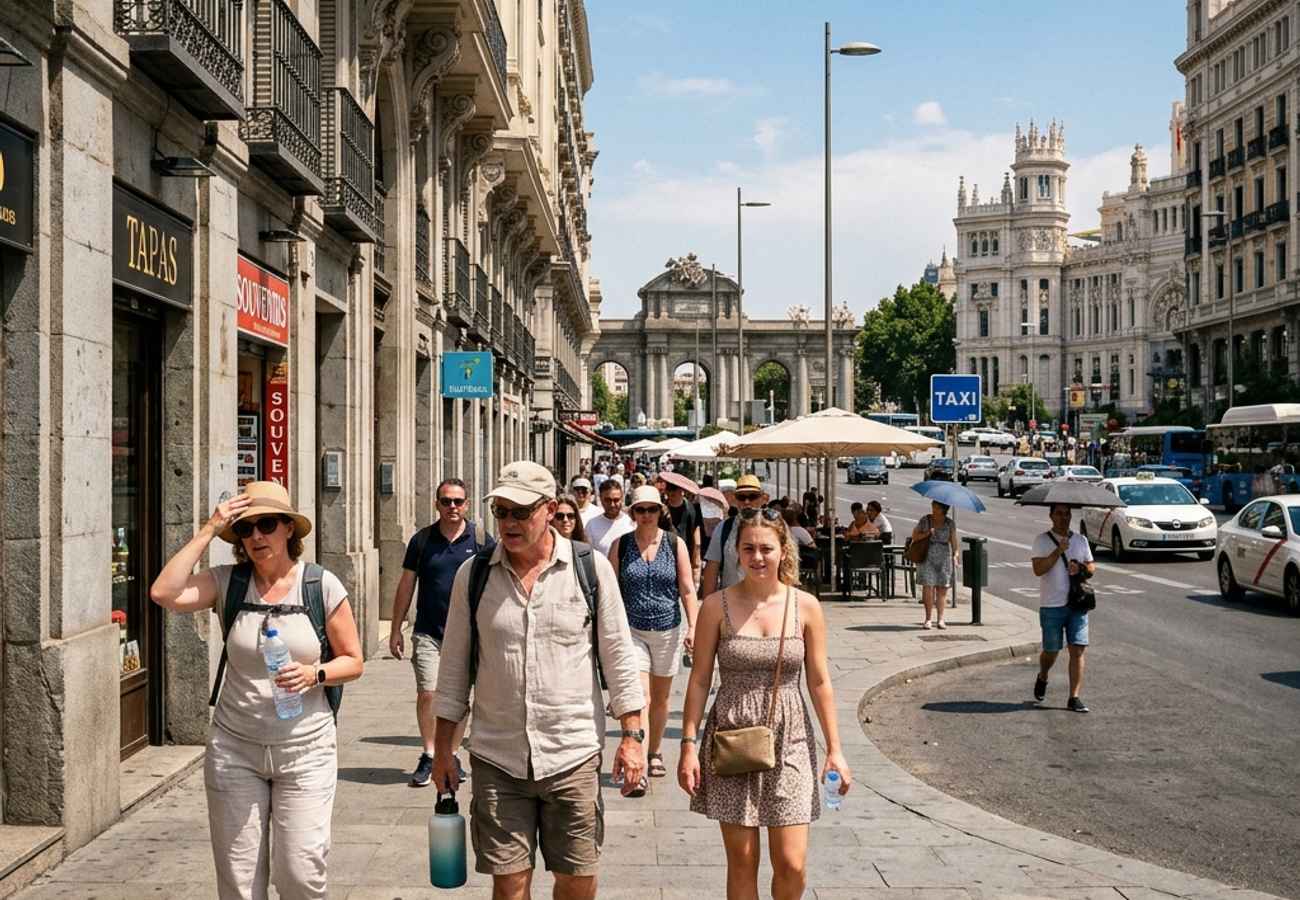
Image generated by AI
I've been guiding travelers through Spain for over two decades, and I've never seen heat advisories stack up quite like this. AEMET, Spain's State Meteorological Agency, has issued a special heatwave notice for what's already the second major scorcher of summer 2026. Temperatures are forecast to hit 42°C in several river valleys, with some inland areas pushing toward 44°C.
This isn't background weather. It's a real-time travel safety issue affecting Madrid, Andalusia, the Canary Islands, the Balearics, and the Ebro valley. If you're booked to visit Spain this week, your itinerary needs adjusting now.
Where the Heat Hits Hardest
AEMET identifies the south-western mainland, the Guadiana and Guadalquivir valleys, the Ebro valley, and north-eastern depressions as the primary risk zones. Inland Galicia, the southern plateau, and the eastern Cantabrian coast are also running unusually hot.
Mallorca is forecast to see highs of 36-38°C. Monday is expected to be the most brutal day, with heat spreading into the Ebro valley, the northern plateau, and eastern mainland zones.
A possible DANA—an isolated upper-level depression—adds uncertainty for Tuesday and Wednesday. But temperatures above 39-40°C may persist in the south-west, southern plateau, Ebro valley, and inland south-eastern areas before relief arrives Thursday.
Madrid: Shift Your Sightseeing Clock
When I'm in Madrid during heatwaves, I start my day at 7:30 AM. Retiro Park is empty and shaded along the Paseo de Coches before 9 AM. The Prado Museum opens at 10 AM—book online and arrive for opening to avoid the outdoor queue that builds along Paseo del Prado.
Skip midday walking along Gran Vía. The asphalt radiates heat, and there's minimal shade between Plaza de España and Plaza de Cibeles. Instead, use the Metro (Line 1 connects Sol to Atocha in under five minutes) and plan indoor activities between 1 PM and 6 PM.
The Mercado de San Miguel stays cool inside, but it gets packed after 7 PM. I'd grab a late lunch there around 3:30 PM when the post-lunch rush thins out.
Seville, Córdoba, and Granada: The Andalusian Oven
Andalusia is where this heatwave gets dangerous. Seville's Barrio Santa Cruz is a maze of narrow streets that trap heat like a furnace after noon. The Alcázar gardens offer some shade, but I'd only visit before 10:30 AM.
The Metropol Parasol (Las Setas) in Plaza de la Encarnación has an elevated walkway with better airflow—worth considering for late afternoon when the sun drops lower.
In Córdoba, the Mezquita-Catedral stays relatively cool inside its thick stone walls. Time your visit for the 10 AM opening. The Jewish Quarter (Judería) patio lanes are beautiful but exposed; walk them before 11 AM or after 7 PM.
Granada's Alhambra is a timed-entry site, and the climb up Cuesta del Rey Chico from the Nueva Square side is brutal in peak heat. Take the microbus (C30 or C32) from Plaza Isabel la Católica instead of walking up. Book the earliest morning slot available.
"I was in Seville last August when it hit 45°C. The streets were literally empty between 2-6 PM. My hotel AC couldn't keep up, and I ended up spending three hours in El Corte Inglés just for the air conditioning. Plan your day around the heat, not against it." — u/sevilletraveler, r/travel
Canary Islands: Wildfire Pre-Alert Adds Another Layer
The Canary Islands emergency authority has declared a pre-alert for maximum temperatures across the autonomous community starting Sunday. There's also a forest fire alert for Gran Canaria above 400 metres and for mid-altitude and summit areas of southern and western Tenerife.
If you're planning hikes in Teide National Park, check with local visitor centers before heading out. The TF-21 road through the park can close quickly if fire risk escalates. In Gran Canaria, rural drives through the interior—like the GC-60 to Roque Nublo—pass through the alert zone above 400 metres.
Avoid lighting barbecues, tossing cigarette butts, or leaving glass bottles in dry areas. Report any fires immediately by calling 112.
Health Precautions: More Than Summer Common Sense
Spain's Ministry of Health has activated the National Plan for Preventive Actions Against Effects of Excess Temperatures, running through September 30. The guidance targets older travelers, pregnant women, children, and anyone with chronic conditions.
The official advice: drink water frequently, avoid prolonged sun exposure, use sunscreen, wear loose clothing, and stay in air-conditioned spaces during peak hours. What caught my attention in this advisory is the warning about warm nights.
Minimum temperatures are staying high across many regions, which means your body gets less recovery time overnight. For travelers not used to Mediterranean heat, this compounds the risk significantly.
I always tell clients to carry a refillable water bottle, keep medications in insulated pouches, and never leave anyone—children, elderly travelers, or pets—in a parked vehicle.
Official Sources to Monitor
The UK Foreign, Commonwealth and Development Office advises checking AEMET warnings and European meteorological services during extreme temperatures. The FCDO also notes that wildfires occur frequently in Spain during summer, including on the islands.
AEMET's website updates its alert map regularly. I check it every morning when I'm on the ground in Spain. The color-coded system—green, yellow, orange, red—tells you exactly what's happening in each province.
What Tour Operators Are Doing
Tourism operators should treat this as a multi-day event, not a single-day spike. Hotels, guides, coach operators, and transfer companies need to adjust schedules, add hydration stops, and shift high-exertion activities to early morning or evening.
If you've booked a cycling tour through Extremadura, a vineyard visit in La Rioja, or a hiking excursion in the Balearics, contact your operator. Ask about modified start times, additional water provisions, and shaded rest points. Reputable companies are already adjusting.
Practical Visitor Guide
Best Times to Visit During This Heatwave:
- Sightsee before 10:30 AM or after 7 PM
- Indoor museums and attractions: 1-5 PM
- Avoid outdoor queues, open-air dining, and long walks between 12-6 PM
- Intercity AVE trains are air-conditioned—prefer these over driving
Local Safety Considerations:
- Carry water on all transit, including airport transfers and intercity buses
- Confirm hotel air-conditioning before arrival
- Keep medications cool in insulated pouches
- Know the emergency number: 112 works nationwide
- Download the AEMET app for real-time weather alerts
- Avoid hiking in wildfire alert zones in the Canaries
- Report any signs of fire immediately
Budget Expectations:
- Budget extra for taxis and Metro rides to avoid walking in peak heat
- Air-conditioned hotels may cost more during high-demand periods
- Some outdoor attractions may offer partial refunds or rescheduling if they close
- Bottled water at supermarkets (Mercadona, Consum) runs under €1 per 1.5L—avoid tourist kiosks where prices triple
- Indoor activities like museums are good value during peak heat hours
Key Regions Affected:
- Madrid and central plateau
- Andalusia (Seville, Córdoba, Granada, inland areas)
- Ebro valley (Zaragoza)
- Balearic Islands (Mallorca)
- Canary Islands (Gran Canaria above 400m, southern and western Tenerife summits)
Spain remains open and welcoming. But this heatwave is a reminder that climate volatility now shapes summer travel planning. The safest itinerary this week is cooler, slower, and built around official alerts.
Travel smart. Check AEMET daily. Your Spain trip can still be extraordinary—you just need to work around the sun.
Related Travel Guides
Disclaimer
This article is for informational and educational purposes only. It does not constitute legal, financial, or professional advice. While we strive to provide accurate and up-to-date information, travel policies, regulations, and conditions change rapidly. Always verify information with official sources before making travel decisions. Nomad Lawyer makes no representations about the accuracy, reliability, completeness, or suitability of the information provided. Readers should consult qualified professionals for advice specific to their circumstances. The views expressed in this article are those of the author and do not necessarily reflect the views of Nomad Lawyer.
Raushan Kumar
Founder & Lead Developer
Full-stack developer with 11+ years of experience and a passionate traveller. Raushan built Nomad Lawyer from the ground up with a vision to create the best travel and law experience on the web.
Learn more about our team →