
Southwest Airlines Flight WN2828 Diverts to Nashville During Chicago to Atlanta Route on August 4 2026
Southwest Flight WN2828 from Chicago to Atlanta was forced to make an emergency diversion to Nashville International Airport on August 4, 2026, due to an onboard operational issue.

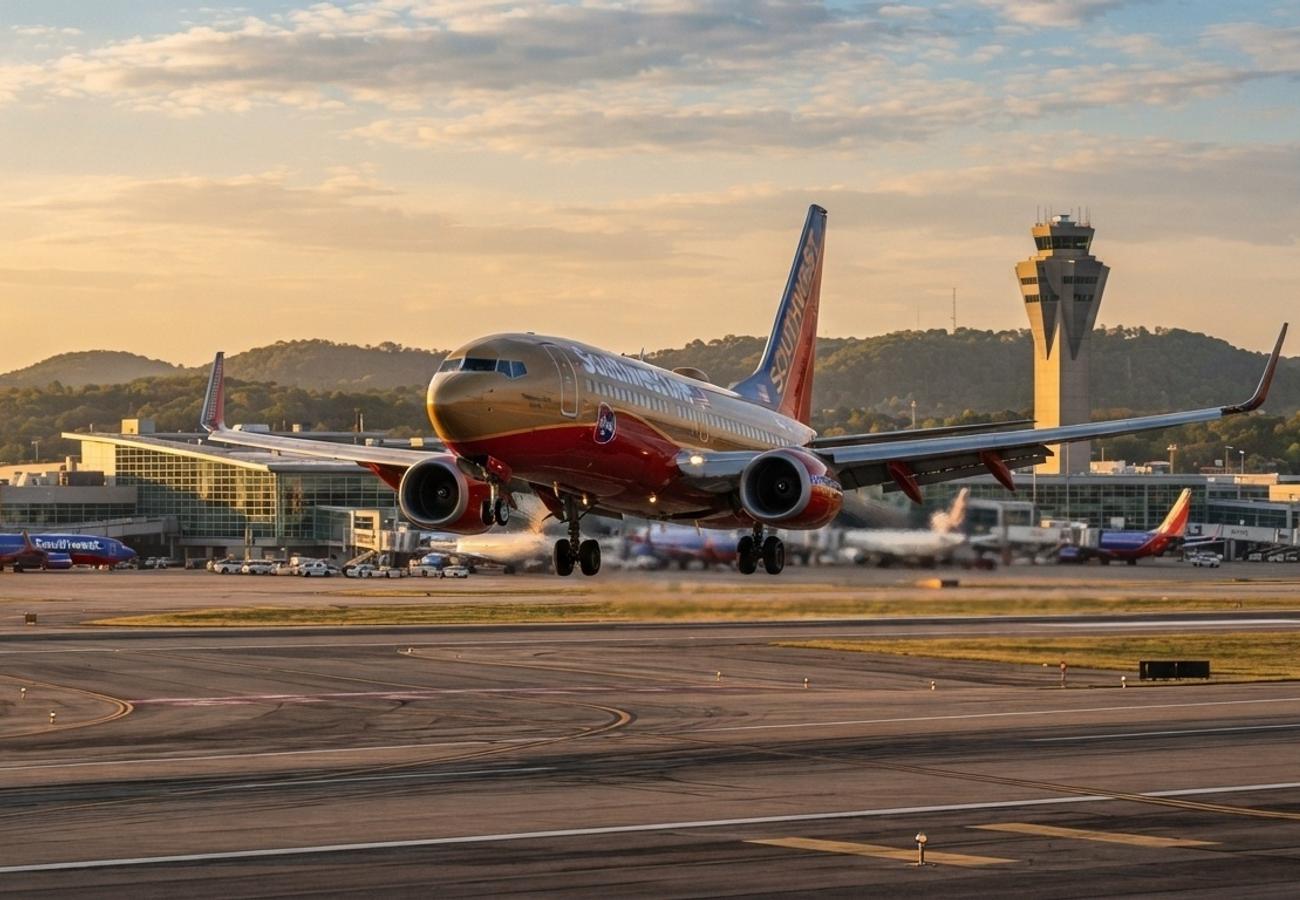
Image generated by AI
A routine domestic journey turned into an unscheduled stop on August 4, 2026, when Southwest Airlines Flight WN2828 was forced to divert to Nashville while traveling from Chicago to Atlanta. The aircraft landed safely in Tennessee following an onboard operational problem that required immediate technical attention.
The incident occurred during a standard flight segment between Illinois and Georgia. While the flight had departed on schedule, the crew identified a mid-transit issue that necessitated a deviation from the planned flight path. Following coordination with air traffic controllers, the aircraft was redirected to Nashville International Airport (BNA), where it landed without further incident.
Operational Details of Flight WN2828 Diversion
Flight WN2828 took off from Chicago Midway International Airport (MDW) as part of its scheduled service to Atlanta, Georgia. The aircraft utilized for this journey was a Boeing 737-800, carrying the registration N8611F. During the cruise phase of the flight, the flight crew detected an operational anomaly that made continuing to the final destination impractical or potentially unsafe.
Upon landing at Nashville International Airport, the aircraft was met by engineering teams and maintenance personnel. These specialists began an immediate inspection of the vessel to isolate the cause of the in-flight irregularity. Because Nashville serves as a significant operational point for Southwest, the diversion allowed the airline to utilize existing ground infrastructure to manage the technical failure and assist the displaced passengers.
Safety Protocols and Diversion Logic in Aviation
Flight diversions are a standard safety mechanism in commercial aviation, triggered when real-time risk assessments indicate that a landing at the nearest suitable airfield is preferable to continuing the journey. In the case of Flight WN2828, the decision to divert to Nashville was based on strict aviation protocols that prioritize passenger and crew safety over the maintenance of a flight schedule.
Diversions can be triggered by a variety of factors, including:
- Mechanical Warnings: Unexpected alerts from onboard diagnostic systems.
- Meteorological Shifts: Rapidly deteriorating weather conditions at the destination airport.
- Medical Emergencies: Urgent health crises involving passengers or crew.
- System Anomalies: Fluctuations in cabin pressure or engine performance indicators.
By choosing an established hub like Nashville, the flight crew ensured that the aircraft would have immediate access to certified mechanics and that passengers would have access to ground support services.
Technical Specifications of the Boeing 737-800
The aircraft involved, the Boeing 737-800, is the primary workhorse for Southwest Airlines' domestic operations. The airline's decision to maintain a standardized fleet of Boeing 737s is a strategic move that simplifies technical troubleshooting and safety responses.
The 737-800 is equipped with advanced twin-engine configurations and real-time diagnostic tools that monitor fuel consumption, engine health, and cabin environmental controls. When these sensors flag an irregularity, the captain is required to consult with ground dispatchers to identify the safest alternate landing site. Given the availability of maintenance facilities in Nashville, the Boeing 737-800 (N8611F) was directed there to minimize further operational disruption.
Passenger Logistics and Ground Management
When a commercial flight is diverted, a complex logistical chain is activated to manage the transition from the air to the ground. At Nashville International Airport, ground staff and air traffic controllers worked to secure runway priority and gate access for WN2828.
Once the aircraft arrived, the airline's station managers were tasked with:
- Passenger Communication: Providing updates on the nature of the diversion.
- Rebooking: Arranging alternative flights to Atlanta for the affected travelers.
- Basic Needs: Providing meals and refreshments during the delay.
- Crew Management: Recalculating crew duty hours to ensure legal rest requirements were met before any subsequent flights.
In instances where a mechanical inspection is required, airlines typically dispatch a replacement aircraft or transfer passengers to other scheduled flights to mitigate the total delay time.
Post-Landing Analysis and Regulatory Compliance
Following the safe landing of Flight WN2828, safety technicians conducted a comprehensive review of the airframe and analyzed flight data recorders. This process is essential to determine whether the diversion was caused by a systemic mechanical failure or a precautionary response to a minor sensor fluctuation.
If a mechanical anomaly is confirmed, the aircraft remains grounded until a certified engineer signs off on its airworthiness. If the diversion was weather-related, the plane typically refuels and waits for a clear window to resume its path.
Beyond the immediate technical fix, airlines are required to submit official reports to aviation regulatory bodies. These documents detail the circumstances of the diversion and the corrective actions taken. This transparency is a cornerstone of global aviation safety, ensuring that operational anomalies lead to industry-wide improvements in maintenance and emergency response.
Why This Matters: The Traveler's Perspective
For the average passenger, a diversion can be stressful and disruptive. However, from a logistical and legal standpoint, this incident highlights the "safety-first" culture of modern aviation. When a pilot chooses to divert, they are exercising a professional judgment that overrides the commercial pressure to arrive on time.
For travelers, this means that while a diversion may cause a missed connection or a late arrival, it is the result of a system designed to prevent accidents before they occur. The use of a standardized fleet (like Southwest's Boeing 737s) further reduces risk, as mechanics at any hub are intimately familiar with the aircraft's systems. From a passenger rights perspective, such diversions often trigger airline obligations to provide care, food, and re-routing, ensuring that the traveler is not left stranded during a technical failure.
Aviation safety remains a rigorous process of constant monitoring and immediate action.
Related Travel Guides
Disclaimer
This article is for informational and educational purposes only. It does not constitute legal, financial, or professional advice. While we strive to provide accurate and up-to-date information, travel policies, regulations, and conditions change rapidly. Always verify information with official sources before making travel decisions. Nomad Lawyer makes no representations about the accuracy, reliability, completeness, or suitability of the information provided. Readers should consult qualified professionals for advice specific to their circumstances. The views expressed in this article are those of the author and do not necessarily reflect the views of Nomad Lawyer.
Raushan Kumar
Founder & Lead Developer
Full-stack developer with 11+ years of experience and a passionate traveller. Raushan built Nomad Lawyer from the ground up with a vision to create the best travel and law experience on the web.
Learn more about our team →