
Southwest Airlines Seating: End of Open Boarding on 800+ Boeing 737s
Southwest Airlines abandons its 50-year open seating model across 800+ Boeing 737s in 2026, reshaping operational efficiency and competitive positioning in short-haul markets.

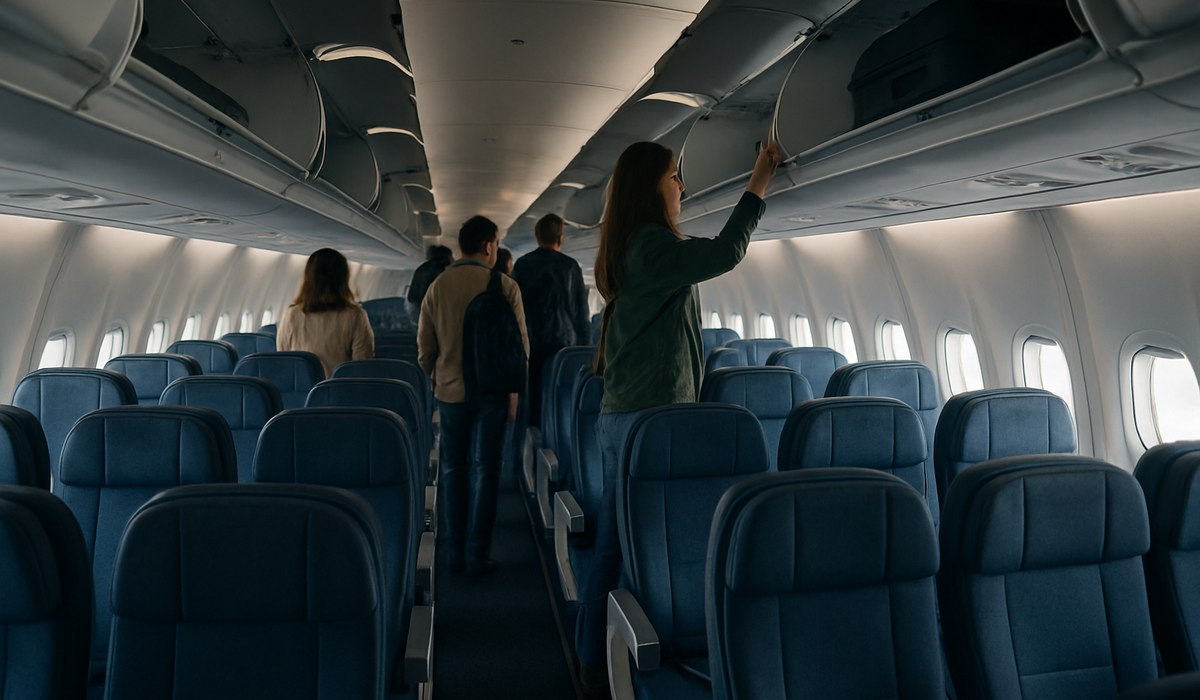
Image generated by AI
Southwest Airlines Ends Five Decades of Open Seating Strategy
Southwest Airlines is fundamentally restructuring its fleet operations by introducing assigned seating across its entire 800+ Boeing 737 fleet, marking the most significant operational departure in the carrier's 54-year history. The transition abandons the legendary open seating model that became synonymous with the airline's brand identity and competitive advantage in domestic short-haul markets throughout 2026 and beyond.
The Operational Math Behind Southwest's Open Seating Legacy
For over 50 years, Southwest Airlines seating relied on a boarding system where passengers selected seats upon arrival at the gate. This approach wasn't merely a marketing gimmick—it represented sophisticated operational mathematics designed to minimize turnaround times. Open boarding eliminated the need for complex seat assignment algorithms, reduced ground crew coordination overhead, and accelerated cabin preparation cycles.
The model thrived because Southwest's network concentrated on point-to-point routes with consistent passenger loads. Boeing 737s, typically carrying 175-180 passengers, moved through gates in 25-30 minutes. Gate efficiency directly correlated to daily aircraft utilization rates, allowing Southwest to extract maximum revenue per aircraft annually. This mathematical elegance justified the business model across thousands of daily flights, positioning the airline ahead of legacy carriers burdened by assigned seating infrastructure throughout the 2010s and 2020s.
However, computational demands shifted as networks expanded and load factors intensified, requiring Southwest to recalculate operational parameters.
Why Southwest Is Abandoning Its Signature Business Model
Multiple strategic pressures converged in 2026, forcing Southwest's leadership to reconsider the open seating framework. Ultra-low-cost carriers aggressively expanded domestic capacity, eroding Southwest's cost advantage. Meanwhile, passengers increasingly demanded seat selection certainty before purchase—a feature competitors offered through paid premium seating options.
Revenue management science advanced substantially, revealing that assigned seating enabled dynamic pricing strategies unavailable under open boarding. Airlines could charge premium fares for preferred seat locations, bundling ancillary revenue streams. Additionally, integration with corporate travel management systems and online booking platforms required standardized seat assignment protocols.
The hidden mathematics proved decisive: assigned seating on 800+ Boeing 737s could generate $300-500 million annually in incremental revenue through seat selection fees, preferred boarding, and ancillary services. This projection outweighed operational efficiency losses from increased boarding complexity.
Financial Implications for the 800+ Boeing 737 Fleet
The transition requires substantial capital investment and operational restructuring. Southwest must retrofit cabin configuration data across its entire Boeing 737 fleet, implementing modern seat mapping systems comparable to competitors like American, United, and Delta. Software integration with reservations, boarding systems, and airport operations demands millions in technology expenditure.
Gate operations will experience modest turnaround time increases—perhaps 5-10 minutes per flight—as crews manage seat assignment verification and boarding sequence complexity. With 3,500+ daily flights, even marginal efficiency losses compound into annual costs. However, financial modeling suggests revenue gains from ancillary services offset these operational headwinds substantially.
The Boeing 737 fleet transition rolls out gradually through 2026-2027, affecting route schedules and passenger experience inconsistently during the implementation period. Operations teams must train on new procedures while maintaining schedule integrity across dense networks serving major hubs like Dallas, Las Vegas, Phoenix, and Denver.
Competitive Repositioning in Short-Haul Markets
This strategic pivot repositions Southwest among major carriers rather than distinct low-cost competitors. The airline surrenders a unique operational identity cultivated across decades, adopting conventional industry practices. This convergence suggests competitive advantage increasingly derives from dynamic pricing sophistication, network optimization, and customer experience differentiation rather than structural operational models.
Legacy carriers immediately recognized the implications. American Airlines, United, and Southwest now compete on near-identical operational parameters, with success determined by network efficiency, fuel costs, and revenue management execution. The short-haul marketplace becomes more homogeneous, potentially benefiting ultra-low-cost carriers like Spirit and Frontier who maintain aggressive cost structures.
For business travelers and frequent passengers, assigned seating across Southwest's 800+ Boeing 737s eliminates booking uncertainty and enables seat preference planning. Leisure travelers face potential ancillary fee increases, though Southwest's historical pricing philosophy suggests moderate implementation compared to legacy carriers' aggressive premium seating strategies.
Impact on Passenger Experience and Booking
Passengers booking Southwest flights after the assigned seating transition must adopt different booking practices. The airline's intuitive open seating process—arrive, select seats at gate, board strategically—disappears entirely. Customers now receive assigned seats upon booking, with potential paid upgrades for preferred locations.
Southwest's boarding groups (A, B, C) will likely evolve toward premium boarding tiers differentiating full-fare passengers, frequent flyer elite members, and ancillary service purchasers. This mirrors industry-standard practices but represents fundamental change for Southwest loyalists expecting equal boarding treatment.
Gate agents previously focused on managing boarding flow will shift toward seat assignment verification and special accommodation handling. The Boeing 737 cabins, while familiar to crews, require different operational procedures. Training investments across ground operations teams remain ongoing throughout the implementation cycle.
Key Data: Southwest Airlines Seating Transition Facts
| Metric | Value | Significance |
|---|---|---|
| Fleet Size Affected | 800+ Boeing 737s | Largest operational transition in company history |
| Years of Open Seating | 54 years (1972-2026) | Competitive advantage duration |
| Estimated Annual Revenue Impact | $300-500 million | Ancillary and seat selection fees |
| Average Turnaround Time Increase | 5-10 minutes per flight | Operational efficiency trade-off |
| Daily Flight Impact | 3,500+ flights | Scope of system-wide transition |
| Boeing 737 Passenger Capacity | 175-180 seats | Standard configuration across fleet |
| Implementation Timeline | 2026-2027 | Phased rollout period |
| Major Hub Airports | Dallas, Las Vegas, Phoenix, Denver | Highest traffic impact locations |
What This Means for Travelers: Action Checklist
Passengers traveling on Southwest Airlines during and after the assigned seating transition should prepare accordingly:
-
Review booking confirmations carefully when purchasing tickets post-transition, noting assigned seat numbers and boarding group assignments during checkout.
-
Understand seat selection pricing by reviewing available upgrade options for preferred locations within 48 hours of departure through the airline's website or app.
-
Arrive early for check-in to understand new boarding procedures, particularly during early transition phases when both crew and passengers adapt to assigned seating protocols.
-
Download the Southwest app to manage seat assignments, view cabin maps, and track implementation updates across your Boeing 737 flights.
-
Check seat upgrade opportunities before arriving at the airport, as preferred seat inventory may sell out during peak booking periods.
-
Monitor schedule changes affecting your preferred flights, as some routes may experience timing adjustments during the 2026-2027 transition window.
-
Contact Southwest directly before traveling if you have specific seating needs (mobility assistance, family groupings, anxiety management) to ensure accommodation under new protocols.
Frequently Asked Questions
What happens to my Southwest boarding pass if I already purchased a ticket under open seating?
Existing tickets purchased before the assigned seating transition activate original terms—open boarding remains valid. You'll receive assigned seats upon check-in, but boarding group positioning follows legacy open seating mechanics rather than new premium tier structures.
Will Southwest charge for seat selection like other airlines?
Southwest hasn't confirmed explicit seat selection fees matching legacy carrier models. The airline historically resisted ancillary revenue extraction, though assigned seating enables optional paid upgrades for premium locations. Standard seat assignments remain included with ticket purchase.
How does assigned seating affect family travel and connecting flights?
Southwest's system prioritizes family grouping and connecting passenger
Disclaimer
This article is for informational and educational purposes only. It does not constitute legal, financial, or professional advice. While we strive to provide accurate and up-to-date information, travel policies, regulations, and conditions change rapidly. Always verify information with official sources before making travel decisions. Nomad Lawyer makes no representations about the accuracy, reliability, completeness, or suitability of the information provided. Readers should consult qualified professionals for advice specific to their circumstances. The views expressed in this article are those of the author and do not necessarily reflect the views of Nomad Lawyer.
Kunal K Choudhary
Co-Founder & Contributor
A passionate traveller and tech enthusiast. Kunal contributes to the vision and growth of Nomad Lawyer, bringing fresh perspectives and driving the community forward.
Learn more about our team →