
Southwest Airlines' 300+ Boeing 737 MAX 7 Orders Stranded by Five-Minute Cockpit Rule Crisis
A five-minute engine anti-ice protocol and Post-it note workarounds are derailing Southwest Airlines' massive 737 MAX 7 fleet expansion, with certification now pushed to H1 2026.

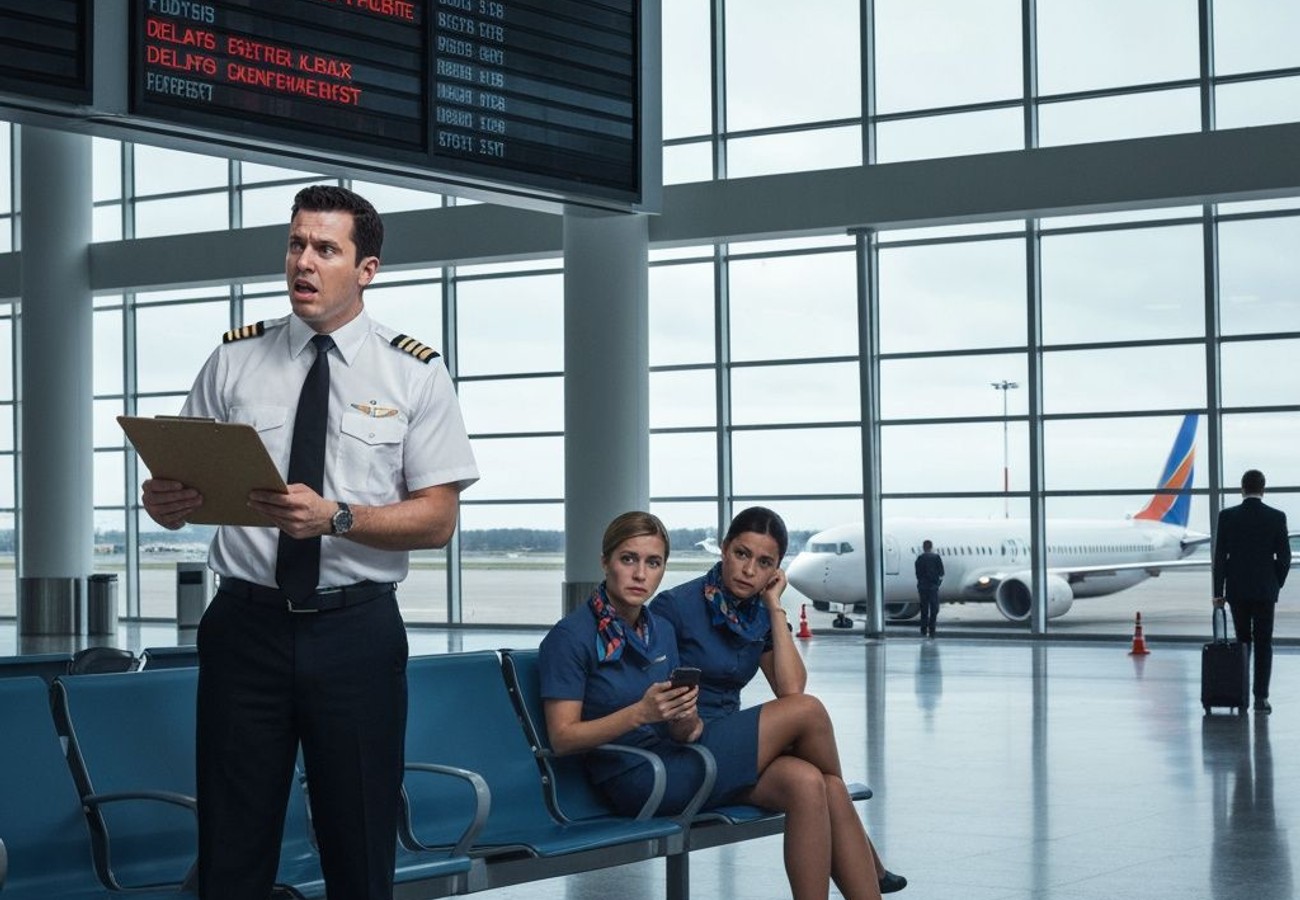
Image generated by AI
The Post-It Note Problem Nobody Saw Coming
I've covered aviation regulation for years, but the image of commercial pilots relying on handwritten sticky notes to remember critical safety procedures still struck me as jarring. Yet that's exactly where we are: Southwest Airlines' ambitious fleet expansion sits in limbo because of a five-minute manual timer that pilots must enforce themselves—without automated reminders, without cockpit alerts, without the technological safeguards modern commercial aviation depends on.
The irony cuts deeper still. This isn't a theoretical problem from a proposed aircraft. The workaround is already happening on Boeing 737 MAX 8 and 737 MAX 9 jets carrying passengers daily. And it's keeping 455 outstanding orders for Southwest's fleet parked in certification limbo, with executives now expecting the 737 MAX 7 to arrive in the first half of 2026—years later than originally promised.
What the Five-Minute Rule Actually Is
The issue centers on the CFM LEAP-1B engines fitted to every aircraft in the Boeing 737 MAX family. Specifically, it's about the anti-ice system protecting the engine nacelle inlet—a device designed to prevent dangerous ice accumulation during cold, wet flight conditions.
Here's where the problem emerges: under certain atmospheric conditions, continuous use of this anti-ice system can overheat the carbon-composite inlet structure itself. The danger zone? Between 20,000 and 30,000 feet in warm, dry air around 50 degrees Fahrenheit.
In August 2023, the FAA issued an Airworthiness Directive requiring flight crews to manually switch off the engine anti-ice system after exactly five minutes when operating in dry air conditions where actual icing isn't present. The procedure is straightforward in theory. In practice, it's a nightmare.
Reddit: "You're telling me pilots are supposed to manually remember a five-minute timer while managing descent, communication, navigation, and a hundred other tasks? That's not safety culture. That's asking for human error." — r/aviation
The Certification Breakdown
Boeing initially pursued a time-limited exemption from the FAA in 2024, arguing that the dangerous atmospheric conditions were relatively uncommon and that pilots could safely manage the system through operational procedures alone. The company requested approval for the 737 MAX 7 and 737 MAX 10 under this framework while engineers developed a permanent fix.
That strategy collapsed spectacularly after the January 2024 Alaska Airlines door plug blowout. Public confidence in Boeing's safety culture evaporated overnight. Political pressure mounted instantly. Lawmakers criticized the exemption request with undeniable justification: here was Boeing, already battered by reputational damage, asking for regulatory flexibility on a procedure that pilots were already struggling to manage without digital assistance.
Boeing withdrew the exemption request.
Why There's No Automated Alert in the Cockpit
The absence of an automated five-minute timer in the cockpit represents a fundamental disconnect between modern aviation safety philosophy and the current certification reality. Commercial aviation has moved decisively toward eliminating human memory as a failure point. Automated systems monitor nearly everything—fuel consumption, engine parameters, altitude compliance, landing gear status.
But the anti-ice system? That's still reliant on crew cognition.
According to FAA oversight documentation on airworthiness directives, the regulatory agency is increasingly skeptical of procedures that depend on pilots manually remembering limitations during high-workload phases of flight. Yet here we are in 2026 with reported incidents of crews using Post-it notes as cockpit reminders—a practice that seems almost medieval compared to the automation available elsewhere in the aircraft.
The optics have been devastating. Aviation media outlets have repeatedly highlighted the sticky note workaround as emblematic of Boeing's broader crisis—a company asking for safety exemptions while its current fleet operates under procedures that seemingly cry out for technological solutions.
Southwest Airlines Faces Years of Disruption
No airline has been hit harder than Southwest Airlines, and the numbers illustrate why. According to ch-aviation data, Southwest currently has 455 outstanding orders split between 737 MAX 7 and 737 MAX 8 aircraft. The carrier originally expected the smaller 737 MAX 7 variant to arrive years ago.
Southwest's entire fleet strategy depended on the MAX 7. The airline operates a single-aircraft model centered entirely on the Boeing 737. The MAX 7 promised improved fuel efficiency while offering operational flexibility for thinner domestic routes that the larger MAX 8 couldn't service effectively.
Current fleet composition tells the story of a company adapting to disappointment:
| Aircraft Type | In Fleet | On Order |
|---|---|---|
| Boeing 737-700 | 294 | — |
| Boeing 737-800 | 196 | — |
| Boeing 737 MAX 7 | — | 269 |
| Boeing 737 MAX 8 | 310 | 186 |
Southwest has been forced to accept larger MAX 8 aircraft that don't perfectly match operational requirements, keeping older 737-700 and 737-800 jets in service longer than intended. That means higher maintenance costs, reduced fuel efficiency, and capacity constraints on routes designed for smaller aircraft.
The delays also trigger cascading financial consequences. Airlines structure pilot hiring, training schedules, maintenance programs, and network expansion around expected aircraft delivery dates. Every additional year of delay forces rescheduling across multiple systems simultaneously.
The Permanent Fix Extended Everything
After withdrawing the exemption request, Boeing pivoted to developing a permanent engineering solution for both the 737 MAX 7 and 737 MAX 10. Politically, that move eased pressure. Operationally, it became a disaster.
The permanent fix reportedly involves modifications to the engine inlet and anti-ice system architecture to eliminate the overheating risk entirely. Because the same issue affects both aircraft, Boeing effectively tied their certification timelines together. When one aircraft advances, so must the other. When complications emerge, both schedules slip.
Modern airliner engineering changes rarely move quickly. Even relatively targeted modifications trigger additional testing requirements involving aerodynamics, structural performance, software integration, and maintenance procedures. Regulators, already scrutinizing Boeing's submissions with extraordinary intensity following the Alaska Airlines incident and quality control concerns, are unlikely to approve modifications without exhaustive review.
Southwest executives now expect 737 MAX 7 certification in the first half of 2026—a timeline that has shifted repeatedly over the past eighteen months. What initially appeared to be a manageable certification complication has become a multi-year operational disruption affecting one of the world's largest narrowbody operators.
The Broader Safety Philosophy Question
Here's what keeps industry observers awake at night: the current workaround is technically legal and operationally approved. The FAA determined that pilots can safely manage the anti-ice system manually if they follow the five-minute limitation.
But should they have to?
Modern commercial aviation has built its safety record on eliminating unnecessary dependence on human memory during high-workload situations. Cockpit resource management training emphasizes automation as a safeguard precisely because pilots are managing hundreds of tasks simultaneously during descent, approach, and landing—the most demanding phases of flight.
A five-minute timer without automated backup operates against that entire philosophy. The fact that crews have reportedly resorted to Post-it notes suggests that even professionals find the procedure cognitively burdensome under operational conditions.
Boeing and regulators maintain that the procedure remains safe when followed correctly. But critics—reasonably—argue that introducing unnecessary operational risk for the sake of a temporary workaround while permanent fixes languish in certification limbo represents a failure of safety culture.
The five-minute rule was supposed to be temporary. It's 2026 now, and Southwest Airlines is still waiting.
Related Travel Guides
Disclaimer
This article is for informational and educational purposes only. It does not constitute legal, financial, or professional advice. While we strive to provide accurate and up-to-date information, travel policies, regulations, and conditions change rapidly. Always verify information with official sources before making travel decisions. Nomad Lawyer makes no representations about the accuracy, reliability, completeness, or suitability of the information provided. Readers should consult qualified professionals for advice specific to their circumstances. The views expressed in this article are those of the author and do not necessarily reflect the views of Nomad Lawyer.
Raushan Kumar
Founder & Lead Developer
Full-stack developer with 11+ years of experience and a passionate traveller. Raushan built Nomad Lawyer from the ground up with a vision to create the best travel and law experience on the web.
Learn more about our team →