
South Korea Follows Laos and More Source Markets Giving Cambodia Tourism a Shocking Decline Amid Border Crisis and Safety Concerns
South Korea Follows Laos and More Source Markets Giving Cambodia Tourism a Shocking Decline Amid Border Crisis and Safety Concerns

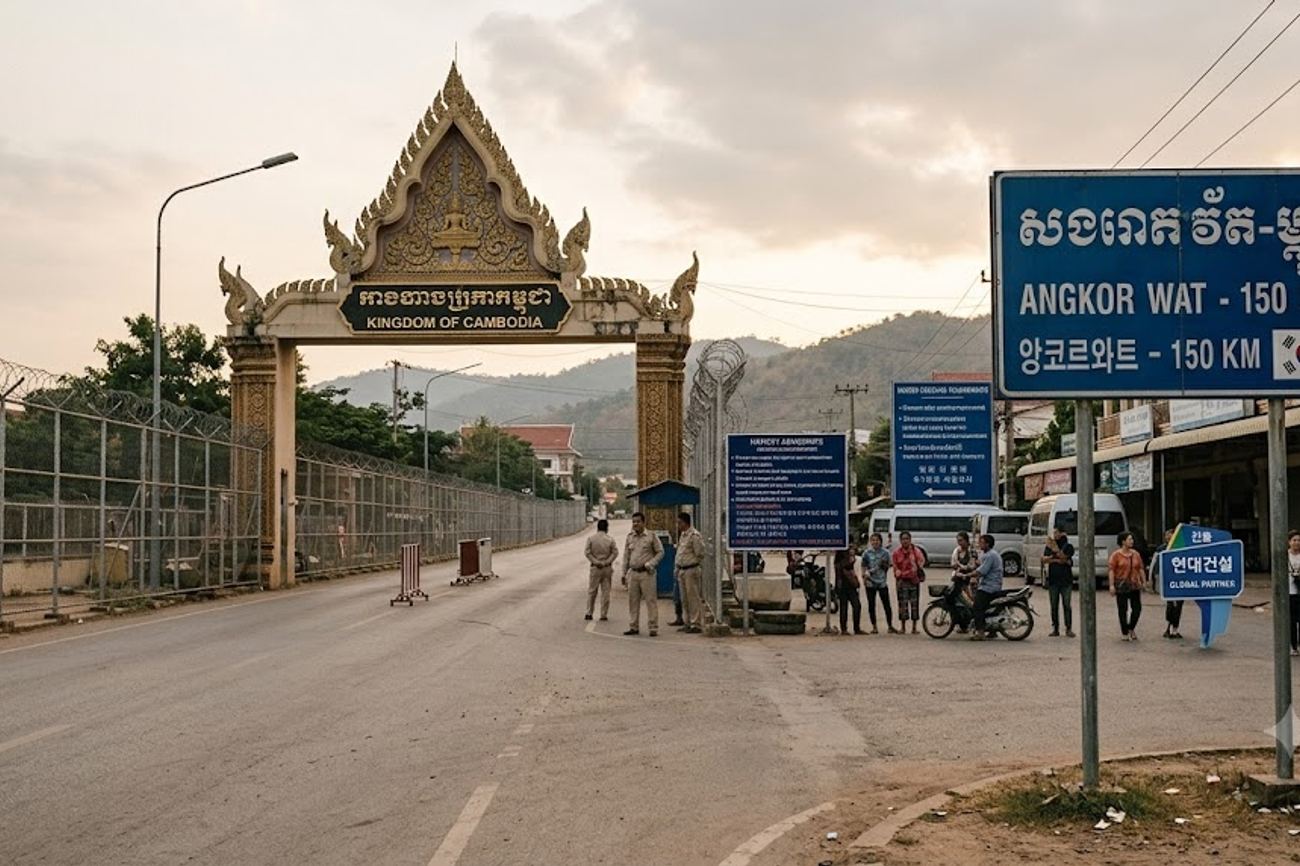
Image generated by AI
[Phnom Penh, August 2026] — Cambodia is facing a severe tourism crisis as international arrivals plummeted by approximately 46% between January and July 2026 compared to the previous year. The downturn is driven by a near-total collapse in land-border crossings and a sharp withdrawal of visitors from key Asian markets, including South Korea and Laos.
The crisis is the result of a volatile combination of border checkpoint closures, escalating safety concerns regarding criminal activity, and a damaged international reputation linked to online scam networks. While long-haul markets from Europe and North America show relative resilience, the regional travel ecosystem—traditionally the backbone of Cambodia's short-term tourism—is currently in a state of freefall.
The Collapse of Regional Land Mobility
The primary catalyst for the current slump is the dramatic failure of overland tourism. Since June 2025, persistent disruptions at border checkpoints have severed the primary arteries for regional travelers. This has fundamentally altered the country's tourism architecture, forcing a reliance on aviation that the market is struggling to sustain.
Data from the first quarter of 2026 reveals a stark divide between travel modes: land arrivals crashed by 69%, while air arrivals saw a more moderate decline of 15.9%. Consequently, air travel now accounts for 65.4% of all foreign entries into the country.
The most catastrophic impact is visible in the Thai market. Thailand, historically a dominant source of visitors, has seen arrivals virtually vanish. Between January and May 2026, Thai visitor numbers dropped from over 856,000 to just 32,700—a staggering 96.2% decline. This loss is particularly damaging because Thai travelers typically drive the high-volume, short-duration weekend and holiday traffic that sustains local hospitality businesses.
Market Breakdown: The Asian Exodus
The crisis extends far beyond the Thai border. Even when excluding Thai data, arrivals from other international markets fell by 26% during the first quarter of 2026. The decline is most pronounced among Asian neighbors and strategic partners who are reacting to safety warnings and regional instability.
The following table outlines the sharp declines in key source markets:
| Source Market | Arrival Decline (%) | Primary Driver |
|---|---|---|
| Laos | 90.6% | Border disruptions / Regional demand |
| South Korea | 66.1% | Safety concerns / Criminal activity reports |
| Russia | 57.3% | General travel demand / Perception |
| Vietnam | 22.7% | Regional mobility issues |
South Korea's sharp exit is specifically attributed to reports of criminal activity in certain Cambodian jurisdictions. These reports have triggered official travel warnings and a collapse in consumer confidence among Korean tourists.
In contrast, long-haul travelers appear less sensitive to these regional disruptions. During the first quarter of 2026, declines from the United States (12.9%), the United Kingdom (11.9%), and France (16.9%) were significantly lower than those of Asian neighbors. This suggests that while the global image of Cambodia is slipping, the immediate safety and border crises are primarily deterring regional "hop-on" travelers.
Practical Traveler Advisory and Strategic Insights
For passengers and nomads currently planning trips to Cambodia, the operational reality on the ground has shifted.
1. Abandon Land Border Plans: If you are planning to enter Cambodia via Thailand or Laos, do not rely on traditional land crossings. With a 69% drop in land arrivals and widespread checkpoint closures, the risk of being stranded or denied entry is high. Book flights through the Cambodia Airports network instead.
2. Heightened Safety Vigilance: The sharp decline in South Korean visitors is a direct result of criminal activity reports. Travelers should exercise increased caution in specific urban centers and stay updated on travel advisories issued by their respective embassies or the U.S. Department of State.
3. New Visa Opportunities for Chinese Nationals: If you hold a Chinese passport, travel is currently streamlined. Between June 15 and October 15, 2026, visa-free entry is available for up to 14 days, provided an electronic arrival form is submitted.
4. Hotel Availability and Pricing: With occupancy rates having fallen from 77.8% to 59.1% since 2025, travelers will likely find significant vacancies and potential for negotiated rates at hotels in Siem Reap and Phnom Penh.
The Pivot to China and Aviation Stability
To offset the regional collapse, the Cambodian government is aggressively pivoting toward the Chinese market. China remains a critical pillar of the recovery strategy, with 242,387 visitors recorded in the first quarter of 2026. Of these, business travel is the primary driver, accounting for 135,209 arrivals, while leisure travel accounts for 106,207.
The aviation sector is currently the only stable component of the tourism infrastructure. Between January and July 2026, international flight movements remained nearly flat, declining by only 1% to a total of 37,248 movements. However, this stability is superficial; while the planes are flying, the passengers are not. Total passenger traffic fell by 9% to 3.71 million.
Airport distribution remains concentrated, with Techo International Airport handling 70.3% of all movements, followed by Siem Reap Airport (24%) and Sihanoukville Airport (5.3%). Interestingly, air cargo has bucked the trend, increasing by 21%, suggesting that while people are avoiding the country, trade continues to flow.
Economic Aftershocks and the 2025 Warning
The 2026 crash follows a period of steady erosion throughout 2025. Last year, international arrivals hit 5.57 million, already a 16.9% drop from previous peaks. The average length of stay also contracted from 7.1 days to 6.2 days.
Despite these headwinds, tourism remains a systemic necessity for the Cambodian economy. In 2025, the sector generated US$3.878 billion in revenue, contributing 9.8% to the national GDP. The current 46% drop in arrivals for the first half of 2026 threatens to destabilize this economic pillar, particularly in Siem Reap, where the Angkor Archaeological Park has seen a significant decline in foot traffic.
FAQ: Cambodia Travel 2026
Can I still enter Cambodia by land from Thailand? While technically possible, it is highly discouraged. Thai arrivals have dropped by 96.2% due to widespread checkpoint closures. Air travel is the only reliable method of entry currently.
Why are South Korean travelers avoiding Cambodia? A 66.1% decline in Korean arrivals is linked to reports of criminal activity and online scam networks in certain areas, leading to reduced traveler confidence and official warnings.
What are the current visa rules for Chinese citizens? From June 15 to October 15, 2026, Chinese citizens can enter Cambodia visa-free for up to 14 days with multiple entries, provided they complete an electronic arrival form.
Is it safe to visit Siem Reap and Angkor Wat? The sites remain open, but visitor numbers have declined. Travelers are advised to monitor official government travel advisories regarding safety in urban centers.
Cambodia's tourism industry is now a race between the growth of Chinese business travel and the collapse of regional land borders.
Related Travel Guides
- Zaragoza Launches Fiestas del Pilar 2026 Autumn Festival Featuring Free Cultural Events, Floral Offering, and Low-Cost Transit Options
- Vietnam’s Ha Giang Province Expands Community-Based Tourism to Transform Northern Mountain Villages and Empower Ethnic Minorities
- Japan and ASEAN Nations Meet in Manila to Upgrade Comprehensive Economic Partnership and Drive Future Travel Connectivity Across Asia
Disclaimer
This article is for informational and educational purposes only. It does not constitute legal, financial, or professional advice. While we strive to provide accurate and up-to-date information, travel policies, regulations, and conditions change rapidly. Always verify information with official sources before making travel decisions. Nomad Lawyer makes no representations about the accuracy, reliability, completeness, or suitability of the information provided. Readers should consult qualified professionals for advice specific to their circumstances. The views expressed in this article are those of the author and do not necessarily reflect the views of Nomad Lawyer.
Raushan Kumar
Founder & Lead Developer
Full-stack developer with 11+ years of experience and a passionate traveller. Raushan built Nomad Lawyer from the ground up with a vision to create the best travel and law experience on the web.
Learn more about our team →