
South Korea Aviation Surge 2026: Incheon Transit Growth, Japan-China Travel Shifts, and Stopover Guide

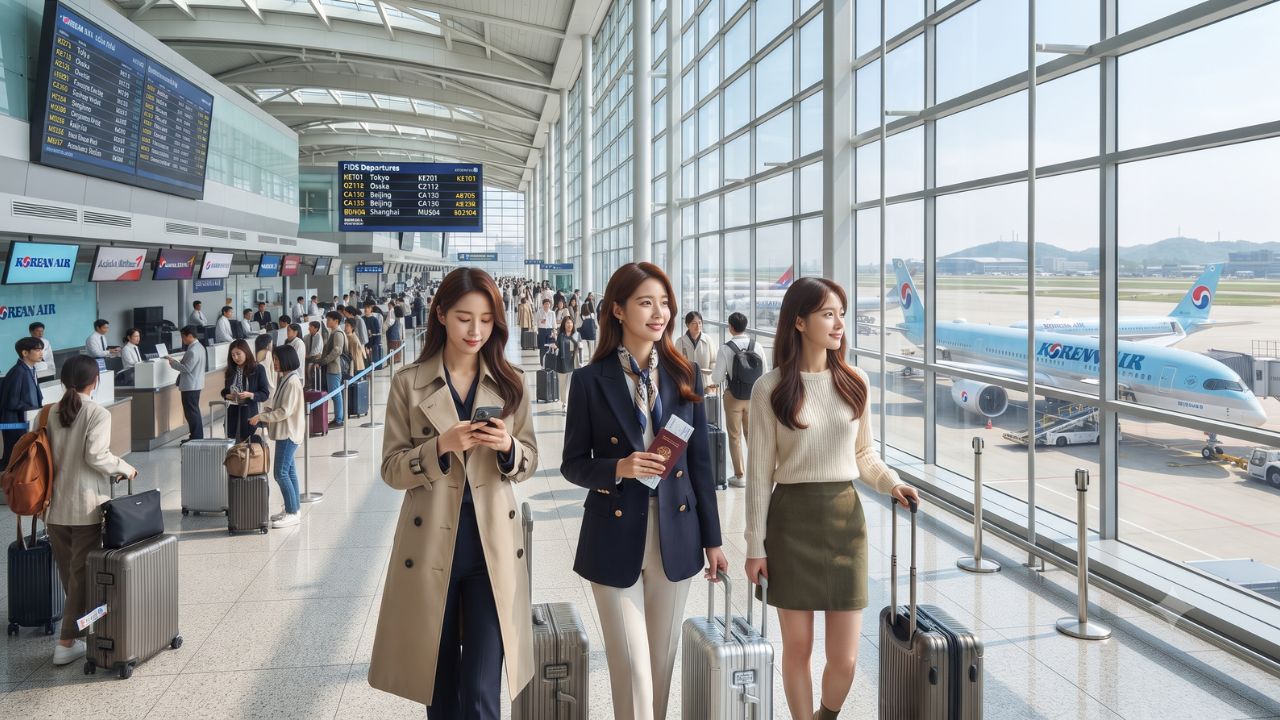
More than 51% of all international air traffic passing through South Korea across the first eight months of 2026 was concentrated in just two bilateral corridors: Japan and China. While long-haul travelers often view the peninsula merely as an efficient runway connection, the country's aviation corridors are experiencing a structural reorganization. Official data released by the Ministry of Land, Infrastructure and Transport through its Air Portal Information System and reported by SBS News reveals that South Korea handled 68.435 million international passengers between January and August 2026, marking a 9.8% expansion over the 62.315 million passengers recorded during the identical period in the previous year. Total international flight operations climbed 6.6% to 384,700 aircraft movements, proving that passenger load factors and seat demand outpaced airline seat additions even against persistent jet fuel cost pressures.
The Northeast Asian Route Pivot: Why Short-Haul Traffic Outpaced Southeast Asia
The engine powering South Korea's record-setting passenger volume is an intense consolidation of short-haul Northeast Asian travel. Traffic between South Korea and Japan surged by 20.3% to reach 21.31 million travelers across the eight-month timeframe. A favorable currency exchange rate driven by the weak Japanese yen made city breaks to Tokyo, Osaka, and regional Japanese prefectures exceptionally attractive for outbound Korean travelers looking to avoid expensive long-haul fuel surcharges. Concurrently, flight paths connecting South Korea and China experienced a 23.0% leap in passenger volume, tallying 13.615 million passengers despite flight operations growing at a much more modest 7.9%. This pronounced capacity squeeze demonstrated that demand recovered at nearly triple the speed of flight resumptions, aided by shifting regional travel dynamics where Chinese travelers selected Seoul and Jeju as preferred international alternatives.
Together, Japan and China route additions accounted for an increase of 6.141 million passengers, effectively matching the nation's entire net international passenger growth of 6.12 million travelers. This hyper-focus on short-distance corridors occurred alongside notable passenger pullbacks across traditional Southeast Asian vacation markets. As rising oil prices translated into hefty carrier fuel surcharges, traveler interest migrated away from four-to-six-hour tropical flights toward one-to-three-hour regional hops. Vietnam recorded 6.626 million passengers, a decline of 5.1% paired with a 6.6% drop in flight movements. The Philippines saw passenger numbers contract 13.7% to 2.501 million alongside a steep 17.5% reduction in flight operations, while Thailand experienced a 13.0% passenger decline to 2.343 million travelers with a 9.3% reduction in scheduled flights.
South Korean carriers redirected widebody aircraft and high-frequency narrowbodies to the densest commercial city pairs. Flag carrier Korean Air posted second-quarter passenger business revenue of KRW 2.8479 trillion, an increase of KRW 451.4 billion year-over-year. The airline scaled up frequencies on heavy-demand North American sectors including Los Angeles, Atlanta, and Vancouver, while maximizing short-haul rotations to Tokyo and Osaka. Low-cost carriers Eastar Jet and Jeju Air simultaneously expanded mainland China networks, locking in new scheduled service to secondary hubs such as Xiamen, Hangzhou, and Guilin to capture inbound group and independent cultural travelers.
Incheon Airport's Dominance as a Strategic Global Transfer Crossroads
The most significant operational shift in 2026 belongs to Incheon International Airport, which recorded 5.982 million international transfer passengers between January and August, representing a 20.1% surge year-over-year. Geopolitical airspace closures across Eastern Europe and ongoing airspace rerouting in the Middle East prompted international travelers and corporate flight planners to reroute transpacific and Euro-Asian itineraries through Seoul. Transfer traffic originating from Europe jumped by 53.0%, while transfer volumes from Japan and China rose by 42.6% and 35.8% respectively. The Americas maintained its status as Incheon's single largest connecting origin, sending 2.02 million transfer travelers through the terminal complex, an increase of 12.8%.
Long-haul point-to-point markets maintained strong momentum regardless of elevated operating expenses. Passenger movements on routes connecting the Americas reached 4.961 million, an 8.2% annual increase, while European sectors expanded 9.3% to 3.478 million passengers. The steady volume of international students, corporate delegations, and transpacific connecting traffic insulated long-haul routes from discretionary spending drops. For global travelers, Incheon has transformed from a simple layover terminal into an integrated entry point that incentivizes multi-day exploration across the Seoul Capital Area and surrounding coastal provinces.
What Makes South Korea's Modern Gateway Experience Different
Unlike mega-hubs that isolate transiting passengers within airside retail strips, Incheon and the broader South Korean transport network are physically structured to encourage rapid cultural immersion. The AREX express railway system links Incheon Terminal 1 and Terminal 2 directly to Seoul Station in 43 minutes, allowing transit guests with four-to-eight-hour layovers to step into century-old neighborhoods before their connecting flight boards.
The country's compact geography and high-speed KTX rail network mean that arriving in Seoul puts travelers within two hours of coastal fish markets in Busan, historic ceramic kilns in Gyeongju, or bamboo forests in Damyang. Furthermore, the integration of automated smart-entry systems, comprehensive luggage forwarding services from airport rail stations directly to boutique hotels, and extensive municipal multilingual guidance make South Korea one of the easiest destinations in Asia to navigate spontaneously without extensive pre-booking.
Visitor Insider Tips: Timing, Transit Hacks, and Local Etiquette
- Optimize Airport Layovers with Official Free Transit Tours: If your connection through Incheon Airport exceeds three hours, register at the dedicated transit tour desks in Terminal 1 or Terminal 2. The Korea Tourism Organization operates complimentary guided excursions covering historic spots such as Songdo Central Park, Incheon Grand Park, and Yonggungsa Temple, complete with English-speaking guides and dedicated shuttle buses.
- Master the AREX Express vs. All-Stop Rail Distinction: When heading into downtown Seoul, purchase tickets for the orange AREX Express Train rather than the blue All-Stop commuter line. The Express provides assigned seating, high-speed Wi-Fi, and a direct 43-minute run to Seoul Station without commuter crowding.
- Carry a Physical Transit Card for Micro-Mobility: While major department stores accept international credit cards, Seoul's subways, local buses, and street food stalls require either a physical T-money card or cash top-ups. Purchase a WOWPASS or T-money card at the airport rail entrance and load it with Korean Won at automated kiosks.
- Navigate Local Meal Etiquette During Peak Rush: In busy dining alleys around Jongno and Euljiro, single diners are often turned away between 11:30 AM and 1:00 PM when neighborhood office workers fill tables for communal stews. Plan solo culinary explorations for 1:30 PM to 4:00 PM to enjoy dishes like seolleongtang or kalguksu in unhurried comfort.
- Base Yourself Along Line 3 or Airport Railroad Hubs: For seamless access between airport connections and authentic heritage neighborhoods, choose accommodations in Gongdeok, Mapo, or Anguk rather than distant commercial quarters. These hubs provide direct transit links to both Incheon and Gimpo airports alongside quick walking access to traditional tea houses and royal palaces.
Cultural and Environmental Context: Managing High-Density Tourism
The sharp influx of regional travelers has intensified the focus on neighborhood preservation in Seoul's historic cores. In heritage residential zones such as Bukchon Hanok Village and Seochon, municipal authorities have implemented designated visiting hours from 10:00 AM to 5:00 PM to mitigate overcrowding and reduce noise disturbances for multi-generational residents living in traditional timber houses. Travelers are requested to maintain whisper-level conversations, avoid photographing private courtyards, and pack out any personal waste.
Environmental sustainability initiatives have also reshaped the domestic aviation and transport sectors. South Korean carriers are accelerating fleet modernization with fuel-efficient Airbus A321neo and Boeing 787-9 aircraft to reduce carbon emissions on high-frequency routes to Japan and China. Additionally, the national "Zero Waste" campaign across transit hubs has eliminated single-use cups in airport lounges and subway stations, encouraging travelers to utilize public tumbler-washing stations and returnable beverage containers. Supporting neighborhood family-run businesses, purchasing locally grown produce at traditional markets like Mangwon and Gwangjang, and traveling via electric intercity rail directly support South Korea's long-term environmental and community preservation objectives.
FAQ: Visiting South Korea 2026
What is the best season to plan a trip to South Korea?
Autumn between September and November offers dry weather, crisp mountain air, and spectacular fall foliage across national parks, while spring from April to May brings mild temperatures and vibrant blossom displays.
Do international visitors require an entry visa or electronic travel authorization?
Citizens of eligible visa-waiver nations must apply for a K-ETA (Korea Electronic Travel Authorization) online prior to departure, though select nationalities enjoy temporary K-ETA exemptions through promotional tourism initiatives. Always confirm entry guidelines before booking.
How do I travel between Incheon International Airport and central Seoul?
The AREX Express Train runs non-stop between Incheon Airport and Seoul Station in 43 to 51 minutes. Alternatively, premium Airport Limousine buses operate direct routes to major hotel districts across Myeongdong, Gangnam, and Hongdae.
Is South Korea safe and convenient for solo independent travelers?
South Korea ranks among the safest destinations worldwide, featuring virtually non-existent violent street crime, 24-hour convenience services, well-lit pedestrian corridors, and comprehensive English signage throughout the public transport network.
From high-speed terminal transfers to quiet temple walks, navigating South Korea's evolving travel landscape reveals a destination where world-class connectivity meets timeless cultural depth.
Related Travel Guides
Disclaimer
This article is for informational and educational purposes only. It does not constitute legal, financial, or professional advice. While we strive to provide accurate and up-to-date information, travel policies, regulations, and conditions change rapidly. Always verify information with official sources before making travel decisions. Nomad Lawyer makes no representations about the accuracy, reliability, completeness, or suitability of the information provided. Readers should consult qualified professionals for advice specific to their circumstances. The views expressed in this article are those of the author and do not necessarily reflect the views of Nomad Lawyer.
Naina Thakur
Contributor & Travel Specialist
Travel enthusiast and legal writer covering visa regulations, responsible tourism, and cultural journeys across global destinations.
Learn more about our team →