
FlyArystan Launches Almaty to Chongqing Non-Stop Flights: Silk Road Aviation Expansion and Travel Guide 2026

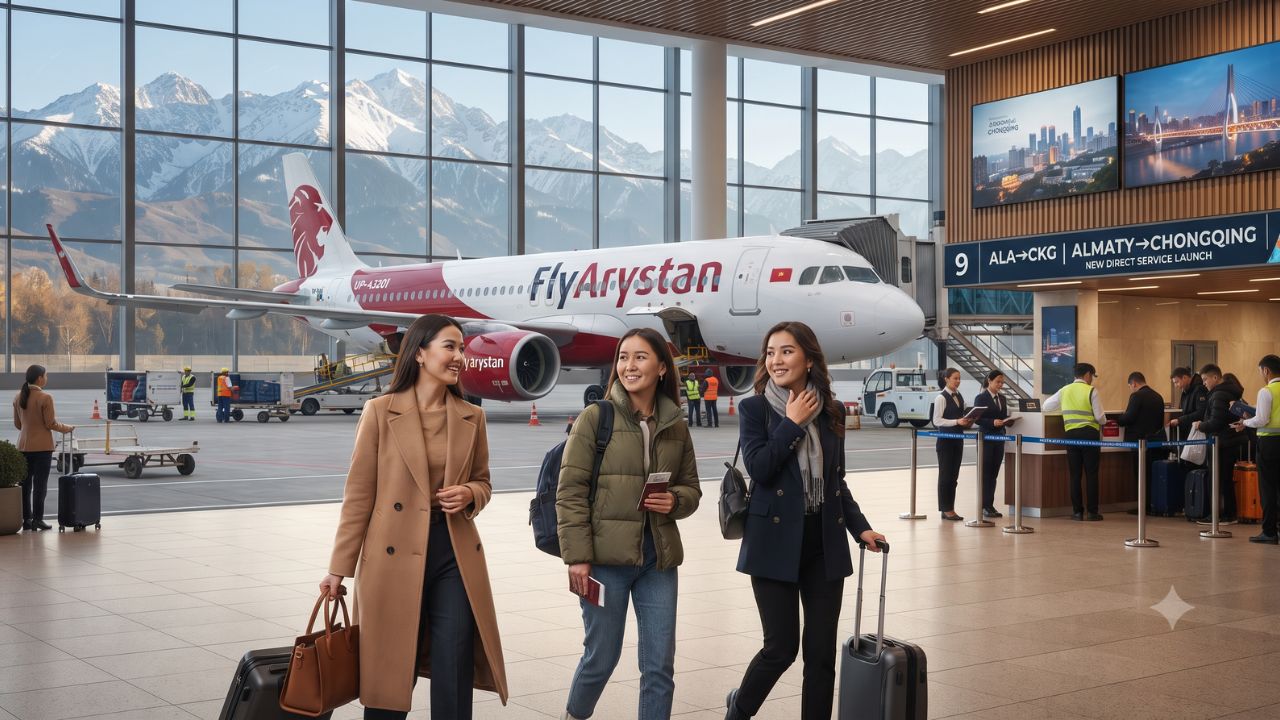
Connecting the snow-capped Tian Shan mountain valleys of Central Asia with the vertical mega-city of Southwestern China, direct commercial aviation now links Almaty and Chongqing in under six hours without multi-leg hub layovers. Low-cost carrier FlyArystan officially inaugurated its scheduled non-stop service between Almaty International Airport and Chongqing Jiangbei International Airport on September 23, deploying fuel-efficient Airbus A320neo aircraft. Operating twice weekly every Wednesday and Saturday, the non-stop route expands FlyArystan’s mainland Chinese network to five destinations—joining existing scheduled services to Urumqi, Yining (Kulja), and Xi’an—under bilateral air transport frameworks coordinated by the Civil Aviation Committee of the Ministry of Transport of the Republic of Kazakhstan.
The Modern Silk Skyway: Linking Central Asia with Southwestern China
The launch of the Almaty–Chongqing corridor marks a strategic evolution in trans-Eurasian connectivity. Historically, travelers moving between Kazakhstan and interior Chinese commercial hubs faced circuitous layovers in Beijing, Guangzhou, or Chengdu. By establishing direct point-to-point service into Chongqing, the mountain-flanked metropolis along the upper Yangtze River, the route creates a streamlined gateway for cultural tourists, academic exchanges, regional trade delegations, and bilateral enterprise.
Chongqing serves as the economic and multimodal transport powerhouse of Southwestern China, famous for its multi-tiered urban architecture, misty river gorges, and fiery Sichuan-Chongqing pepper culinary traditions. For outbound Kazakh travelers and regional Central Asian nomads, the route opens seamless high-speed rail and river cruise connections across Sichuan, Guizhou, and Yunnan provinces, facilitating effortless journeys into the karst topography of Wulong and the historic mountain sanctuaries of Mount Emei.
Conversely, for inbound Chinese travelers, Almaty represents the cultural, gastronomic, and alpine heart of Kazakhstan. Supported by Kazakh Tourism, the city functions as the primary jumping-off point for exploring the Silk Roads: Chang'an-Tianshan Corridor, an ancient transcontinental trade network recognized by UNESCO for its monumental caravanserais, mountain passes, and archaeological heritage.
What Makes the Almaty to Chongqing Route Experience Different
This air link bridges two of Eurasia’s most geographically dramatic urban environments. Almaty sits nestled immediately against the northern slopes of the Zailiyskiy Alatau range, where travelers can transition from cosmopolitan tree-lined boulevards and artisan cafes to high-altitude ski slopes at Shymbulak in under 30 minutes via scenic gondola lines. The city preserves a rich post-nomadic heritage characterized by monumental Soviet-era neoclassical architecture, leafy green squares, and mineral-rich mountain springs flowing along historic street channels (aryks).
In contrast, Chongqing is engineered across steep hillsides along the dramatic confluence of the Yangtze and Jialing rivers, earning it the reputation of China’s "8D Cyberpunk City." Monorail trains pass directly through residential apartment towers at Liziba Station, while the illuminated multi-tiered wooden eaves of Hongyadong cascade down river bluffs. Experiencing both cities on a single journey provides an extraordinary contrast between nomadic mountain heritage and vertical futuristic architecture.
Visitor Insider Tips: Navigating Almaty and Chongqing Like a Local
- Explore Almaty's Green Bazaar (Kok Tobe) in the Morning: Visit the historic Zelyony Bazar (Green Bazaar) between 8:30 AM and 11:00 AM to sample regional delicacies from local vendors without crowds. Try fresh kurt (salted dried cheese curds), wild mountain honey, smoked horsemeat delicacies (kazy), flatbreads baked in clay tandoors, and crisp Almaty Aport apples, the ancestral variety of domestic apples worldwide.
- Ride the Medeu-Shymbulak Cable Car for Alpine Vistas: Take Municipal Bus 12 from central Almaty to the Medeu High-Altitude Ice Rink, then board the combination cable car up to Shymbulak Mountain Resort and Talgar Pass at 10,500 feet. Pack warm windproof layers even in summer, as alpine summit temperatures remain cool year-round.
- Master Chongqing's Vertical Navigation and Rideshare Apps: Street addresses in Chongqing can be deceptive due to multi-level terrain; what appears to be the ground floor on a navigation map is frequently the 11th floor of a hillside complex. Utilize local metro lines (CRT) or ride-hailing apps, and arrange pickup spots at recognized hotel driveways rather than steep roadside ramps.
- Experience Authentic Chongqing Hotpot Etiquette: When ordering hotpot in traditional neighborhood eateries across Chongqing, select the yuanyang split-pot featuring both mild bone broth and traditional beef-tallow broth infused with Sichuan peppercorns (mala). Dip delicate beef slices, lotus root, and handmade bamboo shoots into a small bowl of sesame oil and crushed garlic to temper the chili heat.
- Carry Local Cash and Verify Mobile Pay Setup: While WeChat Pay and Alipay with linked international cards operate across urban venues in Chongqing, local public markets, mountain teahouses, and alpine shared taxis around Almaty require Kazakhstani Tenge (KZT) cash notes.
- Visit Panfilov Park and Zenkov Cathedral in Almaty: Spend a tranquil morning walking through Panfilov Park in central Almaty to admire the colorful, onion-domed Ascension Cathedral (Zenkov Cathedral). Constructed entirely of wood without metal nails in 1907, the earthquake-resilient structure houses exquisite Orthodox iconography and tranquil prayer spaces.
Cultural and Environmental Context: Eco-Tourism Across the Tian Shan
The growth of regional air routes between Kazakhstan and China highlights the necessity of balanced environmental management in high-mountain ecosystems. Almaty’s surrounding protected zones, including Ile-Alatau National Park, Charyn Canyon, and the turquoise alpine waters of Kolsai and Kaindy Lakes, host fragile spruce forests, glacier-fed streams, and endangered wildlife like the snow leopard and Tian Shan brown bear.
Kazakh national park authorities have introduced digital park-entry systems, strict trash-collection guidelines, and eco-trail signposting to prevent environmental degradation along sensitive alpine corridors. Cross-border tourism initiatives promoted by the Chongqing Municipal Commission of Culture and Tourism Development and regional Kazakh agencies emphasize sustainable travel practices. Travelers can protect local heritage by staying in family-run guesthouses in Saty village, hiring local horse guides on high-altitude passes, and choosing carbon-efficient Airbus A320neo flights that reduce fuel burn per passenger on trans-border journeys.
FAQ: Traveling Between Almaty and Chongqing 2026
What is the flight schedule between Almaty and Chongqing on FlyArystan?
FlyArystan operates scheduled direct flights twice weekly, departing on Wednesdays and Saturdays aboard modern Airbus A320neo aircraft.
Do travelers need visas to visit Kazakhstan and China?
Kazakhstan and China have established reciprocal mutual 30-day visa-free entry arrangements for eligible citizens. International travelers of other nationalities should verify respective visa or transit requirements before travel.
What is the flight duration between Almaty and Chongqing?
The non-stop flight takes approximately 5 hours and 30 minutes, drastically cutting travel times compared to multi-stop itineraries.
When is the best season to explore Almaty and Chongqing?
May to June and September to October offer pleasant temperatures, clear mountain views in Almaty, and comfortable outdoor sightseeing conditions along Chongqing’s riverfronts.
From tranquil apple orchards beneath the Tian Shan peaks to glowing lanterns reflected on the Yangtze River, this new sky link unites the ancient spirit and modern pulse of the Silk Road.
Related Travel Guides
Disclaimer
This article is for informational and educational purposes only. It does not constitute legal, financial, or professional advice. While we strive to provide accurate and up-to-date information, travel policies, regulations, and conditions change rapidly. Always verify information with official sources before making travel decisions. Nomad Lawyer makes no representations about the accuracy, reliability, completeness, or suitability of the information provided. Readers should consult qualified professionals for advice specific to their circumstances. The views expressed in this article are those of the author and do not necessarily reflect the views of Nomad Lawyer.
Naina Thakur
Contributor & Travel Specialist
Travel enthusiast and legal writer covering visa regulations, responsible tourism, and cultural journeys across global destinations.
Learn more about our team →