
South Africa Extends Visa Amnesty Until November 2026 for Middle East Conflict Refugees Stranded by Flight Disruptions
South Africa grants extended visa relief through November 2026 for foreign nationals stranded by Middle Eastern aviation chaos, protecting travelers from overstay penalties.

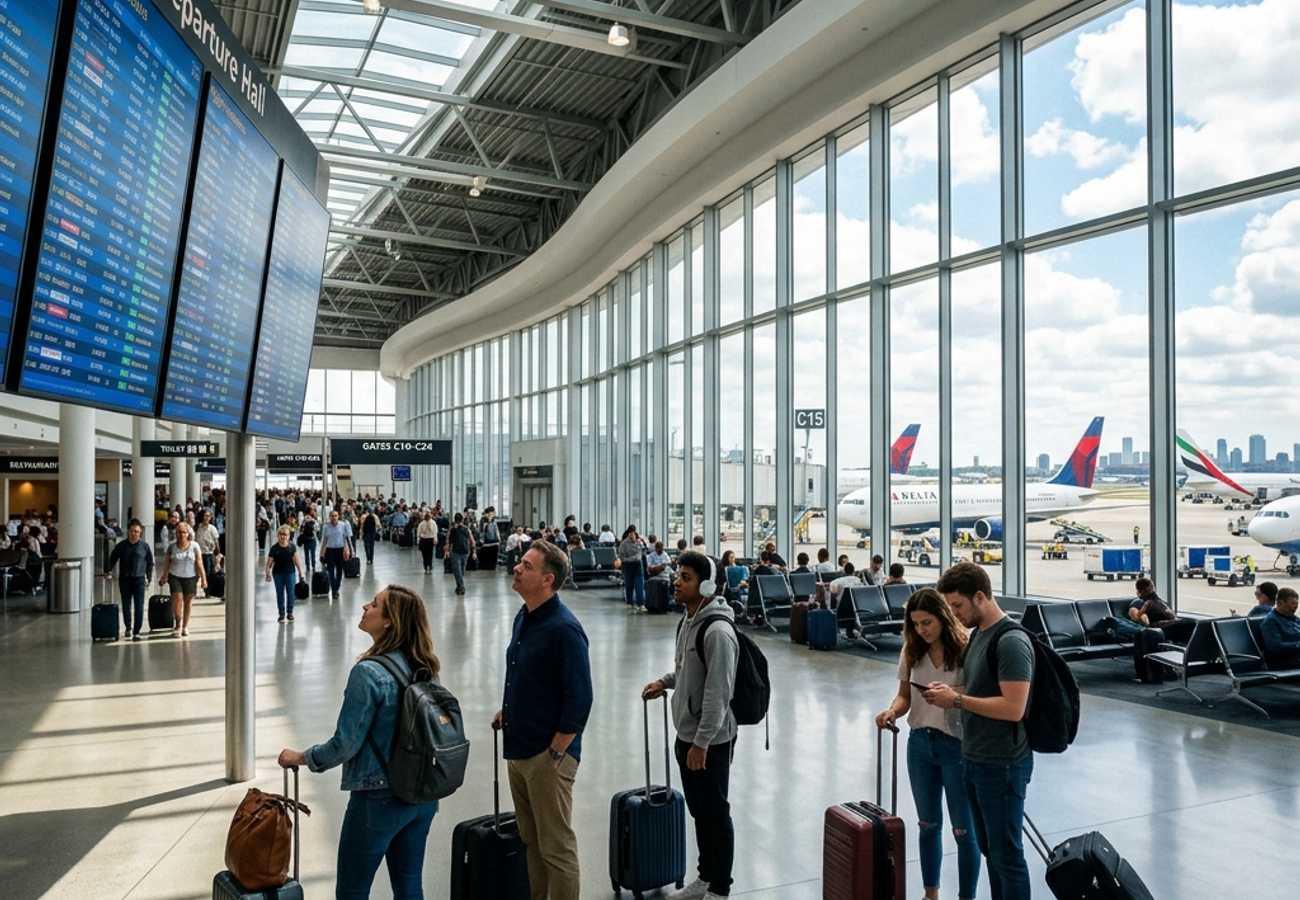
Image generated by AI
The Crisis: When Geopolitics Trap Travelers
It's a nightmare scenario that became reality for thousands of international travelers in 2026. You're stuck in South Africa—legally, lawfully, through no fault of your own—because the airspace corridors connecting the Middle East have collapsed. Flights cancelled. Routes suspended. Airports shuttered.
Now your visa is expiring, and you face a choice: overstay and risk deportation, or somehow find a way home through an aviation system in freefall.
South Africa just solved that dilemma. On July 1, 2026, immigration authorities announced a landmark extension of emergency visa relief that protects stranded foreigners until the end of November 2026—or until peace is formally declared, whichever comes first.
What's Actually Happening Here
This isn't a typical visa extension. It's a humanitarian legal shield designed to prevent foreign nationals from becoming unwilling immigration violators due to geopolitical circumstances beyond their control.
The relief framework covers travelers stranded after attempting to transit through or escape conflict-affected regions including Iran, Iraq, Syria, Qatar, Bahrain, Kuwait, Lebanon, Saudi Arabia, United Arab Emirates, Israel, Palestine, Jordan, and Oman.
Reddit: "My flight from Dubai was cancelled three times. This amnesty just saved me from being deported for an overstay I couldn't prevent." — r/travel
The policy was first introduced in March 2026 as a three-month emergency measure. That initial phase expired in May 2026. Officials have now recognized that regional instability is not improving fast enough, so they've doubled down with a six-month extension.
Who Gets Protected—And How
Long-term visa holders facing permit expiry can now apply for extensions before their status lapses, provided they meet standard requirements. No penalty. No irregular status.
Visitor visa holders who've already maxed out their allowed stay can request up to three additional months. This is extraordinary flexibility by any immigration standard.
Temporary residence visa holders whose documents expired during the disruption period can renew without the bureaucratic pre-authorization typically required for irregular status cases.
Here's the critical part: you cannot be declared undesirable or face enforcement penalties if your overstay was caused by flight cancellations rather than voluntary non-compliance. This distinction matters legally.
If you were previously labeled "undesirable" after late February 2026 due to conflict-related overstays, you now have the right to appeal with supporting evidence—cancelled booking confirmations, airline notifications, official travel advisories.
Airline Crews and Transit Passengers Included
This relief extends to airline personnel stranded by operational disruptions and transit passengers caught mid-journey when their connections evaporated. Airlines benefit indirectly by having reduced immigration pressure on their staff, allowing faster crew redeployment to unaffected routes.
According to ICAOs aviation tracking data, the Middle Eastern aviation crisis of 2026 created unprecedented stranding situations, with some carriers unable to complete scheduled rotations for weeks.
The Global Pattern: Other Countries Following Suit
South Africa isn't alone in this response. Egypt, Kenya, Tanzania, India, and Thailand have introduced comparable temporary visa flexibility systems during periods of regional aviation instability.
This reflects a broader international shift: immigration authorities are recognizing that 21st-century geopolitical crises demand adaptive governance frameworks. Rigid, pre-written visa rules don't account for externally triggered travel paralysis.
What Stranded Travelers Must Do Now
This amnesty doesn't operate automatically. You must take action.
Submit applications within applicable timelines. Gather evidence: cancelled flight bookings, airline emails, official travel restriction notices from your embassy. The burden of proof rests on you to demonstrate that your circumstance was genuinely beyond your control.
Contact South African Home Affairs or visit the official immigration portal to understand which relief category applies to your specific visa status. Extensions aren't granted universally—they're conditional on eligibility verification.
The Bigger Picture: When Law Meets Humanitarian Crisis
What makes this policy remarkable isn't the visa extension itself—it's the explicit legal protection against enforcement consequences. South Africa has essentially created a legal exception that says: Your overstay is not a violation if the aviation system prevented your departure.
This is jurisprudential innovation under crisis conditions. Most immigration frameworks treat all overstays equally. This one differentiates between culpable and circumstantial violations.
The policy expires either in November 2026 or upon formal regional ceasefire—whichever happens first. That conditional language suggests authorities recognize this is a temporary, not permanent, shift in immigration policy.
For now, if you're stranded between continents because Middle Eastern airspace is effectively closed, South Africa has your back. Document everything, submit your applications, and navigate this bureaucratic lifeline while it exists.
When geopolitics closes airspace, good immigration law opens doors.
Related Travel Guides
Disclaimer
This article is for informational and educational purposes only. It does not constitute legal, financial, or professional advice. While we strive to provide accurate and up-to-date information, travel policies, regulations, and conditions change rapidly. Always verify information with official sources before making travel decisions. Nomad Lawyer makes no representations about the accuracy, reliability, completeness, or suitability of the information provided. Readers should consult qualified professionals for advice specific to their circumstances. The views expressed in this article are those of the author and do not necessarily reflect the views of Nomad Lawyer.
Preeti Gunjan
Contributor & Community Manager
A passionate traveller and community builder. Preeti helps grow the Nomad Lawyer community, fostering engagement and bringing the reader experience to life.
Learn more about our team →