
Smart Catering Reducing Airline Food Waste With AI Technology
Airlines deploy AI-powered catering systems to combat 3.6 million tonnes of annual cabin food waste in 2026. Smart technology promises to halve waste by 2040 as industry faces sustainability crisis.

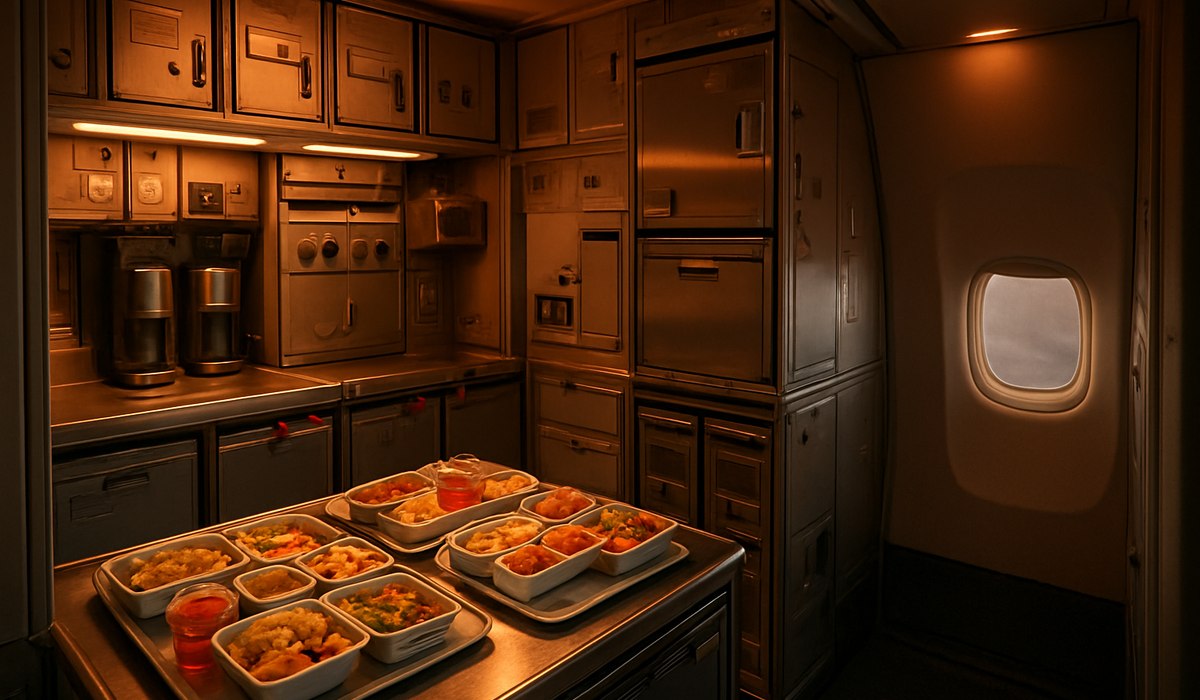
Image generated by AI
Airlines Leverage AI to Combat Soaring Cabin Food Waste Crisis
The global aviation industry is accelerating its adoption of artificial intelligence-powered catering systems to address a mounting environmental crisis: 3.6 million tonnes of cabin and catering waste generated annually. According to 2024–2025 data from the International Air Transport Association (IATA) and the Aviation Sustainability Forum (ASF), this volume is projected to reach four million tonnes by late 2025. Without intervention, the industry faces a potentially catastrophic doubling of waste by 2040, driven primarily by growing passenger numbers and unchanged operational practices.
Airlines worldwide are recognizing that smart catering reducing technologies represent a critical frontier in aviation sustainability. The shift toward machine learning algorithms and predictive analytics marks a fundamental reimagining of how carriers approach meal planning, inventory management, and waste disposal across their global networks.
The Scale of Airline Food Waste
The magnitude of cabin food waste represents one of aviation's least-discussed environmental challenges. The 3.6 million tonnes figure encompasses untouched meals, partially consumed food items, and packaging discarded during flight operations. This waste stream rivals the annual garbage production of mid-sized cities.
Several factors compound the problem. Airlines maintain conservative meal counts based on booking data, leading to surplus food production. Dietary restrictions, last-minute passenger changes, and crew overordering create additional waste streams. Regulatory requirements mandate disposal rather than reuse of opened food items, even if unconsumed. The challenge intensifies on long-haul flights where meal service spans multiple courses across extended flight durations.
Industry analysts warn that without intervention, cabin food waste could emerge as a defining sustainability challenge comparable to aviation emissions. The IATA's commitment to net-zero carbon by 2050 increasingly includes waste reduction as a core pillar. Organizations including the Aviation Sustainability Forum are publishing benchmarking data that pressures carriers to modernize their catering practices.
How AI-Powered Catering Works
Smart catering reducing systems leverage artificial intelligence to forecast precise meal requirements with unprecedented accuracy. These platforms analyze historical consumption patterns, real-time booking data, passenger demographics, route-specific preferences, and seasonal trends to generate optimized meal counts for each flight.
Machine learning algorithms examine variables including cabin class distribution, special meal requests, weather patterns affecting appetite, and crew preferences. The system continuously learns from actual meal consumption data, refining predictions across tens of thousands of flights annually. Airlines implementing these platforms report waste reduction ranging from 15 to 35 percent within the first operational year.
Integration with inventory management systems enables catering vendors to adjust production schedules in real-time. Predictive alerts notify kitchen managers when demand patterns shift unexpectedly. Some systems incorporate IoT sensors in galley waste bins, measuring actual discard volumes and generating immediate feedback loops.
Leading technology providers like CHOOOSE and specialized aviation tech firms are developing purpose-built solutions for the airline sector. These platforms synchronize with crew management systems, ground handling operations, and passenger data platforms to create seamless workflows. The result: precise meal loading that minimizes both waste and stockouts.
Industry Sustainability Goals and Timeline
The aviation sector has established ambitious but urgent sustainability timelines. The IATA's Sustainable Aviation Fuels (SAF) initiative includes waste management as an integrated sustainability strategy. Multiple carriers have publicly committed to 30-percent waste reductions by 2030.
European airlines face regulatory pressure from the EU's revised Packaging and Packaging Waste Directive, which mandates measurable waste reduction targets. United States carriers are increasingly adopting voluntary sustainability commitments as pressure mounts from investors and environmentally conscious passengers.
The projected doubling of waste by 2040 underscores the urgency. Current industry growth trajectories suggest passenger numbers will increase by 60 percent over the next 15 years. Without smart catering reducing technologies deployed at scale, absolute waste volumes become unsustainable both environmentally and economically.
Early adopters view waste reduction as a cost-optimization opportunity. Meal production represents a significant operational expense; precision catering directly impacts profit margins. Airlines implementing smart systems report kitchen labor efficiencies and reduced storage requirements, creating financial incentives beyond environmental responsibility.
Implementation Challenges and Solutions
Deploying AI-powered catering systems across global airline networks presents substantial operational challenges. Legacy systems at major catering facilities often lack digital integration. Training ground crews and kitchen staff requires investment in change management and technical education.
Data privacy concerns arise when systems collect passenger preferences and dietary information. Airlines must navigate regulations including GDPR compliance while maintaining system accuracy. Standardizing data formats across different catering vendors, airports, and regions remains technically complex.
Small and regional airlines face proportionally higher implementation costs. Developing affordable, scalable solutions for carriers operating 50-aircraft fleets rather than 800-aircraft networks requires innovative business models. Some technology providers are exploring shared-service platforms where multiple airlines utilize centralized AI systems.
Supply chain disruptions occasionally create mismatches between predicted and actual demand. Backup protocols ensure that smart catering reducing systems include safeguards preventing dangerous understocking. Integration with supplier relationships determines whether optimization translates to practical kitchen operations.
Solutions emerging across the industry include phased rollouts beginning with major hub airports and long-haul routes where waste volumes prove highest. Cloud-based architectures reduce capital expenditure compared to on-premise installations. Partnerships between airlines and catering companies align financial incentives toward waste reduction rather than meal volume maximization.
| Metric | 2024–2025 Baseline | 2025 Projection | 2030 Target | 2040 Scenario |
|---|---|---|---|---|
| Annual Cabin Food Waste (Million Tonnes) | 3.6 | 4.0 | 2.8 | 7.2 (without intervention) |
| Airlines with AI Catering Systems | 15 | 35 | 120+ | 350+ |
| Average Waste Reduction (%) | — | 8–12 | 30 | 40–50 |
| Global Passenger Volume (Billions) | 4.5 | 4.8 | 6.2 | 7.2 |
| Estimated Cost of Deployment (USD Millions) | — | 200 | 850 | 2,100 |
| Catering Industry Waste Savings (USD Billions) | 1.8 | 1.9 | 2.8 | 4.2 |
What This Means for Travelers
Smart catering reducing technologies will reshape the passenger experience and airline operations in measurable ways:
-
Improved Special Meal Handling: AI systems will accurately predict demand for vegetarian, vegan, kosher, and medical-restriction meals, reducing instances of unavailable special meals on flights. Passengers with dietary requirements will experience more reliable service consistency.
-
Enhanced Flight Beverage Service: Optimized inventory management means better stocking of preferred beverages and snacks. Flights will carry appropriate quantities based on passenger preferences rather than generic assumptions, improving onboard satisfaction.
-
Sustainable Airline Selection Criteria: Travelers increasingly selecting airlines based on environmental practices will find measurable sustainability data. Smart catering reducing becomes a differentiator in competitive markets, influencing loyalty program participation and ticket purchases.
-
Reduced Flight Delays: Streamlined catering processes minimize last-minute loading adjustments and inventory confusion. Flights may experience smoother turnarounds at destination airports, translating to improved schedule reliability.
-
Lower Long-Term Airfare Trends: As catering companies recapture operational savings, airlines gradually pass cost reductions to passengers through competitive pricing. Waste elimination directly strengthens airline balance sheets, creating pricing pressure in competitive routes.
FAQ
**How accurate are AI predictions for meal
Disclaimer
This article is for informational and educational purposes only. It does not constitute legal, financial, or professional advice. While we strive to provide accurate and up-to-date information, travel policies, regulations, and conditions change rapidly. Always verify information with official sources before making travel decisions. Nomad Lawyer makes no representations about the accuracy, reliability, completeness, or suitability of the information provided. Readers should consult qualified professionals for advice specific to their circumstances. The views expressed in this article are those of the author and do not necessarily reflect the views of Nomad Lawyer.
Preeti Gunjan
Contributor & Community Manager
A passionate traveller and community builder. Preeti helps grow the Nomad Lawyer community, fostering engagement and bringing the reader experience to life.
Learn more about our team →